Left-hand traffic, enormous distances, kangaroos on the highway at dusk, and speed cameras that don't offer warnings. Here's everything international visitors need to know — including when to skip the car entirely.
Cooee Tours — Travel Planning TeamBrisbane, QLD · Updated March 2026 · Practical Guide for International Visitors
12 min read
Driving in Australia gives you a freedom that public transport can't match — especially outside the capital cities. But the conditions are different from what most international visitors are used to: left-hand traffic, distances that dwarf most countries, wildlife that wanders onto highways, an outback that punishes poor preparation, and speed cameras that don't offer warnings to tourists. Here's the practical information you actually need.
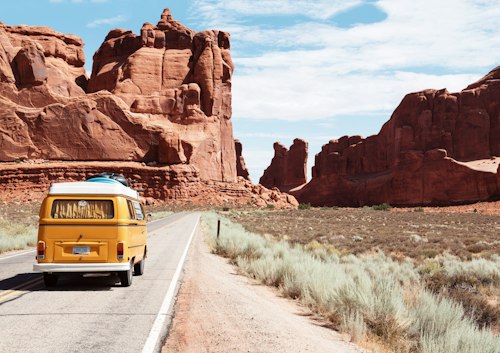
The OutbackDistances you need to plan for
Wildlife SignsTake them seriously at dusk
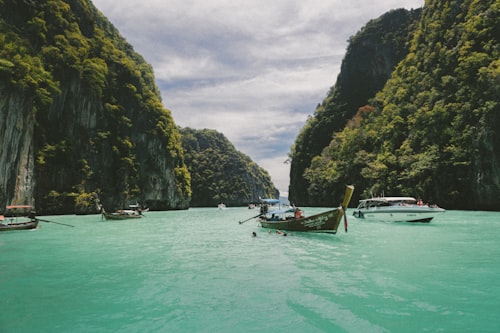
Coastal RoadsAmong the world's best drives
Car HireKnow the insurance details
Mountain RoadsThe Great Ocean Road, Victoria
Section 1
🚗
Left-Hand Driving — The Adjustment
If you're from a country that drives on the right — the US, Canada, most of Europe, most of Asia — switching to left-hand traffic is the biggest adjustment you'll make. The steering wheel is on the right side of the car. You drive on the left side of the road. Indicators and wipers are swapped on the steering column (you'll activate the wipers every time you want to indicate for the first day or two — this is universal and very normal).
The good news: most visitors adapt within a few hours. The bad news: the adjustment period is when accidents happen, and Australia's road rules don't make allowances for unfamiliarity.
Where international drivers make mistakes
The most dangerous moments come at intersections and when turning — particularly right turns, where instinct pulls you toward the wrong lane. Right turns cross oncoming traffic in Australia; left turns don't. Roundabouts (extremely common throughout Australia) rotate clockwise — you give way to vehicles already in the roundabout and enter from the left.
Car parks, petrol station exits, and quiet residential streets are where visitors most frequently drift to the right side of the road — because there's no other traffic acting as a visual reference point. These low-speed moments feel harmless but are where most visitors have their first close call.
Motorways and highways are usually fine once you're in moving traffic — other vehicles keep you honest. The danger zone is re-entering a road after stopping, or navigating an empty intersection early in the morning when there's nothing else to follow.
Practical advice that works: Spend 15–20 minutes practicing in a quiet car park or residential street before driving in traffic. Stick a sticky note on the dashboard: "KEEP LEFT." When stopped at a junction and about to pull out, say out loud "look right" before going — in left-hand traffic, your first look should be to the right. After a half-day of driving, the majority of visitors report it feeling close to natural.
First day warning
Jet lag plus left-hand driving is a genuinely dangerous combination. If you've just landed in Australia, take a taxi or shuttle from the airport and sleep before you drive. Tiredness amplifies the left-hand adjustment difficulty significantly. Starting to drive the following day rather than arrival day is a meaningful safety decision, not overcaution.
Section 2
📋
Licences & Requirements
English-language licenceIf your licence is in English, you can drive in most Australian states and territories on your overseas licence for up to 3 months. No International Driving Permit is required. Your licence must be current and you must carry the physical card.
Non-English licenceYou need either an International Driving Permit (IDP) obtained before leaving home from your national motoring authority, or an official NAATI-accredited English translation carried alongside your original licence at all times.
Minimum age for hireMost rental companies require you to be at least 21. Under-25 surcharges are standard ($15–30 per day extra). Some premium or large vehicles require age 25+. Check your specific rental company's policy when booking.
Always carry your licenceYou must have your physical licence (plus IDP or translation if applicable) with you whenever driving. Digital licences from overseas countries are not currently accepted as legal identification in Australia.
State-by-state variation
Licence requirements vary slightly between Australian states and territories. The rules above are broadly correct across all jurisdictions, but if you're planning extended driving or are uncertain, check the specific transport authority website for the state you'll be driving in: TMR Queensland, Transport for NSW, VicRoads, DPTI South Australia, MRWA Western Australia.
Section 3
⚖️
Key Road Rules That Catch Visitors Out
The rules that generate the most fines for visitors
Seatbelts: Compulsory for every passenger, front and rear. No exceptions. Children under 7 require an approved child restraint — rental companies can provide these for an additional fee, or you can bring your own. A $350+ fine per unbelted passenger applies.
Mobile phones: Your phone must not be touched while driving — not to make calls, not to check maps, not even at red lights. Use a mounted hands-free holder (mounted to dashboard or windscreen, not held) or don't use it at all. Mobile phone detection cameras using AI are now deployed across multiple states and operate 24/7. Fines start at $500 and can include demerit points.
Blood alcohol limit: 0.05% for standard licences (effectively one standard drink for most adults). Random breath testing is common and can occur any time of day. If you're drinking, nominate a driver or use a taxi/rideshare. There is no flexibility or "tourist allowance" — this is enforced uniformly.
Roundabouts: Give way to vehicles already circulating in the roundabout. Traffic flows clockwise. Signal when exiting. This is different from many countries where you give way to entering vehicles.
Keep left unless overtaking: On multi-lane roads, you must keep to the left lane unless overtaking. Sitting in the right lane while not overtaking is an infringement in most states. Trucks and highway patrol enforce this seriously on major highways.
Hook turns (Melbourne CBD only): At certain intersections marked with a "Hook Turn" sign, you must make a right turn from the far left lane — to avoid trams. These are unique to Melbourne and confuse nearly every visitor the first time. Follow the signs carefully.
Enforcement is automatic and strict
Speed cameras, red light cameras, and mobile phone detection cameras are widespread, automatic, and operate around the clock. There is no warning, no leniency, and no tourist exemption. Fines are photographed by camera and mailed via the rental company to your credit card — often weeks after you've returned home. A single speeding fine can cost $250–500+. Multiple infringements on one trip have cost some visitors over $1,000. The system doesn't care that you're a visitor.
Section 4
🚦
Speed Limits
Zone
Speed Limit
Notes
Urban / Suburban
50 km/h
Default in all built-up areas unless a different limit is posted. Even quiet residential streets with no signage are 50 km/h.
School Zones
40 km/h
During signed operational hours on school days — typically 8–9:30 AM and 2:30–4 PM. Fixed and mobile cameras actively patrol these zones.
Shared Zones
10 km/h
Pedestrians have priority. Found in some mall areas, laneways, and shared precincts.
Local / Arterial Roads
60–80 km/h
Always follow the posted signs. Limits change frequently and cameras don't allow for the "I didn't see the sign" explanation.
Main Highways
100–110 km/h
Most major state highways. 110 km/h on motorways and some dual-carriageway routes.
Northern Territory
130 km/h
Some designated NT open roads now have a 130 km/h limit. The rest are 110 km/h unless signed. Check before assuming.
Convert to what you know: 50 km/h ≈ 31 mph · 100 km/h ≈ 62 mph · 110 km/h ≈ 68 mph · 130 km/h ≈ 81 mph. Note that Australian enforcement is based on your GPS or speedometer reading — both tend to read slightly high, so your true speed is typically 2–3 km/h lower than indicated, which gives a small buffer. Don't rely on this buffer deliberately.
Section 5
🚙
Car Hire Tips
Book early and compare widelyUse aggregator platforms (RentalCars, DriveNow, CarHire.com.au) and compare with direct booking. Airport locations carry a significant premium over city depot pickup — sometimes $15–30/day. The airport convenience often isn't worth the extra cost for longer rentals.
Insurance — read the policy carefullyBasic rental includes insurance with a high excess (often $3,000–5,000 AUD). Excess reduction coverage costs $15–30/day and caps your liability at $0–500. Third-party excess policies (e.g. from your travel insurer or a standalone provider) can be cheaper than the rental company's. Critical: most standard policies exclude damage on unsealed roads — check before heading to gravel.
Automatic vs manualThe vast majority of Australian rental cars are automatic. Manual is available on request but less common. For left-hand-drive adjustment, automatic is significantly easier — one less thing to think about while adapting.
One-way fees and drop-offDropping a rental car in a different city than pickup incurs a one-way relocation fee — typically $150–500+ depending on distance and company. Factor this into your budget if planning a point-to-point itinerary.
Do you need a 4WD?For sealed road travel between major cities and tourist destinations — no. A standard 2WD car is perfectly adequate. For unsealed outback roads, national park tracks, or remote destinations — yes, a 4WD is necessary. 4WD hire costs roughly double a standard car.
Fuel policyMost rentals are "full to full" — collect with a full tank, return full. Fill up near the rental depot on return day. Pre-paid fuel from the rental company is always overpriced (typically 20–30% above pump price). Never accept this unless you're certain you'll run dry.
Section 6
⛽
Fuel & Running Costs
Fuel in Australia is called petrol (not gas), sold in litres, and priced at the pump without tax included. As a guide for 2026 prices — they fluctuate weekly, especially in cities which run a predictable boom-and-bust cycle:
Unleaded 91 — Cities$1.70–2.10/litre. Sydney, Melbourne, Brisbane, Adelaide and Perth all follow a weekly price cycle — filling up on Tuesday or Wednesday typically catches the low. Apps like PetrolSpy and FuelMap Australia show cheapest stations near you in real time.
Unleaded 91 — Regional & Remote$2.20–2.80/litre once you're more than an hour from a capital city, and up to $3.00+ in very remote areas. This is not price gouging — remote freight costs are real. Fill up at every opportunity; don't assume the next town will be cheaper or even open.
Diesel$1.80–2.20/litre in cities, more regionally. Most 4WD hire vehicles run diesel. Diesel is generally more widely available than unleaded in very remote areas — check your vehicle's fuel type before heading anywhere isolated.
Petrol gradesThe standard grade is Unleaded 91. Premium 95 and 98 are available and most rental cars specify the minimum required grade in the fuel cap or manual. Using a lower grade than required can damage the engine and void your hire agreement — it's not worth the saving.
Quick reference: A$2.00/litre ≈ US$4.80/gallon ≈ £1.00/litre. Broadly comparable to UK pump prices, significantly more expensive than the US. Budget roughly A$80–120 per 400km in a standard hire car. A cross-country road trip from Sydney to Perth (~4,000km) would cost roughly A$700–1,000 in fuel alone for a mid-size vehicle.
Section 7
🏜️
Outback & Regional Driving
Driving between Australian cities — or into the outback proper — is fundamentally different from any urban driving experience. The distances are genuinely extraordinary: Sydney to Melbourne is 880km. Sydney to Perth is 4,100km. Alice Springs sits 1,500km from the nearest major city. The consequences of poor preparation are not inconvenient — they are dangerous.
That said, outback driving is one of the great travel experiences in the world. The right preparation makes it completely accessible to international visitors.
Critical rule for any regional driving
Never assume your phone will have coverage. Mobile signal drops out within 30–60 minutes of most regional towns. Download offline Google Maps before you leave town — both the area you're in and your route forward. Carry a physical road atlas. For remote outback travel, seriously consider hiring a PLB (personal locator beacon) or satellite communicator such as a Garmin inReach. These are available from camping stores and are worth more than you can quantify if something goes wrong.
Water — minimum 5L per person
Offline maps downloaded
Physical road map or atlas
Fill fuel at every opportunity
Spare tyre — checked and inflated
Basic recovery kit for unsealed roads
Tell someone your route + ETA
Food and snacks for the journey
Hat, sunscreen and long sleeves
Torch with spare batteries
First aid kit
Jump-start cables
Fatigue is the outback's real danger
Long, straight roads through repetitive flat landscape are genuinely hypnotic. The Nullarbor Plain, the Stuart Highway through South Australia, and the vast central Queensland roads all lull drivers into a dangerous state. Fatigue causes more outback accidents than speed or mechanical failure.
Stop every 2 hours. Swap drivers where possible. If you feel drowsy, pull over immediately — there's no schedule worth risking your life for. Plan realistic driving days: 4–5 hours of driving is sensible in the outback; 8–10 hour days are asking for trouble. The regular "Driver Reviver" rest stops along major highways exist for exactly this reason — use them.
Unsealed (gravel) roads: The correct speed on most unsealed outback roads is 60–80 km/h — slower than you might think. Corrugations at high speed cause vehicles to "float" and lose steering. Gravel can also flick up and shatter windscreens. Check your hire car insurance covers unsealed roads before committing to them — most standard policies don't.
Distances that surprise visitors
The most common outback mistake is underestimating how long distances actually take. At 100 km/h with no stops, 500km is 5 hours. Add fuel stops, meal breaks, photography stops, rest stops, and the actual pace of outback driving — that's closer to 7–8 hours. Plan 6 hours of actual driving per day as a maximum for a comfortable, safe experience.
Section 8
🦘
Wildlife on the Road
Kangaroos, wallabies, wombats, emus, and cattle are all genuine road hazards in regional Australia. Wildlife collisions are extremely common — they're one of the leading causes of vehicle damage in rural areas. The risk is not theoretical: Australian insurance companies specifically price it in.
🦘 Kangaroos & WallabiesMost active at dawn and dusk — and unpredictable even when you see them. A kangaroo that appears to be moving away from the road can reverse direction instantly. Where you see one kangaroo at the roadside, assume a group. They travel together.
🐻 WombatsLow to the ground and solid — wombats can do serious undercarriage damage. They're also most active at dusk and dawn and move slowly. The impact on a wombat at 100 km/h is comparable to hitting a concrete block.
🦆 Emus & CassowariesEmus are widespread in the outback and semi-arid regions. They're fast, unpredictable, and large. Cassowaries are confined to Far North Queensland rainforest areas and are critically endangered — slow right down in cassowary zones.
🐄 LivestockOn outback roads in Western Australia, South Australia, Queensland, and the Northern Territory, unfenced cattle can wander onto the road. Road trains (triple-trailer trucks up to 53m long) also share these highways and require enormous braking distances.
The single most important wildlife rule
If an animal appears on the road ahead — brake firmly and hold your lane. Do not swerve. Swerving to avoid a kangaroo has caused more serious accidents — rollovers, opposite-lane collisions, leaving the road — than simply braking. A damaged car is vastly preferable to a rolled car or a head-on. This is counterintuitive but the advice is consistent across every Australian road safety authority.
Practical timing: If your route takes you through rural or regional areas, plan to drive the longest distances during daylight hours — specifically avoiding the 90-minute windows around sunrise and sunset when animals are most active. A motel stop is genuinely the right call if you're facing a long rural stretch in the dark.
Section 9
🛣️
Tolls & City Driving
Sydney and Melbourne have extensive toll road networks that you'll almost certainly use without noticing — until a bill arrives weeks later via your rental company. Understanding how they work before you drive saves significant money and the headache of mystery charges.
How Australian tolls actually work
There are no toll booths in Australia. Every toll road uses electronic cameras that photograph your number plate as you drive through. Payment is linked to a registered account. As a visitor in a hire car, this means the toll roads register your hire car's plate and charge the rental company's account — which then charges you, plus an administration fee that's often larger than the actual toll.
Sydney is the most toll-heavy city. Major routes including the M2, M7, Harbour Tunnel, Eastern Distributor, and Cross City Tunnel are all tolled. It's almost impossible to drive across central Sydney without using at least one toll road. The Lane Cove Tunnel, M5, and WestConnex all add up quickly. A single cross-city trip can cost $8–15 in tolls.
Melbourne has CityLink and EastLink — the major freeway corridors through and around the city. Driving from the airport into the city uses CityLink. The rental company surcharge on top of the actual toll is typically $3–5 per day you use any toll road, regardless of how many toll events occur that day.
Option 1: Register for a visitor passCreate a Linkt account at linkt.com.au (covers NSW, VIC, QLD). Set up with your hire car's plate number and a credit card. You're charged actual toll rates with no rental company markup. Takes 5 minutes and is almost always cheaper than letting the rental company handle it.
Option 2: Avoid tolls entirelyGoogle Maps has an "avoid tolls" routing option. It adds time but saves money. For occasional city driving this is completely viable — it often only adds 10–20 minutes for cross-city routes. If you're based outside the CBD and mostly doing day trips, avoiding tolls is easy and sensible.
Option 3: Let the rental company handle itThe most expensive and laziest option. Fine if you're only in a tolled city for one or two days and don't want the hassle of setting up an account. Don't use this option for a week-long Sydney hire.
Brisbane, Gold Coast & CairnsBrisbane has the Legacy Way, Airport Link, and Go Between Bridge tunnels. Gold Coast has the M1 motorway tolls. Cairns has no tolls at all. Toll costs in Brisbane are much lower than Sydney or Melbourne — the rental company handling fee often isn't worth avoiding.
Parking in Australian cities: City parking in Sydney and Melbourne is expensive and scarce — $20–50+ for a full day in a CBD car park. Many major attractions have limited or no free parking. For city sightseeing, public transport (Opal card in Sydney, Myki in Melbourne) is genuinely better value and less stressful than driving. Save the hire car for out-of-city excursions.
Section 10
🚌
When to Skip the Car Entirely
Hiring a car is not always the best choice. There are situations where the cost, stress, and logistics of driving outweigh the freedom it provides — and a guided tour, public transport, or a combination delivers a better experience.
🏙️ City-only tripsSydney, Melbourne, and Brisbane all have adequate public transport. Driving in Sydney CBD is genuinely one of the more stressful experiences in Australian tourism — tolls, parking costs, confusing expressway interchange, and congestion combine badly. If you're staying in the city, leave the car at the depot.
🌿 Day trips from a baseIf your goal is hinterland, rainforest, or coastal scenery near the Gold Coast, Brisbane, or Cairns, a guided day tour includes transport, local knowledge, no navigation stress, and often access to locations you'd struggle to find independently. Cooee Tours runs small-group day trips from all three cities.
🍷 Wine regions & brewery toursHunter Valley, Barossa Valley, Yarra Valley, McLaren Vale — all require someone to stay sober and drive. A guided wine tour solves this problem completely. You taste everything; someone else handles the roads.
✈️ Your first day (always)Long-haul jet lag combined with left-hand driving adjustment and an unfamiliar city is a genuinely risky combination. Take a taxi, Uber, or airport shuttle from the airport on arrival day. Sleep first. Drive tomorrow.
👨👩👧👦 Families with young childrenLong driving days with young children in Australian summer heat are a particular kind of exhausting. For family day trips around Queensland, guided tours with fixed schedules, air-conditioned vehicles, and stops built in are often much more enjoyable than self-driving.
🐊 Far North Queensland & wildlife areasThe Daintree, Cape Tribulation, and Atherton Tablelands involve roads that reward local knowledge: where crocs come close to the road, where the best birding spots are, where the unmarked track leads to the waterfall. A local guide here delivers experiences a hire car map cannot.
Section 11
🗺️
Australia's Best Road Trips
When you do drive — and you should — these are the routes that reward self-driving most completely. All are manageable for international visitors with good planning.
VIC
The Great Ocean Road
Melbourne to Warrnambool along the southern Victorian coast — 243km of cliff-edge road, the Twelve Apostles, ancient rainforest gorges, and some of Australia's most dramatic coastline. Allow 2–3 days to do it properly. One of the world's great drives.
Distance: 243kmBest time: Year-round
QLD
The Queensland Coast: Brisbane to Cairns
1,700km of coast, island access, rainforest detours, and the Great Barrier Reef running alongside you for half the trip. The Whitsunday coast, Airlie Beach, Townsville, and Mission Beach punctuate one of Australia's most rewarding drives. Allow 10–14 days minimum.
Distance: 1,700kmBest time: Apr–Oct
SA / NT
The Red Centre: Adelaide to Uluru
1,500km through the Stuart Highway, Coober Pedy opal fields, and into the red heart of Australia. Uluru at sunset, Kata Tjuta, Kings Canyon. This is true outback driving — prepare properly and it's unforgettable. Alice Springs is a logical midpoint.
Distance: 1,500kmBest time: May–Sep
WA
The Coral Coast: Perth to Exmouth
1,200km up the Western Australia coast through Cervantes Pinnacles, Kalbarri Gorge, Shark Bay (World Heritage), Monkey Mia dolphins, and Ningaloo Reef — where you can snorkel with whale sharks. The least-travelled of these routes and arguably the most rewarding.
Distance: 1,200kmBest time: Apr–Oct
NSW
Sydney to Byron Bay via the Pacific Coast
810km from Sydney through the Hunter Valley wine country, Port Macquarie, Coffs Harbour, and the Northern Rivers to Byron Bay. Swap inland for coastal and you can take the Pacific Highway the whole way or dip between coast and highway as mood dictates. Excellent for first-time Australian road trippers.
Distance: 810kmBest time: Year-round
TAS
Tasmania Circuit
Tasmania has Australia's best driving — small scale, extraordinary scenery, minimal traffic, and World Heritage wilderness. A complete circuit (Hobart → Freycinet → Launceston → Cradle Mountain → Southwest → Hobart) is 1,000km and one of the world's finest self-drive routes. Allow 7–10 days.
Distance: ~1,000kmBest time: Nov–Apr
FAQ
❓
Frequently Asked Questions
The left side. Steering wheel on the right. For visitors from the US, Canada, Europe, or most of Asia, the biggest adjustment comes at intersections, roundabouts, and turns. Roundabouts go clockwise. Practice in a quiet area before driving in traffic and expect to activate the windscreen wipers instead of the indicator for the first day — this is completely normal and universal among new left-hand-drive visitors.
Only if your licence is not in English. English-language licences from any country are accepted in all Australian states for up to 3 months. For non-English licences, you need either an IDP (obtained before leaving your home country from your national motoring authority) or an official NAATI-accredited English translation carried alongside your original licence at all times. You cannot get an IDP once you're in Australia — they must be issued in your home country before departure.
Budget compact cars start around AUD $40–60 per day from city depots (higher at airports). Mid-range SUVs run $80–130/day. 4WD vehicles for outback travel are $120–200/day. Add fuel (roughly $1.70–2.10/litre in cities), insurance excess reduction ($15–30/day is worth taking), and toll pass registration if driving in Sydney or Melbourne. Book early — prices spike significantly during school holidays and peak seasons. Airport pickups carry a 15–25% premium over city depot locations.
Yes, with preparation. The main risks are: vast distances between fuel stops (carry reserves), wildlife on roads especially at dawn and dusk, extreme heat (carry 5L+ water per person), no mobile coverage (download offline maps, consider a PLB or satellite communicator), and driver fatigue on long straight roads (stop every 2 hours). Tell someone your route and expected arrival time. Drive the big distance sections during daylight. A 4WD is only necessary for unsealed roads — sealed highways are accessible in any standard hire car.
Urban default: 50 km/h (even residential streets with no signage). School zones: 40 km/h during signed hours. Main highways: 100–110 km/h. Northern Territory designated roads: 130 km/h. Enforcement is automatic via fixed speed cameras, mobile speed cameras, and point-to-point average speed systems on some highways. There is no tourist exemption and no warning system. Fines are photographed automatically and mailed to you via the rental company — sometimes weeks after your trip. A single fine can cost $250–500+. Multiple fines in one trip have cost visitors over $1,000.
Set up a Linkt visitor account online (linkt.com.au) before you pick up your hire car. Enter your hire vehicle's plate number and link a credit card. You pay actual toll rates with no rental company surcharge. Alternatively, use Google Maps with the "avoid tolls" option — it adds some time but costs nothing. The least recommended option is letting the rental company handle it — they add an administration fee on every day you use any toll road, regardless of how many toll events.
Brake firmly in a straight line. Do not swerve. This is the consistent advice from every Australian road safety authority — swerving to avoid wildlife has caused far more serious accidents (rollovers, opposite-lane collisions, leaving the road) than the collision itself. If you do hit an animal, pull over safely and check for joeys — an injured adult kangaroo may have a joey in the pouch that can be saved if handed to a wildlife carer. Report the collision to the nearest police station and your rental company.
Planning a remote Australia trip — from vehicle preparation to water management and emergency protocols.
Drive Smart, Stay Safe
Driving in Australia is straightforward once you've adjusted to left-hand traffic and genuinely respected the distances. The key elements are: understand the road rules before you collect the car, carry what you need for anything regional, avoid driving tired or at night in wildlife zones, sort your toll arrangements before you need them, and never underestimate how far apart things actually are.
Which brings us neatly to the next thing most visitors need to understand: just how big Australia actually is — and how to plan a trip that doesn't try to see everything and actually sees something.
🌿 Skip the Stress · Small Groups Only · Local Guides · Since 1963
Not Sure About Driving? Let Us Handle It.
Cooee Tours handles the driving, the navigation, and the local knowledge. You get the scenery, the wildlife encounters, and the stories — without the toll confusion, left-hand adjustment anxiety, or car hire paperwork.
ATAS Accredited · TripAdvisor Certificate of Excellence · ★★★★★ 4.8/5 · 50,000+ Guests · Australian Owned Since 1963