Forty thousand humpback whales. A 10,000-kilometre annual migration. Sighting success rates that reach 98%. Australia offers some of the most reliable, intimate, and extraordinary whale watching on the planet — here is everything you need to experience it.
Cooee Tours Marine Wildlife TeamQueensland Whale Watching Specialists · 15 min read · Updated March 2026
Australia offers some of the planet's most spectacular and reliable whale watching — a consequence of one of nature's longest mammal migrations combined with protected coastal environments that concentrate whale activity close to shore. Every year between May and November, tens of thousands of humpback whales travel over 10,000 kilometres from Antarctic feeding grounds to tropical breeding waters, creating extraordinary encounters along Australia's eastern, southern, and western coasts. This guide covers everything you need to plan and experience it at its best.
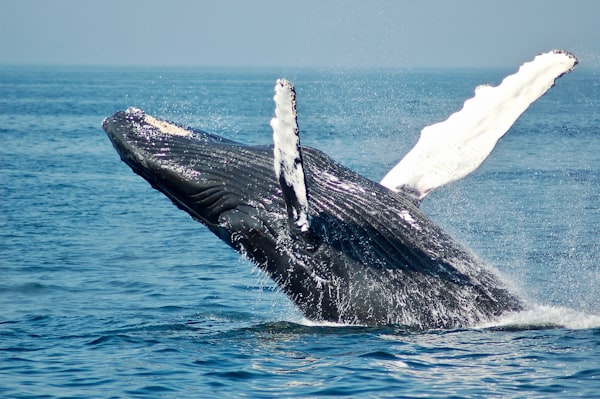
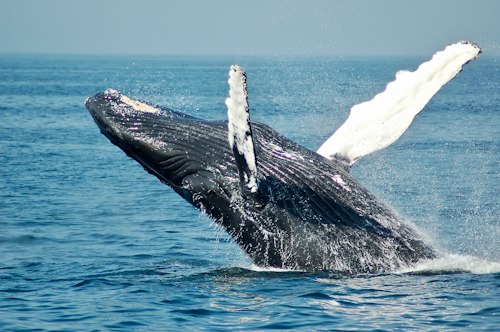
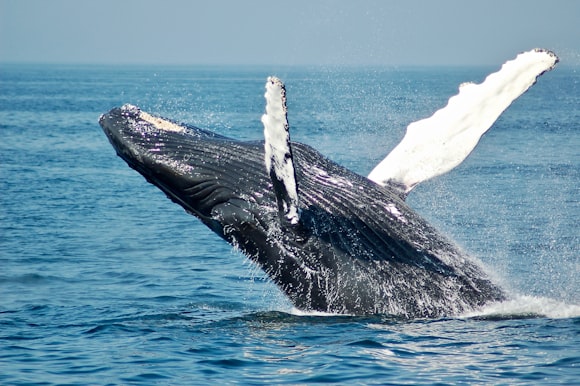
Full breach — humpbacks regularly launch their entire 40-tonne body from the water
Tail fluke before deep dive — each fluke pattern is unique, like a fingerprint
Close encounter — Hervey Bay humpbacks regularly approach vessels deliberately
Hervey Bay — calm protected waters create optimal conditions for encounters
Mother and calf — southward migration offers the most intimate encounters
The Science
Understanding Australia's Whale Migration
Australia's whale watching season is governed by one of the animal kingdom's most extraordinary phenomena — the annual round-trip migration of humpback whales between Antarctic feeding grounds and warm tropical breeding waters. This journey covers approximately 10,000 kilometres each way and creates two distinct watching windows with different characteristics.
The northward migration (May to August) sees whales travelling with purpose toward tropical breeding grounds. Movement is relatively efficient, with less time spent at surface level and fewer extended resting or socialising behaviours. Sightings occur, but encounters tend to be briefer and more transitory.
The southward migration (August to November) is widely considered superior for whale watching. Mother-calf pairs travel more slowly — calves are still building strength and developing behaviours — and frequently rest in protected bays and coastal embayments for extended periods. Calf behaviour becomes increasingly playful and acrobatic as the migration progresses: breaching, pec-slapping, tail-lobbing, and spy-hopping occur with far greater frequency. This is the season when Hervey Bay achieves its extraordinary reputation for whale encounters.
Conservation milestone: Australia's humpback whale population has recovered from fewer than 500 individuals in the 1960s to over 40,000 today — one of conservation's great success stories, made possible by the cessation of commercial whaling and strong marine protection legislation. Each whale you encounter represents this extraordinary recovery.
What You'll See
Whale Species in Australian Waters
Humpbacks dominate Australia's whale watching scene by volume, but our waters host a remarkable diversity of cetacean species. Understanding the range helps you choose destinations and seasons that align with the specific encounters you're hoping for.
Species
Primary Season
Best Locations
Typical Behaviour
Status
Humpback Whale
May–November
East & West Coast, Hervey Bay, Gold Coast, Byron Bay
Insider tip: If you specifically want to see southern right whales — a different and equally extraordinary experience to humpback watching — plan a separate trip to Albany (Western Australia) or the Head of Bight (South Australia) between July and October. These locations specialise in southern right encounters at close range from shore or vessel and offer a distinctly different character to the east coast humpback season.
Where to Go
Premier Whale Watching Destinations
Australia's whale watching destinations span the continent's entire coastline — from tropical Queensland to the rugged southern coast of Western Australia. These seven locations represent the country's best and most diverse whale watching experiences, each offering something distinctly different.
🌊 World's Best
Queensland · Fraser Coast · Whale Watching Capital
Hervey Bay
The gold standard — calm protected waters, intimate encounters, and the world's highest interaction rates
Hervey Bay is internationally recognised as Australia's whale watching capital, and arguably one of the world's premier locations for close humpback encounters. The sheltered waters between Fraser Island and the Queensland mainland create a natural amphitheatre where southward-migrating humpbacks — particularly mothers with calves — stop to rest for days at a time. This pause behaviour, absent in more exposed coastal locations, transforms the Hervey Bay experience from whale sighting to whale watching in its truest sense.
The whales here exhibit a distinctive "mugging" behaviour — approaching vessels deliberately from below, spy-hopping to observe passengers, rolling alongside the hull, and remaining in contact for up to several hours. Operators regularly report 98% sighting success during peak season (August–October), and the sheltered conditions mean even passengers prone to seasickness can participate comfortably. Hervey Bay is the definitive Australian whale watching experience.
Peak SeasonAugust–October
Tour DurationHalf-day or full-day
Best ForIntimate encounters, families
Special FeatureMugging behaviour — whales approach boats
Resort convenience meets peak whale season — departing minutes from Australia's most visited beach strip
The Gold Coast's whale watching season runs June through November, aligning perfectly with Queensland's pleasant dry-season winter. Tours depart from Main Beach and the Gold Coast Seaway, with humpbacks passing through concentrated channel waters just minutes from shore. The combination of calm winter conditions, short vessel transfer time, and dense whale traffic makes the Gold Coast one of Australia's most accessible whale watching destinations — particularly valuable for visitors who don't want to build a multi-day Fraser Coast itinerary.
Gold Coast headlands — Burleigh Heads, Point Danger, and Greenmount — provide outstanding free land-based whale watching from elevated vantage points. From late June onwards, it's common to spot multiple spouts from a single headland viewing position without booking any tour at all. For those combining beach holidays with whale watching, the Gold Coast offers the most efficient integration of both.
Peak SeasonJuly–October
Tour Duration3–4 hours
Best ForAccessibility, land-based viewing
Special FeatureFree headland viewing from Burleigh Heads
From Main BeachShort TransfersHeadland ViewingResort Combine
Gold Coast
Northern NSW
Northern NSW · Australia's Most Easterly Point
Byron Bay
Australia's best land-based whale watching — Cape Byron Lighthouse at eye level with migrating humpbacks
Cape Byron Lighthouse sits atop a headland at Australia's most easterly point, creating an elevated vantage overlooking ocean that whales pass within close range. During migration season, the lighthouse walk is widely regarded as the country's best land-based whale watching experience — no tour boat required, no seasickness possible, and the combination of elevated perspective with morning light produces exceptional photography conditions for capturing surface activity.
Byron's particular strength is the convergence of marine species: dolphins are present year-round in the bay, sea turtles surface regularly, manta rays are visible in summer, and migrating humpbacks dominate from June through October. Small-vessel whale watching tours from Byron provide intimate on-water encounters. The combination of the lighthouse walk and a morning cruise represents one of the most complete whale watching days available anywhere on the east coast.
Peak SeasonJune–October
Tour Duration2–3 hours boat + lighthouse walk
Best ForPhotography, land-based viewing
Special FeatureAustralia's best headland viewpoint
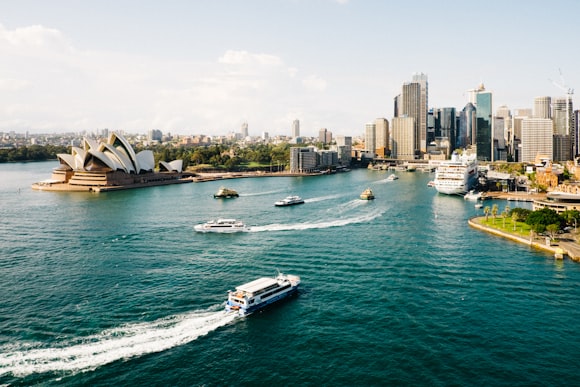
Humpbacks against the Opera House skyline — the most spectacular urban wildlife encounter in the world
Sydney offers what is possibly the world's most dramatic juxtaposition of wildlife and cityscape: humpback whales breaching in front of the Opera House and Harbour Bridge. Tours depart from Circular Quay and Darling Harbour, making this Australia's most logistically accessible whale watching — no drive to a regional port, no early morning departure from an unfamiliar town. The whales pass remarkably close to Sydney's eastern headlands, with excellent shore viewing from North Head, South Head, and The Gap at Watson's Bay.
Sydney's season runs from May through November, offering the longest window of any eastern mainland city. The city's extended winter provides good conditions from early in the season, and the density of migration traffic means multiple encounters per tour are common during peak months. For visitors whose Australia itinerary is Sydney-centric, a whale watching day cruise from Circular Quay is one of the most efficient ways to add a profound wildlife encounter without leaving the city.
Peak SeasonMay–November
Tour Duration3.5–5 hours
Best ForUrban visitors, city-trip combines
Special FeatureOpera House + whale — iconic backdrop
One of the world's rarest wildlife encounters — entering the water with humpback whales under strict permits
Ningaloo Reef holds one of the world's very few permits allowing licensed operators to facilitate in-water encounters with humpback whales. These carefully regulated programs enable snorkellers to enter the water near resting whales and calves under strict protocols — approaching slowly, no sudden movements, maintaining minimum distances, and exiting on the guide's instruction. The encounters typically last 5–15 minutes and are described universally by participants as life-defining experiences.
Tours are limited in number per whale group and are genuinely in high demand — booking 3–6 months ahead is strongly recommended for August to October. The same operators also run whale shark swimming tours (March to July) and manta ray experiences year-round, making Ningaloo the planet's most concentrated location for swimming with large marine megafauna. The remote Exmouth coastline setting — pristine, uncrowded, and extraordinary — adds immeasurably to the experience.
Swim SeasonAugust–October
Book Ahead3–6 months minimum
Best ForBucket-list, serious wildlife seekers
AlsoWhale sharks Mar–Jul, manta rays year-round
In-Water PermittedLimited NumbersRemote LocationWhale Sharks Too
Western Australia · Great Southern
Albany — Southern Right Whales
The southern right whale capital of Australia — a completely different species and a completely different experience
Albany's King George Sound serves as critical calving habitat for southern right whales, which arrive annually to breed in the region's sheltered bays. These whales — distinguishable by their lack of a dorsal fin, white callosities on their heads, and heavier, rounder bodies than humpbacks — exhibit very different behaviour. They are slower-moving, spend extended periods close to shore, and frequently rest with calves in water shallow enough to observe from land.
The historic whaling station at Albany has been converted into a museum — the last land-based whaling station to operate in Australia, closed in 1978. Visiting it provides powerful context for the transformation from industry to conservation and makes Albany's whale watching story one of Australia's most resonant wildlife experiences. The town itself is beautifully situated on a stunning harbour, making it a rewarding destination beyond whale season. Southern right whales routinely approach within metres of shore at Frenchman Bay.
Peak SeasonJuly–October
SpeciesSouthern right whale
Best ForSpecialist, history, land-based
MuseumWhale World — original whaling station
Southern Right WhalesShore ViewingWhale World MuseumSpecialist Experience
Western Australia
I have guided wildlife tours on four continents. Nothing — not African safari, not Galápagos, not the Serengeti — has produced the response in passengers that a humpback whale approaching our hull deliberately and looking up at the humans looking down does. It changes people.
— Cooee Tours Wildlife Guide · Queensland Whale Season
When to Go
Seasonal Calendar by Region
Australia's whale watching season varies significantly by region, species, and the type of encounter you're seeking. The following guide covers the optimal windows for each major destination and the specific whale behaviours you can expect at different points in the migration cycle.
🐋 East Coast — Humpback Season
Full SeasonMay through November
Northward Migration (May–Jul)Whales travelling efficiently; sightings occur but briefer interactions. Good for early-season tours; less calf activity.
Peak Season (Aug–Oct)Southward migration with mother-calf pairs. Most playful behaviour — breaching, pec-slapping, tail-lobbing. Highest sighting rates. Hervey Bay at its absolute best.
Late Season (Nov)Tail end of migration passing Sydney and southern NSW. Still excellent on the Gold Coast through early November.
🌊 Queensland — Region Detail
Gold CoastJune–November. Peak July–October. Best free land-based viewing from Burleigh Heads headland from mid-June. Tours operate from Main Beach.
Hervey BayJuly–November. Peak August–October for mugging behaviour and mother-calf encounters. Book tours well ahead for September.
Cairns / Tropical NorthJune–September. Northward migrants passing; some operators run tours but encounters are typically briefer than Hervey Bay.
🌅 Western Australia
Ningaloo — Humpback SwimAugust–October for licensed in-water encounters. Advance booking essential. Whale sharks March–July in same location.
Albany — Southern RightsJuly–October for calving season in King George Sound. Peak August–September for mother-calf interactions close to shore.
Bremer Bay — OrcaJanuary–April for orca predation events in deep water — a specialist pelagic experience unlike anything else in Australia.
🏔️ Southern Australia & Tasmania
Head of Bight, SAJune–October for southern right whale aggregations at cliff-top viewing platforms. Peak July–August. Free shore access.
Victoria (Portland, Warrnambool)June–October for southern rights. Portland Bay is one of Victoria's most reliable southern right locations.
TasmaniaJune–October for humpbacks and southern rights. Blue whales possible November–May in southern feeding grounds for dedicated pelagic tours.
📅
Best Single MonthSeptember on the east coast — highest whale numbers, peak calf interaction rates, and the best combination of weather and visibility on Queensland tours.
🌅
Best Time of DayMorning departures are preferred — calmer sea conditions, better photography light, and generally more active whale surface behaviour in the first half of the day.
📸
Photography TimingGolden hour (first hour after sunrise) produces the most dramatic breach photography — low raking light across the ocean surface, no harsh midday glare.
Booking Smart
Choosing the Right Whale Watching Tour
Australia's whale watching industry encompasses hundreds of operators from solo-vessel boutique experiences to large commercial fleet departures. The quality varies significantly, and your choice of operator determines more of your experience than your choice of destination. These are the factors that matter most.
🎓
AccreditationLook for operators accredited by Ecotourism Australia and displaying compliance with the Australian National Guidelines for Whale and Dolphin Watching. Accreditation means independently audited approach protocols and wildlife welfare standards.
🚢
Vessel SizeSmaller vessels (under 30 passengers) offer more intimate experiences and greater manoeuvrability. Larger vessels carry more stability in choppier conditions. For Hervey Bay's calm waters, smaller operators offer the best encounters. For offshore Sydney tours, a stable mid-size vessel is preferable.
🔬
Onboard NaturalistThe presence of a qualified marine biologist or naturalist guide dramatically elevates the experience — interpreting behaviour in real time, identifying individual whales by fluke markings, and providing context that transforms a sighting into genuine wildlife education.
✅
Sighting GuaranteeReputable operators in prime destinations offer a free return trip if no whales are sighted. During peak season (Aug–Oct) in Hervey Bay, the guarantee is rarely triggered — but its existence signals operator confidence and proper wildlife protocols.
📅
Departure TimeMorning departures (8–9am) consistently outperform afternoon tours for whale encounter frequency, calmness of sea conditions, and photography light. If an operator offers both, book the morning.
🌊
Season TimingWithin the broader season, the southward migration window (August to October) offers the best encounters by a significant margin — mother-calf pairs resting in sheltered bays produce the longest and most interactive encounters of any whale watching season.
Half-day vs. full-day: Half-day tours (3–4 hours) provide 2–3 hours on the water and are sufficient for most encounters — whales are typically found within 20–40 minutes of departure in prime season. Full-day tours venture further offshore, increasing the range of potential encounters and often including additional marine species. For families with young children, half-day tours are generally more manageable.
Come Prepared
What to Bring on a Whale Watching Tour
The right preparation converts a whale watching tour from an uncomfortable novelty into a deeply immersive experience. These are the essentials, in order of importance.
🎒 Essential Items
Seasickness MedicationTake 30–60 minutes before boarding, not when you feel ill — by then it's too late. Kwells (hyoscine) or Travacalm are widely available in Australian pharmacies and are effective for 4–6 hours. Wristbands can supplement but rarely replace medication for offshore conditions.
Sun ProtectionOcean glare dramatically amplifies UV exposure. SPF 50+ sunscreen (reef-safe formulas where possible), polarised UV-blocking sunglasses, and a wide-brimmed hat are essential. Reapply sunscreen every 90 minutes — saltwater spray accelerates depletion.
Warm LayersEven in Queensland winter (June–August), ocean temperatures are significantly cooler than shore temperatures, and vessel speed creates additional wind chill. Pack a windproof jacket and an extra layer — you'll almost certainly use both.
📷 Photography Essentials
Camera with Telephoto200–400mm equivalent focal length is ideal for capturing distant breaches. Modern smartphone cameras with optical zoom (particularly iPhone 15 Pro and Pixel 8 Pro) can produce excellent results in good light. A 1/2000s or faster shutter speed is needed to freeze breach action.
Extra Batteries & CardsExcitement reliably leads to more photos than anticipated. Cold ocean air and constant shooting drain camera batteries quickly — carry at least one spare battery and a portable power bank for smartphones.
Waterproof ProtectionA dry bag or waterproof phone case is essential — spray is constant on whale watching vessels and a sudden breach 15 metres from the boat creates a significant wave splash zone. One wet phone ruins more whale watching memories than any other factor.
🥗 Comfort & Food
Light Meal Before DepartureBoard with something in your stomach — neither an empty stomach nor a heavy meal is ideal for ocean conditions. A light breakfast 1–2 hours before departure is optimal. Some operators provide morning tea; check before buying on the dock.
HydrationDehydration accelerates motion sickness and reduces energy. Carry a refillable water bottle — most tour vessels provide drinking water but not always in the quantity needed for a 4–5 hour half-day tour in warm conditions.
Light SnacksFruit, crackers, and nuts are the best choices on board — avoid greasy or strongly-scented food. Your guide will likely remind you of this, but knowing in advance saves a wasted purchase on the dock.
🐋 Ningaloo Swim Specifics
Swimwear & WetsuitBring a full swimsuit — wetsuit or stinger suit (3mm minimum) is recommended for Ningaloo water temperatures in August–October (24–26°C). Most operators provide wetsuits but confirm before booking as sizing availability varies.
Snorkelling GearPersonal prescription masks, if needed, should be brought from home — rental availability at remote Exmouth/Coral Bay operators varies. All other snorkelling equipment is typically included in tour price.
Underwater CameraGoPro or equivalent in a floatation mount is ideal for in-water whale encounters. Handheld cameras are prone to being dropped in the excitement of a close encounter — use a secure wrist or body mount.
Marine Stewardship
Conservation & Responsible Whale Watching
Australia's whale watching industry exists because of one of conservation's great success stories. Humpback whale numbers on the east coast fell to fewer than 500 individuals by the 1960s as a direct result of commercial hunting. The cessation of Australian commercial whaling in 1963, combined with international protection from 1966 onwards, enabled a recovery that took over 50 years and reached the current population of approximately 40,000. Every whale you encounter on a tour represents this extraordinary collective achievement.
The sustainability of whale watching depends entirely on operators and passengers maintaining strict approach protocols. Chronic disturbance — vessels that approach too close, too fast, or too often — has been linked to increased stress hormones, altered dive patterns, reduced nursing frequency in calves, and long-term avoidance of specific coastal areas. Understanding the regulations is part of responsible participation in wildlife tourism.
⚖️ Australian Legal Requirements
Minimum Distances100 metres for most whale species. 300 metres for mother-calf pairs. Vessels must never position directly ahead of a whale's direction of travel.
Vessel LimitsNo more than three vessels may be within 300 metres of any single whale group simultaneously. This prevents mob-viewing scenarios that create genuine stress.
Speed Restriction6 knots maximum within 300 metres of any whale. Approach must be gradual and from the side — never from ahead, behind, or above (relevant for aerial drones, which require separate permits).
Swimming ProhibitionSwimming with whales is prohibited throughout Australia except at specifically permitted locations and must always involve a licensed operator.
🌿 Choosing Conservation-Led Operators
Ecotourism AustraliaLook for the Ecotourism Australia "Advanced Ecotourism" or "Nature Tourism" certification logo. These operators fund independent audits, contribute to research programs, and commit to ongoing staff training on marine mammal behaviour.
Research ContributionSeveral premium operators partner with universities and research programs — passengers are invited to assist with photo-identification catalogues and behavioural data collection. These tours are genuinely valuable citizen science programs.
Whale Rescue NetworkORCA Australia operates a 24-hour entanglement and stranding response line (1300 ORCAS). Responsible operators are registered with this network and carry basic disentanglement gear onboard.
How you can help beyond the tour: Reduce single-use plastics — marine debris accounts for significant whale entanglement and ingestion fatality. Participate in beach cleanups when visiting coastal areas. Support organisations including WWF Australia's Cetacean Conservation Program and the Australian Marine Conservation Society. If you observe vessel approach violations or harassment of whales during a tour, report it to the Department of Climate Change, Energy, the Environment and Water on 1800 523 537.
Planning Your Trip
Sample Whale Watching Itineraries
Whale watching integrates naturally with broader Australian travel itineraries. These three frameworks represent the most popular and logistically efficient combinations, each building a whale encounter into a larger Queensland or east coast experience.
🐋 3-Day Hervey Bay Dedicated
Day 1Fly into Hervey Bay or drive from Brisbane (3.5hrs). Afternoon orientation tour of town and esplanade. Sunset at Urangan Pier — often visible spouts offshore.
Day 2Full-day whale watching tour (depart 8am). Afternoon rest. Evening visit to the Whale Heritage Site discovery centre.
Day 3Half-day morning whale watching (repeat, different encounter). Afternoon drive to Rainbow Beach or K'gari (Fraser Island) ferry for overnight extension.
🌊 7-Day Queensland Circuit
Days 1–2Gold Coast: whale watching tour from Main Beach + Burleigh Heads headland free viewing. Combine with beach days and hinterland day trip.
Days 3–5Drive or fly to Hervey Bay. Two whale watching tours (full-day + half-day). Fraser Island day trip or camping extension available.
Days 6–7Continue north to Airlie Beach or Cairns. Snorkelling on the Great Barrier Reef — excellent June–October conditions coincide with whale season.
✈️ Sydney Day-Trip Option
MorningDepart Circular Quay 9am on a whale watching cruise. 3.5–5 hour tour with onboard naturalist. Return to Circular Quay by 2–2:30pm.
AfternoonWalk to Sydney Opera House forecourt — a 15-minute walk from the wharf. Continue to The Rocks for lunch or catch the Manly Ferry for coastal headland walking.
EveningOptional: Drive to North Head or South Head at sunset for additional free shore-based whale viewing against the city lights backdrop.
Real Encounters
What Whale Watchers Say
★★★★★
The Hervey Bay tour was simply one of the most extraordinary experiences of my life. A mother and calf spent over two hours alongside our vessel — the calf kept approaching within 5 metres, spy-hopping to look at us, then diving back to its mother. Our naturalist guide explained every behaviour in real time. I've been on safaris in Kenya and the Amazon. This was better.
— James W., United Kingdom · Hervey Bay Full-Day Tour, September 2025
★★★★★
We combined the Gold Coast whale tour with two days at the beach — perfect winter holiday. Three humpbacks surfaced within 30 metres of the boat during our tour and one breached completely out of the water twice. My children (9 and 12) still talk about it four months later. Guides were exceptional, explained everything, and genuinely seemed as thrilled as we were.
— Priya & Rohan K., Singapore · Gold Coast Winter Whale Tour, July 2025
★★★★★
Ningaloo was the reason I flew from the UK to Australia. In-water with a mother and calf humpback for 12 minutes — they circled us three times. The scale of a humpback underwater, the eye looking at you, the low-frequency sound in your chest when it vocalises nearby — I have no frame of reference for it. It will be the best thing I ever do.
— Sarah T., United Kingdom · Ningaloo Swim-with-Whales, September 2025
★★★★★
Byron Bay lighthouse walk at 7am during migration was breathtaking — seven distinct spout plumes visible simultaneously from the headland, no tour boat needed, completely free. Then the afternoon vessel tour gave us our breach and pec-slap moments up close. The combination of land and water on the same day is genuinely the perfect whale watching structure.
— Marcus L., Germany · Byron Bay Lighthouse + Boat Combo, August 2025
Common Questions
Frequently Asked Questions
When is whale season in Australia?+
Australia's primary whale watching season runs from May to November. East coast humpback migration peaks between July and October, with the southward migration (August to November) offering the best encounters due to slower-moving mother-calf pairs. The Gold Coast sees humpbacks from June through November. Western Australia's season extends June through December. Southern right whales appear along the southern coast between June and October. The single best month, balancing whale density, calf activity, and weather, is September.
Where is the best place to watch whales in Australia?+
Hervey Bay (Queensland) is internationally recognised as Australia's whale watching capital, offering the most reliable and intimate humpback encounters in the world. Sheltered waters between Fraser Island and the mainland create conditions where mother-calf pairs stop and rest for days, producing 98% peak-season sighting rates and "mugging" behaviour where whales approach vessels deliberately. For accessibility without travel, Sydney offers excellent conditions from Circular Quay. For the bucket-list swim experience, Ningaloo Reef (WA) is the only location in Australia with licensed in-water permits.
Can you swim with whales in Australia?+
Swimming with humpback whales is only permitted at Ningaloo Reef in Western Australia under strictly licensed operator programs. Dwarf minke whales can also be encountered in-water at specific permitted locations on the Great Barrier Reef's Ribbon Reefs between June and August. All in-water whale interactions throughout Australia require a licensed operator and must follow federal and state approach distance protocols. Self-initiated swimming with whales outside licensed programs is illegal and carries significant penalties. Ningaloo swim experiences are in very high demand — book 3 to 6 months in advance for peak season (August–October).
What whale species can I see in Australia?+
Australia's waters host humpback whales (most common, east and west coasts, May–November), southern right whales (southern coast June–October — Albany, Head of Bight), minke and dwarf minke whales (Great Barrier Reef, June–August), blue whales (southern waters, specialist pelagic tours, November–May), orcas (Bremer Bay WA January–April for predation events; year-round in southern waters), and occasionally sperm whales offshore. Humpbacks account for the vast majority of encounters during the migration season and are the species you'll almost certainly see on any east coast tour.
Are whale watching tours family-friendly?+
Yes — most Australian whale watching tours are excellent for families with children. Operators provide life jackets and safety briefings, and many have indoor cabin areas that provide shelter and reduce seasickness risk for younger passengers. Naturalist guides typically engage children directly, using identification techniques, hydrophone sounds, and interactive materials. Minimum age requirements vary by operator — some set a minimum of 3 to 5 years. The Gold Coast and Hervey Bay operations are particularly well-suited to families because of their calm water conditions, short departure distances, and high sighting success rates that minimise the patience required from younger passengers.
What if I get seasick?+
Motion sickness is manageable with proper preparation. Take hyoscine (Kwells) or meclizine (Travacalm) 30–60 minutes before boarding — not when symptoms begin. Choose Hervey Bay or the Gold Coast for the calmest conditions, as sheltered waters minimise vessel motion. On board, stay on the outer deck and focus on the horizon. Avoid reading, phone screens, or enclosed cabin spaces in rough weather. Avoid greasy or heavily-scented food within 2 hours of boarding. Ginger in any form has modest but genuine anti-nausea effects as a supplement to medication. If you're highly motion-sensitive, consider a land-based viewing option at Cape Byron Lighthouse or Gold Coast headlands as a no-risk alternative.
Ready to Encounter Australia's Whales?
Private tours. Expert marine naturalists. Departure from Gold Coast, Brisbane, and Cairns. From Hervey Bay's world-famous encounters to Byron Bay's lighthouse-and-boat combination — we design the experience around your season and your group.