Book Now

🌊 Coastal Wonders

Exploring Earth's Most Magnificent Shorelines and Marine Ecosystems

Where Land Meets Ocean: A Journey Through Nature's Masterpieces

Our planet's coastlines represent some of the most dynamic, diverse, and breathtaking environments on Earth. From towering cliffs carved by relentless waves to vibrant coral gardens teeming with life, coastal wonders showcase nature's artistic prowess and ecological complexity.

🏖️ Featured Coastal Tours

Embark on unforgettable journeys to the world's most spectacular coastal destinations. Our curated tours combine adventure, education, and conservation, offering intimate experiences with nature's masterpieces.

🌿 Sustainable Tourism Commitment: All our tours follow responsible tourism practices, supporting local communities and contributing to marine conservation efforts. We partner with certified eco-operators and limit group sizes to minimize environmental impact.

The Majesty of Coastal Environments

Coastal regions occupy less than 10% of the Earth's surface, yet they contain some of the planet's most productive and biodiverse ecosystems. These transitional zones between terrestrial and marine environments create unique habitats that support extraordinary arrays of life forms, from microscopic plankton to massive whales, and from hardy coastal plants to intricate coral polyps.

The interaction between land and sea has sculpted our coastlines over millions of years, creating geological masterpieces that captivate scientists and travelers alike. Wave action, tidal forces, wind erosion, and biological processes work in concert to shape these dynamic landscapes, producing everything from gentle sandy beaches to dramatic sea stacks and hidden grottos.

372,000 Miles of Coastline Globally
80% Of Marine Pollution From Land
3 Billion People Depend on Coastal Resources

Understanding and appreciating coastal wonders is not merely an aesthetic pursuit—it's essential for recognizing the critical role these environments play in global ecology, climate regulation, and human welfare. Coastal ecosystems provide invaluable services including storm protection, carbon sequestration, fisheries support, and tourism opportunities that sustain millions of livelihoods worldwide.

Spectacular Geological Formations

The Sculptors of Stone: How Coastal Landscapes Form

The coastal landscapes we admire today are products of millions of years of geological activity combined with the relentless work of wind, waves, and weather. Understanding these processes helps us appreciate the transient nature of coastlines and the constant state of change that defines these environments.

Wave erosion stands as the primary architect of coastal geology. When waves crash against shorelines with tremendous force—sometimes exceeding several tons per square meter—they compress air in rock crevices, gradually fracturing even the hardest stone. This hydraulic action, combined with the abrasive effect of sand and pebbles carried by waves, steadily wears away coastal rock formations.

Sea Cliffs and Headlands

Towering vertical rock faces formed where resistant rock meets the ocean. These dramatic formations showcase layers of geological history, with different strata revealing ancient environments and climate conditions.

Sea Arches and Caves

Created when waves exploit weaknesses in coastal rock, carving through headlands to form magnificent natural bridges. Over time, arches may collapse, leaving isolated sea stacks standing offshore.

Blowholes and Grottos

Formed when wave action creates underwater tunnels that connect to the surface, producing spectacular water spouts when waves surge through these natural vents.

Tidal Pools

Rocky depressions that retain seawater during low tide, creating miniature marine ecosystems where specialized organisms have adapted to dramatic environmental fluctuations.

Iconic Coastal Geological Wonders

Around the world, certain coastal formations have achieved legendary status for their beauty, scale, or uniqueness. The White Cliffs of Dover in England rise majestically above the English Channel, their brilliant chalk faces composed of countless microscopic marine organisms that lived during the Cretaceous period.

The Giant's Causeway in Northern Ireland presents an entirely different geological spectacle. This UNESCO World Heritage site features approximately 40,000 interlocking basalt columns, created by ancient volcanic activity some 60 million years ago. When molten lava cooled and contracted, it fractured into predominantly hexagonal columns, creating a landscape so geometrically precise it appears almost artificial.

Did You Know? Coastal erosion can occur at dramatically different rates depending on rock type and wave exposure. Soft clay cliffs might retreat several feet per year, while hard granite coasts may change imperceptibly over human lifetimes.

Diverse Marine Ecosystems of the Coast

The Intertidal Zone: Life Between Worlds

The intertidal zone—that strip of coastline alternately submerged and exposed by tides—represents one of Earth's most challenging yet productive habitats. Organisms here must cope with dramatic environmental fluctuations including temperature extremes, desiccation during low tide, wave impact, and varying salinity levels.

Kelp Forests: Underwater Cathedrals

In temperate coastal waters worldwide, kelp forests create some of the ocean's most productive and structurally complex ecosystems. These massive brown algae can grow over two feet per day under optimal conditions, reaching heights exceeding 100 feet to form dense underwater canopies.

The ecological importance of kelp forests extends far beyond the organisms directly inhabiting them. Kelp provides critical habitat for commercially important fish species, supports sea otter populations, and exports nutrients to adjacent ecosystems through drift kelp.

Seagrass Meadows: Coastal Nurseries

Seagrasses represent a remarkable evolutionary achievement—flowering plants that re-colonized marine environments after their ancestors emerged onto land millions of years ago. These marine angiosperms form extensive underwater meadows in shallow coastal waters, providing ecosystem services comparable to terrestrial forests.

Seagrass meadows rank among Earth's most productive ecosystems, supporting biodiversity comparable to coral reefs and rainforests. They serve as nursery habitats for commercially important fish and shellfish species, stabilize seafloor sediments, improve water quality through filtration, and sequester carbon at rates exceeding most terrestrial ecosystems.

Coral Reefs: Rainforests of the Sea

The Architecture of Coral Colonies

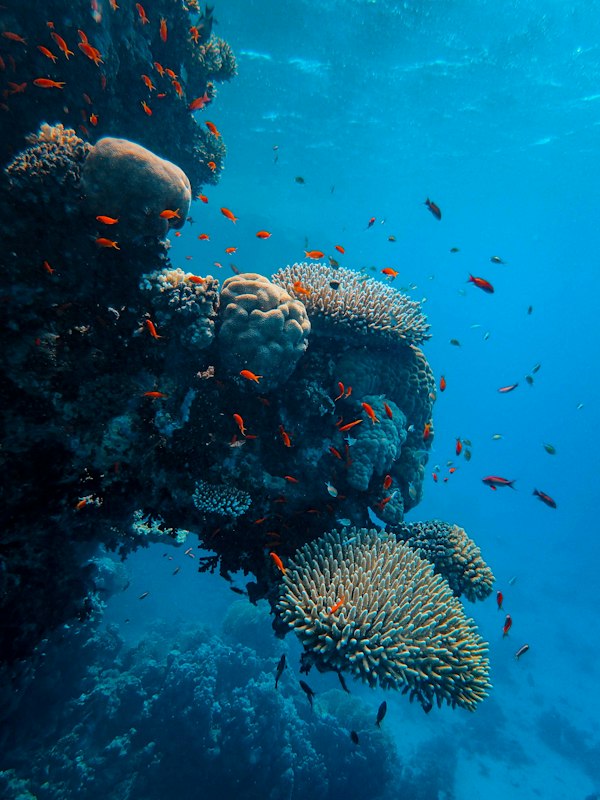
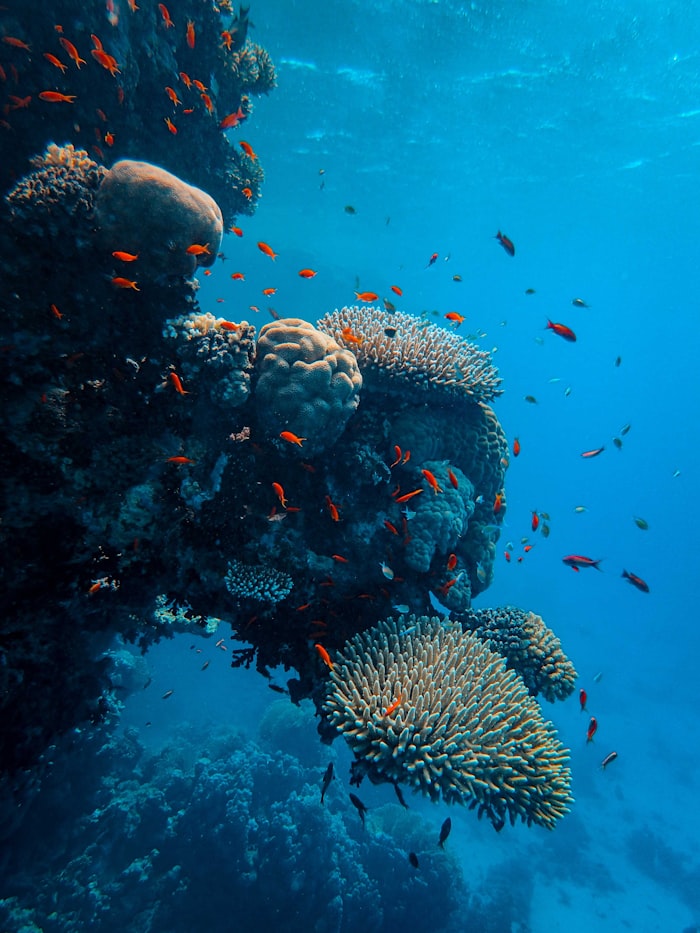
Coral reefs constitute the largest living structures on Earth, visible even from space, yet are built by tiny colonial animals called polyps. Each coral polyp, typically measuring just a few millimeters across, secretes a calcium carbonate skeleton that forms the reef structure.

The success of reef-building corals stems from their symbiotic relationship with microscopic algae called zooxanthellae living within coral tissues. These algae photosynthesize, providing corals with up to 90% of their energy requirements while benefiting from the protected environment and access to coral waste products.

Reef Biodiversity and Ecological Relationships

Though covering less than 0.1% of the ocean floor, coral reefs support approximately 25% of all marine species—a biodiversity concentration rivaling tropical rainforests. This extraordinary species richness results from the reefs' complex physical structure, high primary productivity, and the evolutionary time available for species diversification.

Threats to Coral Reefs and Conservation Efforts

Coral reefs face an unprecedented combination of stressors threatening their survival worldwide. Ocean warming triggers coral bleaching—the breakdown of the coral-zooxanthellae symbiosis—leaving corals without their primary energy source. Ocean acidification reduces the availability of carbonate ions needed for coral skeleton formation.

Conservation initiatives are working to address these threats through multiple approaches. Marine protected areas restrict damaging activities, allowing degraded reefs to recover. Coral restoration programs grow coral fragments in nurseries before transplanting them to damaged reefs.

Remarkable Coastal Wildlife

Seabirds: Masters of Coast and Ocean

Coastal environments support extraordinary concentrations of seabirds, with some colonies numbering in the millions. These birds display remarkable adaptations for marine life, including waterproof plumage, salt-excreting glands, and specialized feeding behaviors.

Coastal cliffs provide critical nesting habitat for many seabird species, offering protection from terrestrial predators. Puffins excavate burrows in clifftop soils, murres nest on narrow ledges in dense colonies, and albatrosses select exposed promontories that facilitate takeoff for their long wings.

Marine Mammals: Intelligence and Adaptation

Coastal waters host diverse marine mammal species that inspire wonder through their intelligence, complex behaviors, and remarkable adaptations to aquatic life. Sea otters, the smallest marine mammals, inhabit kelp forests where they play crucial ecological roles by controlling sea urchin populations.

Cetaceans—whales and dolphins—frequent coastal waters for feeding and breeding. Gray whales undertake epic migrations along coastlines between Arctic feeding grounds and tropical breeding lagoons. Humpback whales return to specific coastal regions annually to breed, entertaining observers with breaching displays and haunting songs.

Coastal Reptiles and Amphibians

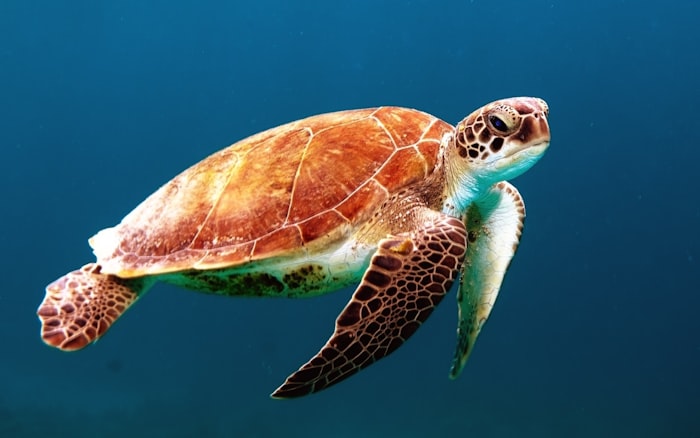
Marine reptiles include remarkable species adapted to coastal life. Sea turtles epitomize the connection between land and sea, spending nearly their entire lives in the ocean but returning to terrestrial beaches to nest. Female turtles display extraordinary site fidelity, often returning to the same beaches where they hatched decades earlier.

World's Most Spectacular Coastal Destinations

The Great Barrier Reef, Australia

The Great Barrier Reef stands as the world's largest coral reef system, stretching over 2,300 kilometers along Australia's Queensland coast. Comprising nearly 3,000 individual reefs and 900 islands, this UNESCO World Heritage site supports staggering biodiversity including over 1,500 fish species, 400 coral species, and countless invertebrates.

Visitors can snorkel or dive among kaleidoscopic coral gardens, swim with sea turtles and reef sharks, and witness the annual coral spawning phenomenon. The reef's islands range from sandy cays to continental islands with rainforest-covered peaks.

The Amalfi Coast, Italy

Italy's Amalfi Coast epitomizes Mediterranean coastal beauty, where dramatic cliffs plunge into azure waters and colorful villages cling to mountainsides. This UNESCO World Heritage coastline features terraced lemon groves, hidden coves, and winding coastal roads offering breathtaking vistas at every turn.

Galápagos Islands, Ecuador

The Galápagos archipelago offers unparalleled opportunities to observe wildlife evolution in action. These volcanic islands served as Charles Darwin's living laboratory, where observations of finch diversity and other endemic species helped formulate the theory of evolution by natural selection.

Norwegian Fjords

Norway's fjords rank among Earth's most spectacular geological features—deep valleys carved by massive glaciers during ice ages, subsequently flooded by rising seas to create dramatic waterways penetrating far inland. Towering cliffs rise directly from deep waters, and waterfalls cascade hundreds of meters down sheer rock faces.

Ha Long Bay, Vietnam

Ha Long Bay's surreal seascape of nearly 2,000 limestone islands and islets rising from emerald waters creates one of Asia's most iconic coastal landscapes. This UNESCO World Heritage site features towering karst formations sculpted by erosion into fantastic shapes, their surfaces covered in tropical vegetation.

Big Sur, California

California's Big Sur coastline presents a rugged meeting of land and sea, where the Santa Lucia Mountains plunge dramatically into the Pacific Ocean. This wild, largely undeveloped stretch offers stunning vistas from Highway 1, ancient redwood groves, and abundant marine wildlife.

The Maldives

The Maldives archipelago consists of 26 natural atolls comprising over 1,000 coral islands. These low-lying islands showcase tropical island ecosystems at their finest, with powdery white sand beaches, crystal-clear lagoons, and vibrant coral reefs just offshore.

The Bay of Fundy, Canada

The Bay of Fundy experiences the world's highest tides, with water levels fluctuating up to 16 meters between high and low tide. This extreme tidal range creates unique ecosystems and geological features, including the famous Hopewell Rocks.

Conservation and Sustainable Management

The Imperative for Coastal Protection

Coastal environments face unprecedented pressures from human activities and climate change, making conservation efforts more critical than ever. Over 40% of the global human population lives within 100 kilometers of coastlines, creating intense development pressure on these fragile ecosystems.

The economic value of coastal ecosystems extends far beyond traditional measures. Beyond supporting fisheries and tourism, coastal environments provide storm protection worth billions of dollars annually. Mangrove forests, salt marshes, and coral reefs absorb wave energy and buffer communities from storm surge.

Conservation Fact: Protecting just 30% of coastal and marine areas could help preserve biodiversity while still allowing sustainable use of marine resources. Currently, less than 8% of global oceans receive significant protection.

Marine Protected Areas and Coastal Reserves

Marine protected areas (MPAs) represent a cornerstone strategy for coastal conservation, establishing zones where human activities are regulated to protect marine ecosystems. Effective MPAs demonstrate remarkable success in restoring degraded habitats, recovering depleted fish populations, and preserving biodiversity.

Community-Based Conservation and Indigenous Knowledge

Successful coastal conservation increasingly recognizes the importance of local communities and indigenous peoples who have sustainably managed coastal resources for generations. Traditional ecological knowledge offers valuable insights into ecosystem functioning, species behavior, and sustainable harvesting practices.

Restoration Ecology: Healing Damaged Coasts

Where coastal ecosystems have been degraded or destroyed, restoration ecology offers hope for recovery. Mangrove restoration projects have successfully replanted millions of trees in formerly cleared areas, restoring critical habitat and coastal protection.

Coral reef restoration has evolved from simple transplantation to sophisticated approaches including coral gardening, where fragments are grown in nurseries before outplanting to degraded reefs. Researchers explore assisted evolution techniques to develop heat-tolerant coral strains better able to survive warming oceans.

Ready to Explore Coastal Wonders?

Join Cooee Tours on an unforgettable journey to the world's most spectacular coastlines. Sustainable adventures await!

Book Your Adventure Today
↑