Where Milford Sound’s vertical walls plunge 350 metres into still water, two glaciers flow into temperate rainforest, and the world’s adventure capital sits on the luminous shore of a glacial lake ringed by the Remarkables.
The South Island contains more UNESCO World Heritage landscapes per square kilometre than almost any country on earth. Here is how to choose your circuit.
We’ve built Queenstown its own dedicated travel guide covering the Nevis Bungy, AJ Hackett’s three jump sites, NZONE skydiving over The Remarkables, the Shotover Jet, heli-skiing, and the Gibbston Valley wine country — plus complete 4, 5, and 7-day itineraries. If Queenstown is on your South Island circuit, read the full guide.
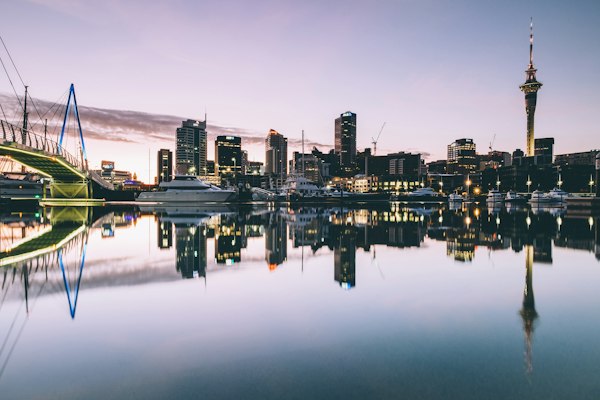
Adventure Capital · 2 tours + full guide
On the shores of Lake Wakatipu, framed by the Remarkables and the Cecil Peak — a glacial-carved lake town that has organised itself entirely around the proposition of doing things you were not sure you could survive. The world’s highest bungy (Nevis, 134m), the world’s most awarded tandem skydiving, the Shotover Jet through 3cm rock clearances at 90km/h, and the Milford Sound day tour as the essential South Island pilgrimage from its most visited base.
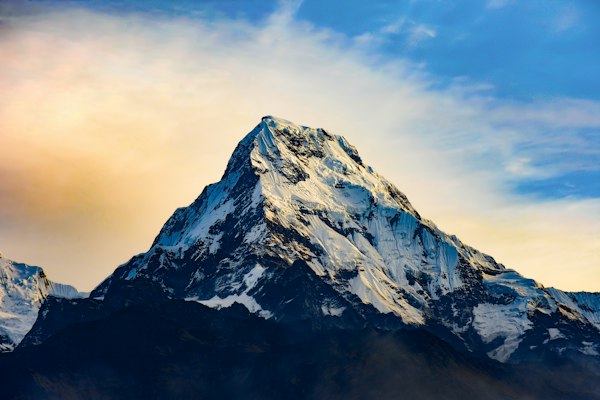
World Heritage Wilderness · 1 tour
Fiordland National Park — 1.25 million hectares, UNESCO World Heritage, the largest national park in New Zealand — contains Milford Sound (the “eighth wonder of the world” — Rudyard Kipling’s description, disputed but defensible) and Doubtful Sound (three times longer, ten times less visited, more wild). Mitre Peak (1,692m — the world’s highest sea-cliff, rising directly from the Milford Sound surface) and the permanent Stirling and Lady Bowen Falls complete the Milford picture. The Milford Track — 53.5km, 4 days, widely regarded as the world’s finest tramping route — begins at Glade Wharf at the head of Lake Te Anau and ends at Sandfly Point on Milford Sound.
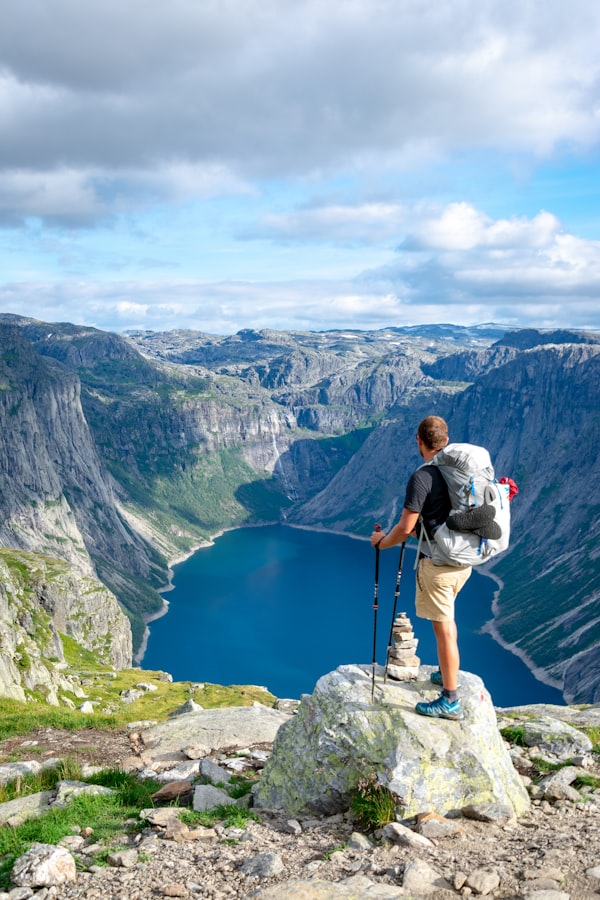
New Zealand’s Highest Peak · 1 tour
Aoraki / Mount Cook (3,724m — New Zealand’s highest peak, named for the Māori sky father Aoraki) rises above the Tasman Glacier — at 23km, the longest glacier in New Zealand and the largest in the Southern Alps. The Hooker Valley Track (10km return, 3hrs, largely flat — the most rewarding walk per effort-spent ratio in New Zealand, passing two glacial lakes and ending with Aoraki directly above and its reflection in Hooker Lake below) is the best free experience in the national park. Aoraki/Mount Cook is also one of the world’s premier Dark Sky Reserves — the Milky Way visible to the naked eye, the Southern Cross and Magellanic Clouds visible from the village, the Earth & Sky telescope sessions at the Mt John Observatory (Lake Tekapo, 1hr south) the finest accessible stargazing in the Southern Hemisphere.

Glaciers & Rainforest · 1 tour
The West Coast is where two glaciers — Franz Josef (Ka Roimata o Hine Hukatere — the Tears of the Avalanche Girl — in Māori) and Fox — terminate in temperate rainforest at under 300m altitude, a combination that exists nowhere else on earth outside Patagonia. Both glaciers have receded significantly since the 1990s (Franz Josef’s terminal face is now 3km further up-valley from its 1909 position), but the heli-hike experience (landing on the upper glacier at 2,500m–3,000m, where the ice is intact and the crevasse field spectacular) remains extraordinary. The Punakaiki Pancake Rocks (horizontally layered limestone formations worn by the Tasman Sea, with blowholes that erupt vertically at incoming tide) and the Hokitika Gorge (a narrow canyon with water of improbable turquoise intensity — the result of glacial flour suspended in the flow) are the non-glacier West Coast highlights.

Abel Tasman & Wine Country · 2 tours
Nelson (the geographical centre of New Zealand) is the sunniest city in the country (2,400+ sunshine hours per year) and the gateway to Abel Tasman National Park — the most visited national park in New Zealand, its 60km coastal track passing golden-sand beaches accessible only by foot or sea. The Marlborough Sounds (the drowned river valleys of the northeast — the world’s most complex inland sea geography) and the Marlborough wine region (750+ vineyards, 77% of New Zealand’s wine exports, and the world’s most internationally celebrated Sauvignon Blanc) are the complementary experiences 90 minutes east of Nelson by the Interislander ferry route.
Gateway City & Banks Peninsula · 1 tour
Christchurch — Te Waihouru — is the South Island’s largest city (380,000) and its primary entry point. After the 2010–2011 earthquake sequence (the February 2011 event killed 185 people and destroyed the city centre), Christchurch underwent the most ambitious urban rebuild of any New Zealand city — the result: the Cardboard Cathedral (the emergency cathedral built from 98 cardboard tubes — now a permanent building), the Re:START mall (retail built in shipping containers — now permanent), and the Transitional City projects that have made Christchurch the most architecturally experimental city in Australasia. Banks Peninsula (the volcanic plug east of the city — Akaroa harbour, the sole New Zealand habitat of the Hector’s dolphin — the world’s smallest and rarest marine dolphin — and the only French-influenced town in New Zealand) is the city’s essential half-day excursion.
All tours curated and bookable through Cooee Tours. Use the filter bar to browse by region.
The classic South Island day from Queenstown: an early coach departure through the Eglinton Valley (the finest valley drive in New Zealand — Mirror Lakes, the Avenue of the Disappearing Mountain), the Homer Tunnel (1.27km carved through solid rock at the head of the Hollyford Valley), and the full Milford Sound scenic cruise under Mitre Peak. The cruise passes the Stirling Falls (151m), the Lady Bowen Falls (162m — Fiordland’s only permanent waterfall — its flow unaffected by drought or season), and the Tasman Sea outlet where dolphins, fur seals, and penguins are regular sightings. On the return, the coach stops at the Chasm (the Cleddau River forced through a 3-metre-wide rock slot) — the most dramatic single geological feature of the Milford Road.
New Zealand’s highest bungy jump — 134 metres above the Nevis River in the schist-rock Nevis Gorge, accessed by cable car from the canyon rim. AJ Hackett invented the commercial bungy at the Kawarau Bridge in 1988; the Nevis (opened 1999) is the statement jump: 8.5 seconds of freefall at 130km/h, the deepest single pendulum swing in the world, and a rebound cycle that takes you within metres of the gorge walls. The Nevis is not for those who want to experience bungy — it is for those who want to go as high as it goes. For the original Kawarau Bridge experience (the historic first commercial bungy site, 43m above the Kawarau River — you can watch from the viewing platform for free before committing), see the Queenstown Guide.
Doubtful Sound — Te Patea — is named for the doubts Captain Cook expressed about being able to navigate out against the prevailing winds (he never entered; Joseph Banks sketched it from the entrance). Three times the length of Milford Sound, ten times less visited, and entirely inaccessible by road — the only access is via Lake Manapouri (one of New Zealand’s deepest and most visually extraordinary lakes) by boat, then by coach over the Wilmot Pass (670m) to Deep Cove. The overnight wilderness cruise anchors in the arms of the fiord, far from any human settlement. The silence at anchor in Doubtful Sound on a calm night — broken only by the sound of waterfalls and the occasional splashing of fur seals — is among the most complete natural quiet available in the Southern Hemisphere. The bottlenose dolphin pod that regularly schools in the fiord’s middle reaches is one of the world’s few resident fiord dolphin populations.
Helicopter to the upper Tasman Glacier at 2,500–3,000m altitude, landing on the ice where the crevasse field is intact and the views of Aoraki / Mount Cook’s summit ridge are at their most immediate. The Tasman Glacier — 23km long, 3km wide, 600m deep at its maximum — is the largest glacier in New Zealand and the largest outside the polar regions in the Southern Hemisphere. The terminal face (accessible from the Tasman Glacier Lake, a proglacial lake that formed only in 1973 and is now 7km long — the glacier has retreated into it) is visible from the valley floor. The heli-hike lands on the upper glacier where the recession is less severe and the ice experience more dramatic. Ice axes, crampons, and full instruction provided — no prior glacier experience required.
Walk through the Franz Josef Glacier valley — a temperate rainforest valley with a river of grey glacial meltwater and the ice terminal visible at the valley head — to the current glacier viewpoint. The Franz Josef Glacier (Ka Roimata o Hine Hukatere — the Tears of the Avalanche Girl) has retreated approximately 3km since its 20th-century maximum extent but remains New Zealand’s most accessible glacier on foot. The valley walk passes the Waiho River, the glacial outwash plain, and the moraine walls from historical advance periods — the most complete geological record of glacier change visible in New Zealand. After the walk: the Franz Josef Hot Pools (geothermally heated outdoor pools at the base of the valley — the most well-earned hot pools in the South Island, included in the tour).
Paddle the golden beaches and clear water of Abel Tasman National Park — New Zealand’s smallest national park and its most visited — and walk a section of the Abel Tasman Coastal Track (the most popular multi-day walk in New Zealand, bookable in sections as day walks or in full as a 5-day Great Walk requiring DOC hut bookings). The kayak approach reveals the park from sea level: the arches and sea caves at Arch Point, the resident fur seal colony at Tonga Island, and the lagoons accessible only at high tide or by kayak. The water taxi return from Totaranui or Awaroa allows exploration of the park’s northern section — the quietest and most botanically diverse part of the coastal track.
Marlborough produces 77% of all New Zealand wine exports and the world’s most celebrated Sauvignon Blanc — the style that New Zealand effectively invented, or at least defined at the level of international recognition, through Cloudy Bay’s 1985 vintage. The Wairau Plains — a flat, stone-ridged alluvial plain between the Richmond and Wither Hills — contains 750+ vineyards in a landscape of remarkable visual order. The tour visits premium boutique estates (Fromm, Dog Point, Seresin — the benchmark biodynamic producers) as well as the major houses. The Sauvignon Blanc tasting is the centrepiece; the Pinot Noir tasting is the revelation — Marlborough’s Pinot Noir, less internationally known than Central Otago’s, is consistently underpriced and overperforming. Lunch at a vineyard restaurant with a current release tasting plate.
Akaroa Harbour — a drowned volcanic crater on the Banks Peninsula, 84km southeast of Christchurch — is the only year-round habitat of the Hector’s dolphin in New Zealand’s South Island waters. The Hector’s dolphin (Māui taniwharau) is the world’s smallest and rarest marine dolphin: 1.2–1.6m in length, 35–60kg, a distinctive rounded black dorsal fin, and a total global population of under 15,000 — making the Akaroa resident population genuinely significant in conservation terms. The cruise offers swimming with the dolphins (the only place in the South Island where this is legally permitted — DOC regulations limit operator numbers and encounter protocols to protect the dolphins). The harbour itself — the caldera rim rising to 800m above the water, the town of Akaroa (New Zealand’s only French settlement, established 1840) on the western shore — is the most visually complete harbour environment on the South Island.
Three South Island circuits — designed around the island’s logic, its distances, and the experiences that most reward time.