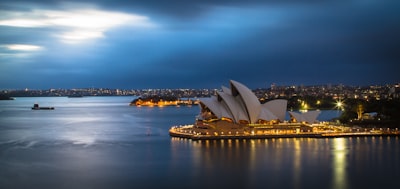


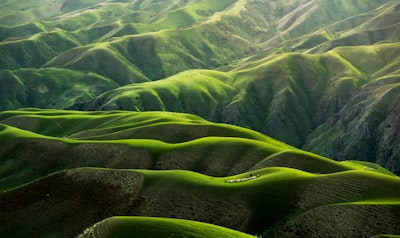
Australia's seasons are opposite to the Northern Hemisphere — summer is December to February, winter is June to August. But the more important variable isn't hemisphere: it's the profound difference between the tropical north and temperate south. The rule of thumb: winter go north, summer go south. Spring and autumn work almost everywhere. This guide explains the nuances that make the difference between a good trip and an extraordinary one.
☀️ Summer — December to February
 Peak Season (South)
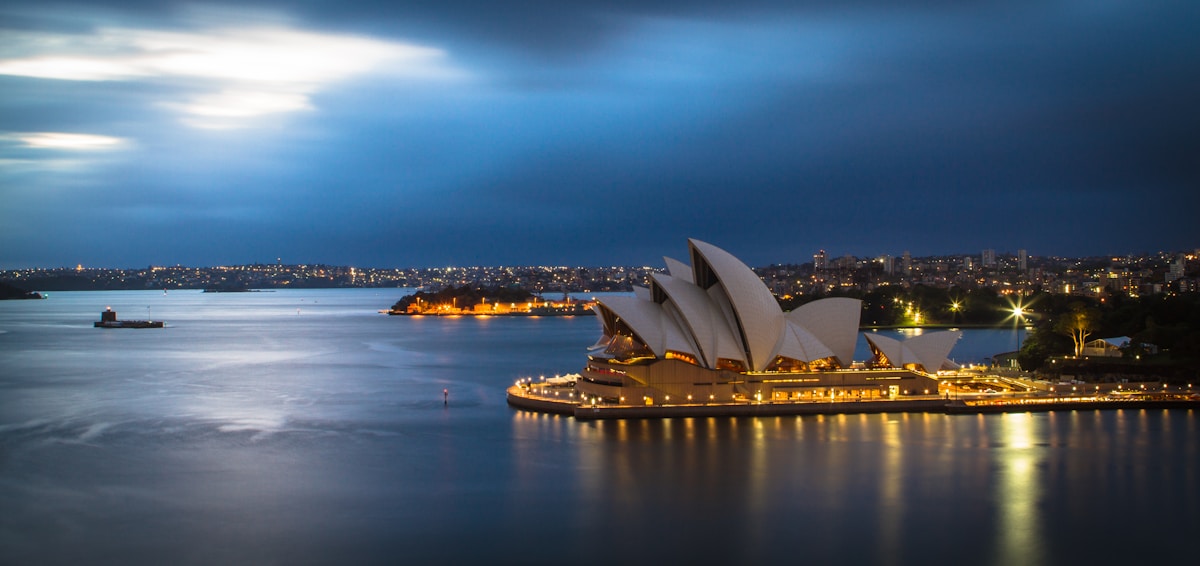
Australian summer is when the southern half of the country comes alive — Sydney's beaches fill, Melbourne's events calendar peaks, coastal road trips are at their most glorious, and New Year's Eve fireworks over Sydney Harbour are among the world's most spectacular. Average temperatures range from 22–37°C across major southern cities. It's peak tourist season with highest prices and crowds. Book well in advance and consider February once school holidays end.
✅ Best For
Sydney, Melbourne, Adelaide, Perth beaches, Tasmania, Great Ocean Road, Gold Coast beaches, NSW South Coast road trips. Sydney New Year's Eve. Australian Open (January).
⚠️ Avoid or Take Care
Tropical north (Cairns, Darwin, Whitsundays) — wet season with flooding, cyclones, and marine stingers. Outback interior (extreme heat 40°C+). Consider February over December/January for thinner crowds.
Summer highlights:
Australian summer brings genuine extreme heat risk. The Outback interior regularly exceeds 45°C; heatwaves affect all southern cities. Bushfire risk is highest December to March. Check the Bureau of Meteorology (bom.gov.au) for fire danger ratings and heat warnings before and during summer travel.
🍂 Autumn — March to May
 Best Shoulder Season
Autumn is Australia's most underrated travel season — and arguably the best overall for first-time visitors. The summer heat softens, crowds thin out significantly after school holidays end in late January, accommodation prices drop 20–40%, and the quality of light across vineyards, hinterlands, and coastlines is extraordinary. In the south it's winding down from summer; in the north (Queensland, NT) it's improving rapidly from the wet season.
Harvest season activates Australia's wine regions — the Barossa Valley, McLaren Vale, Yarra Valley, and Margaret River are at their most sensational March to May. Melbourne earns its cultural reputation with the Australian Grand Prix (March) and the Comedy Festival. Vivid Sydney transforms the city in May–June.
✅ Best For
Everywhere in the south (Sydney, Melbourne, Adelaide, Perth, Tasmania) is excellent. Queensland (Cairns, Whitsundays) opens up beautifully by April–May as the wet season clears. Wine regions at harvest. Hiking in temperate national parks.
📅 Key Dates
Easter long weekend (Apr 3–6, 2026 — book accommodation early). Australian Grand Prix Melbourne (March). Melbourne Comedy Festival (March–April). Whale watching begins May–June. Sydney Royal Easter Show (March/April).
Autumn highlights:
❄️ Winter — June to August
 Best: Tropical North
Australian winter is the smartest season for visitors prioritising the tropical north — Cairns, Darwin, the Whitsundays, and the Kimberley all reach their absolute peak. The dry season delivers cloudless skies, low humidity, clear reef visibility (sometimes 30+ metres on the Outer Reef), and the best conditions for Kakadu, Litchfield, and the Northern Territory's national parks. It's also peak season for whale watching along the entire east coast, with Hervey Bay's humpbacks arriving in July–October.
Southern cities cool considerably — Sydney averages 13–17°C, Melbourne 8–13°C — but still get plenty of sunshine and are crowd-free with the cheapest flights of the year. The Snowy Mountains and Victorian Alps offer skiing in July–August.
✅ Best For
Cairns and the Great Barrier Reef (best visibility, no stingers), Darwin and Kakadu (dry season essential), the Kimberley, Whitsundays, whale watching (east coast), Uluru and the Red Centre, Perth wine regions, skiing in the Snowy Mountains.
💡 Budget Tip
Winter is Australia's cheapest travel season for southern cities. Sydney, Melbourne, and Adelaide flights are 20–40% cheaper than summer. Accommodation prices drop significantly. The exception: tropical north (Cairns, Whitsundays) is peak season with higher prices.
Winter highlights:
🌸 Spring — September to November
 Best: WA & South
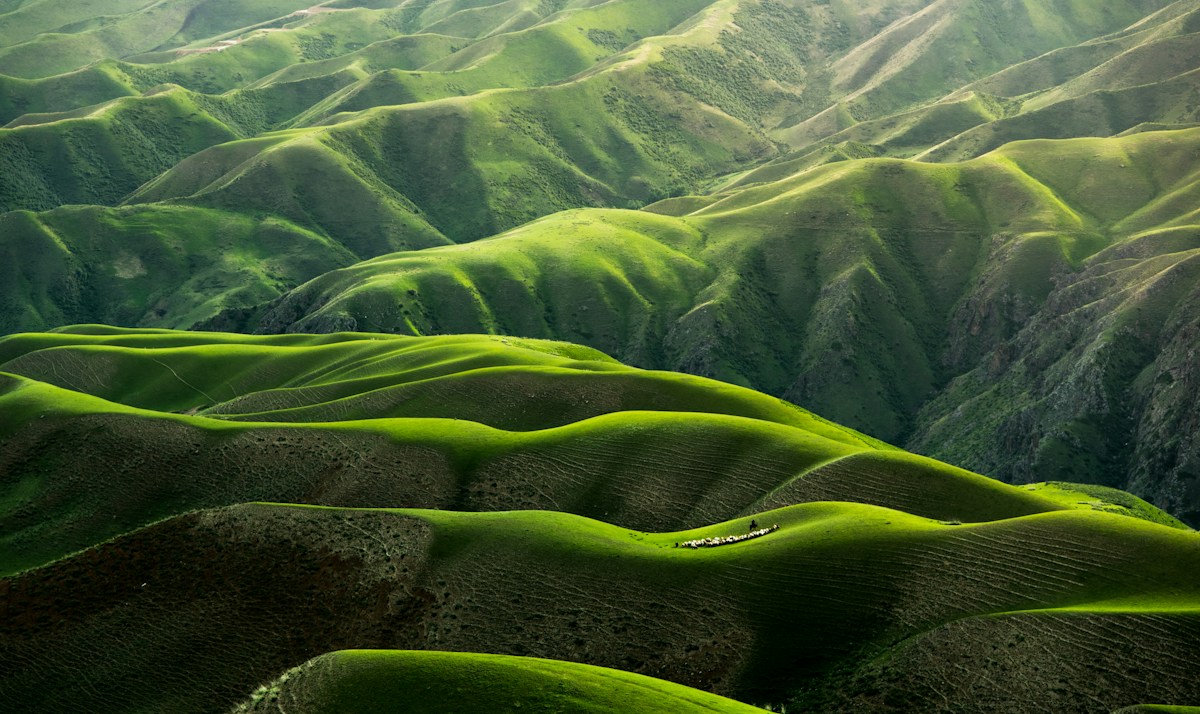
Spring is arguably Australia's most beautiful season — the country is warming up, the light is extraordinary, and Western Australia's famous wildflower season (August–October) transforms the Midwest and Wheatbelt into carpets of colour unlike anything else on Earth. Wildlife is particularly active — spring is when kangaroos have joeys in pouches, koalas are most visible, and migrating whales continue their northward passage.
It's Melbourne's racing carnival season — the AFL Grand Final (September) and the Melbourne Cup (November) fill the city. Sydney's Sculpture by the Sea transforms the Bondi to Tamarama coastal walk in October–November. The Snowy Mountains are accessible again after winter, and Uluru is comfortable before summer heat builds in November–December.
✅ Best For
Western Australia wildflowers (Aug–Oct), Sydney and NSW, Melbourne racing carnival, Great Ocean Road, national park hiking, whale watching continuing (east coast), Uluru before summer heat, reef access improving.
⚠️ Watch Out For
School holiday peaks in September–October drive up Gold Coast and coastal accommodation prices. Stinger season begins in northern Queensland in October. Northern WA starts heating up. Start booking tropical north activities before November.
Spring highlights:
🗺️ Best Time by Region — Quick Reference
Australia's vast geography means the ideal timing varies enormously by destination. Use this matrix to plan multi-stop trips:
| Region / Destination | Best Time | Avoid | Why |
|---|---|---|---|
| Sydney & NSW | Dec–Jan (crowds) | Mild temperatures, shoulder season pricing, good reef and coastal access | |
| Melbourne & Victoria | Winter (cold, grey) | Grand Prix (Mar), harvest (Mar–Apr), AFL (Sep), Melbourne Cup (Nov) | |
| Cairns & Great Barrier Reef | Nov–Apr (stingers, wet) | Best visibility, no stingers, low humidity, dry season conditions | |
| Whitsundays & QLD tropical coast | Nov–Apr (cyclones) | Dry season: clear skies, calm seas, low stinger risk | |
| Brisbane & Gold Coast | Dec–Jan (stingers, crowds) | Year-round viable; winter is mild and uncrowded; spring is excellent | |
| Darwin & Top End | Nov–Apr (wet season only) | Dry season is essential — wet season floods roads and closes parks | |
| Uluru & Red Centre | Nov–Mar (extreme heat) | Manageable temperatures for walking; summer regularly exceeds 45°C | |
| Western Australia (Perth & south) | Jul–Aug (cold) | Spring wildflowers (Sep–Oct); autumn harvest; Mediterranean climate | |
| WA Coral Coast & Ningaloo | Nov–Feb (hot) | Whale sharks Mar–Jul; best beach weather Apr–Sep; June–Aug peak | |
| Kimberley (WA) | Oct–Apr (wet, roads close) | Dry season only accessible for most roads; spectacular gorge country | |
| Adelaide & South Australia | Jan–Feb (extreme heat) | Harvest season (Mar–Apr); Barossa vintage; Kangaroo Island wildlife | |
| Tasmania | Jun–Aug (cold, limited access) | Summer opens hiking tracks; wildflower season; longest days |
📅 Month-by-Month Quick Reference
A quick snapshot of the ideal Australian destinations and activities for each calendar month:
🐾 Australia Wildlife Seasonal Calendar
Australia's wildlife events follow strict seasonal patterns — plan around these windows for the best encounters:
| Wildlife Event | Best Months | Location | Notes |
|---|---|---|---|
| 🐋 Humpback whale watching | May–November | Hervey Bay (Jul–Oct peak), east coast, Moreton Bay | Hervey Bay is Australia's premier destination — sheltered bay, close encounters |
| 🐳 Dwarf Minke whales | June–July | Cairns Outer Reef | World's only swim-with Minke whale programme — licensed operators only |
| 🦈 Whale sharks | March–July | Ningaloo Reef, WA (peak Apr–Jun) | World's largest annual aggregation; licensed swim-with tours required |
| 🐢 Sea turtle nesting | November–January | Mon Repos, Bundaberg | Australia's largest loggerhead nesting site; ranger-guided night tours |
| 🐢 Sea turtle hatching | January–March | Mon Repos, Bundaberg | Hatchlings emerging to the sea — extremely popular, book months ahead |
| 🐦 Wildflowers + birdlife | August–October | Western Australia, SA | 12,000+ WA wildflower species; extraordinary birdwatching in Midwest |
| 🦘 Kangaroos with joeys | Year-round (peak spring) | Nationwide | Spring (Sep–Nov) brings highest joey visibility at national parks and reserves |
| 🦆 Platypus | Year-round (best Apr–Aug) | Eungella NP (Mackay), Mary River | Dawn platforms above Broken River — most reliable in Australia |
| 🦅 Kakadu wetlands birds | May–October | Kakadu NP, Northern Territory | Dry season concentrates birds at wetlands — Yellow Water Billabong cruises |
| 🐊 Crocodile activity | Year-round | Daintree River, Kakadu | Crocodiles year-round; most visible basking in dry season (May–Oct) |
| 🦈 Great White sharks | Apr–Nov | Neptune Islands, SA; WA south coast | Cage diving tours from Port Lincoln, SA — peak season autumn/winter |
🎉 Major Events to Plan Around
These events either create exceptional travel experiences or result in sold-out accommodation and higher prices — plan accordingly:
Australian Open, Melbourne
First Grand Slam of the year, late January. Book Melbourne accommodation 6+ months ahead.
Sydney NYE Fireworks
World's most spectacular New Year's Eve. Harbour-view locations book out a year in advance.
Melbourne Grand Prix
Formula 1 Australian Grand Prix at Albert Park. Melbourne hotel prices surge significantly.
Melbourne Comedy Festival
Australia's biggest comedy festival — 4 weeks of international and Australian comedians.
Vivid Sydney
23 nights of light installations across the CBD, Opera House, and Harbour Bridge. Very popular.
Hervey Bay Whale Season
Humpback whales shelter in the bay. July–October peak; book tours 2–4 weeks ahead during peak.
AFL Grand Final, Melbourne
Australian Rules Football Grand Final — Melbourne is electric. Accommodation books out months ahead.
Sculpture by the Sea
Outdoor sculpture exhibition along the Bondi to Tamarama coastal walk, Sydney. Free entry.
Melbourne Cup
"The race that stops a nation" — public holiday in Melbourne, huge racing carnival season.
Mon Repos Turtle Season
Sea turtle nesting and hatching at Bundaberg. Ranger tours sell out — book months ahead.
Queensland Holiday Peaks
April, July, Sep–Oct, Dec–Jan. Theme park and coastal accommodation prices peak significantly.
WA Wildflower Season
12,000+ native wildflower species bloom across the Midwest and Wheatbelt — free and spectacular.
Australia's weather can be extreme and change rapidly. Before and during travel — particularly to the tropical north, outback, and bushfire-prone areas — always check bom.gov.au for cyclone warnings, flood alerts, fire danger ratings, and severe weather warnings. The BOM app provides location-specific alerts.
💡 Practical Timing Tips
- ✓The golden rule: winter go north, summer go south. This single principle solves most Australia timing questions. The tropical north (Cairns, Darwin, Kimberley) is at its best in the Australian winter (June–August). Southern cities and coastlines are at their best in Australian summer (December–February).
- ✓September holidays are Australia's sweet spot. September school holidays are smaller than July and December, weather is excellent across all regions, and prices haven't peaked for summer. Often the best value combination of conditions and cost for Australia-wide trips.
- ✓May is criminally underrated. May marks the beginning of the dry season in the north while the south still has lingering warmth. Cairns reef visibility is climbing, crowds from the southern summer have left, Vivid Sydney is on, and prices are at shoulder-season levels.
- ✓The northern wet season is manageable but requires planning. November to April in the tropical north brings flooding, road closures, and marine stingers. If visiting during this period: book tours that operate despite the wet season, focus on freshwater swimming holes instead of ocean beaches, and check road conditions before driving. Some travellers love the wet season for its dramatic skies and lack of crowds.
- ✓Book major events accommodation extraordinarily early. Sydney New Year's Eve, the Melbourne Grand Prix, AFL Grand Final, and Australian Open regularly sell out 6–12 months in advance. If these events are on your list, treat accommodation booking as the first step of trip planning.
- ✓Australia's seasons are opposite to the Northern Hemisphere. If you're visiting from Europe or North America, this is genuinely counterintuitive at first. Christmas Day in Sydney is in the middle of summer (hot, beach weather). School holidays fall in April, July, September-October, and December–January — not Northern Hemisphere summer.
Tropical north (Nov–Apr): Cyclone season, heavy flooding, road closures, marine stingers. Some parks entirely close. Outback (Dec–Feb): Extreme heat 40–50°C; dangerous for extended outdoor activity. Alpine areas (Jun–Aug): Snow and ice on roads — check conditions before driving. Bushfire-prone areas (Oct–Mar): Monitor fire danger ratings, particularly in Victoria, SA, and eastern NSW.
Not Sure When to Visit?
Cooee Tours' Australia specialists plan itineraries around the right timing for your specific destinations and interests.
Talk to Our Travel Team →❓ Frequently Asked Questions
What is the best time of year to visit Australia overall?
There isn't one single "best" time for all of Australia — the country is continent-sized with profoundly different climates by region. However, the practical answer for most first-time visitors planning a multi-region trip is:
Spring (September–November) and Autumn (March–May) work well across the broadest range of destinations, with mild temperatures, shoulder-season pricing, and the northern dry season either beginning (May) or still active (October). May specifically is often recommended — the north is excellent, the south is mild, Vivid Sydney is on, and prices are reasonable.
When is the best time to visit the Great Barrier Reef?
May to October (dry season) is the best time for the Great Barrier Reef. This period offers the clearest water visibility (sometimes 30+ metres on the Outer Reef), no box jellyfish or Irukandji (marine stingers present October to May), comfortable humidity, and the most consistent weather for day-boat crossings.
Reef tours run year-round, but November to April brings reduced visibility in some areas (wet season river runoff), higher humidity, stinger risk, and the possibility of weather cancellations. June and July specifically are excellent — the reef is at peak visibility, dwarf Minke whales visit in July, and the Outer Reef platforms are uncrowded.
When is the best time to visit Uluru?
April to October is the ideal window for Uluru (Uluru-Kata Tjuta National Park) in the Northern Territory's Red Centre. Daytime temperatures are 14–25°C — comfortable for hiking and the 10km base walk around the rock. May and September are particularly pleasant.
Avoid November to March when temperatures regularly exceed 40°C and can reach 48°C. The park closes some walking tracks when temperatures are forecast above 36°C. Winter nights at Uluru can drop below 5°C, so pack layers for the Field of Light and night sky viewing experiences. The sunrise and sunset colour changes on the rock are most dramatic in clear winter conditions.
When is whale watching season in Australia?
Humpback whales migrate north along Australia's east coast from May to November. Peak times by location:
Hervey Bay (Queensland): July–October — Australia's best whale watching. Humpbacks shelter in the protected bay, creating unusually close and calm encounters. Sydney and NSW coast: June–November, with August–September peak. Whitsundays: August–September calving ground. Moreton Bay (Brisbane): June–November, half-day tours from Brisbane.
Dwarf Minke whales visit the Cairns Outer Reef in June–July — the only place in the world where you can snorkel legally alongside Minke whales on licensed tours. Southern Right Whales are seen at the Great Australian Bight (SA) and Warrnambool (Victoria) from June to October.
What are Australia's seasons and when do they occur?
Australia's seasons are reversed compared to the Northern Hemisphere because it's in the Southern Hemisphere:
Summer: December to February · Autumn: March to May · Winter: June to August · Spring: September to November
However, this four-season model primarily applies to southern and temperate Australia (Sydney, Melbourne, Adelaide, Perth). The tropical north (Darwin, Cairns, Kimberley) has two seasons: Wet Season (November to April — monsoon, heavy rain, flooding) and Dry Season (May to October — clear, dry, comfortable). For the Outback/Red Centre, the seasons are better described as Hot (November–March, extreme heat) and Comfortable (April–October).
When is wildflower season in Western Australia?
Western Australia's extraordinary wildflower season runs from late July to November, with the peak from August to October. The Midwest and Wheatbelt regions are most spectacular — areas around Geraldton, Kalbarri, the Pinnacles, and Esperance transform into vast carpets of everlastings, kangaroo paw, banksia, and orchids.
With over 12,000 native wildflower species unique to WA — more than the entire British Isles — this is one of Australia's most underrated natural events. Combine with a Ningaloo Reef visit (whale sharks peak April–June) for an outstanding WA spring trip.
When is the cheapest time to visit Australia?
June and July offer the cheapest flights and accommodation to and around southern Australia. International airfares drop 20–40% compared to summer, and accommodation in Sydney, Melbourne, and Adelaide is significantly cheaper outside school holidays.
The catch: tropical north destinations (Cairns, Whitsundays) are in peak season during Australian winter (May–October) so prices are higher there. For the best value across a multi-region trip, May or September (shoulder seasons) offer a good balance — reasonably priced flights, the north still active but not yet at Christmas-level prices, and excellent weather conditions across most of the country.
📖 Related Australia Travel Guides
Highway 1 Big Lap Guide
14,500km around Australia — when and how to plan the Big Lap
Queensland Wildlife Guide
Seasonal wildlife calendar for koalas, turtles, whales & more

Queensland Adventure Guide
Best seasonal timing for rafting, reef, and outdoor activities
Sydney Transport Guide
Getting around Sydney on any budget in 2026