


🦘 Must-Visit Destinations in Australia
Australia's extraordinary ecological and cultural diversity means every region feels like a different country. These six destinations represent the most essential — covering tropical reef, ancient Outback, iconic city, prehistoric rainforest, dramatic coastline, and wild island wilderness.
Great Barrier Reef
The world's largest coral reef system stretches 2,300km — a living organism visible from space and home to 1,500+ species of fish, 4,000+ types of mollusc, and critically endangered loggerhead turtles. Best visited April–November for visibility. Choose operators holding Great Barrier Reef Marine Park Authority certification for responsible reef experience.

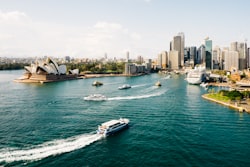
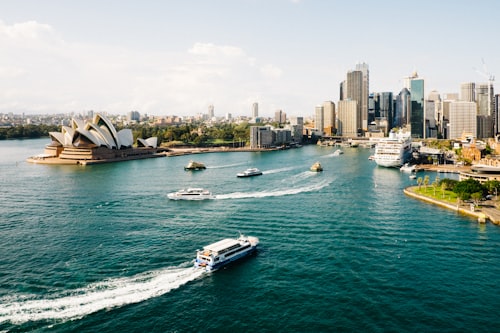
Sydney
Australia's iconic harbour city balances world-famous architecture with 100+ ocean and harbour beaches, vibrant food culture, and a thriving arts scene. Take the Manly Ferry for harbour views that beat any tourist cruise. Walk the Bondi to Coogee cliff path. Climb the Harbour Bridge for 360° views. Allow at least 4 days to do it justice.
Uluru-Kata Tjuta
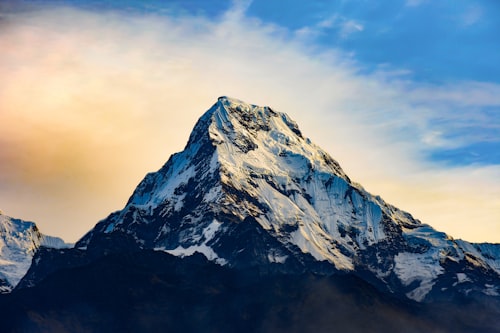
The spiritual heart of Australia — a sacred Anangu site of profound cultural significance. Please do not climb Uluru; the request from Traditional Owners is clear and the path has been permanently closed since 2019. The free Mala Walk with park rangers, the 10.6km base walk, and the Kata Tjuta Valley of the Winds walk are extraordinary alternatives. The 2026 Signature Walk launches new multi-day Anangu-guided experiences.
Great Ocean Road
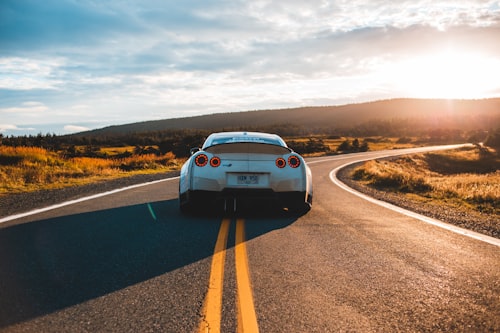
243km of the world's most scenic coastal driving, from Torquay to Allansford. The Twelve Apostles limestone stacks are the headline — but allow time for Loch Ard Gorge, London Arch, and Johanna Beach (some of Victoria's finest surf). Spot koalas in the towns of Kennett River and Cumberland River. Allow 3–4 days to properly explore.

Daintree Rainforest
The world's oldest tropical rainforest — at 180 million years, older than the Amazon — meets the Great Barrier Reef in one of Earth's most biodiverse places. Spot cassowaries, tree kangaroos, and Boyd's forest dragons. The Daintree Ecolodge's spa treatments were developed with Kuku Yalanji Elder approval. The river crossing ferry north of Mossman is the edge of the civilised world.

Tasmania
Australia's island state offers World Heritage wilderness, cool-climate wines, and wildlife found nowhere else. Hike Freycinet's Wineglass Bay (45-min return to saddle viewpoint is sufficient if time is limited). Experience the Bay of Fires for orange lichen-painted granite boulders against white sand. MONA (Museum of Old and New Art) in Hobart is one of the southern hemisphere's most remarkable cultural institutions.
🥝 Must-Visit Destinations in New Zealand
New Zealand packs extraordinary natural diversity into a relatively compact land area — you can experience subtropical beaches, active volcanoes, ancient fjords, alpine glaciers, and Māori cultural heartlands within a 3-week itinerary. The South Island and North Island are genuinely different countries in feel.
Milford Sound / Piopiotahi
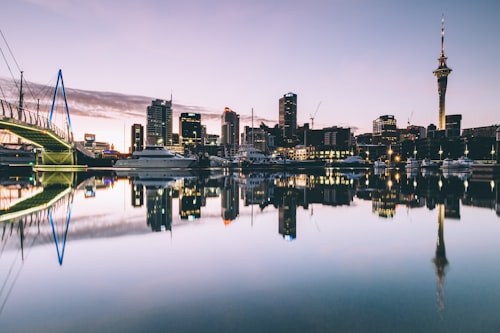
Rudyard Kipling called it the "eighth wonder of the world." Towering Mitre Peak rises 1,692m directly from the sea. Waterfalls cascade year-round. Bottlenose dolphins, fur seals, and Fiordland penguins inhabit these waters. The overnight cruise reveals what day-trippers miss: the fiord after the crowds leave and under a Milky Way that will recalibrate your sense of scale.

Queenstown
The adventure capital of the world sits on the shores of Lake Wakatipu, surrounded by The Remarkables mountain range. Bungy jumping was invented here (Kawarau Bridge, 1988). But Queenstown is also a sophisticated wine, food, and hospitality destination — the Central Otago Pinot Noir is world-class, and the Skyline restaurant views make it one of New Zealand's finest dining settings.

Rotorua
Geothermal wonders and Māori cultural heartland in one destination. Geysers, bubbling mud pools, and hot springs are the natural backdrop for New Zealand's most accessible Māori cultural experiences. The evening hangi feast and kapa haka (cultural performance) at Te Puia or Tamaki Māori Village are among the most moving cultural experiences in the southern hemisphere.

Abel Tasman National Park
New Zealand's smallest national park packs golden beaches, turquoise water, and lush coastal forests into 225km². Sea kayak between secluded coves — the multi-day kayak and walk combination is one of New Zealand's finest active experiences. Fur seals lounge on rocks. Blue penguins nest in the dunes at Totaranui. The coastal track is one of New Zealand's Great Walks.
Tongariro National Park
A dual UNESCO World Heritage site — both for natural values and as a site of profound Māori cultural significance. The Tongariro Alpine Crossing (19.4km) crosses active volcanic landscape past emerald lakes, ancient lava flows, and steaming craters that doubled as Mordor in Peter Jackson's Lord of the Rings. One of the world's great day hikes — always check weather forecasts, it can be lethal in poor conditions.
Waitomo Glowworm Caves
Float silently through limestone caverns illuminated by tens of thousands of Arachnocampa luminosa — the New Zealand glowworm, found only in this country. The effect is genuinely otherworldly: a living galaxy of cool blue-green light reflected in the underground river below you. Black water rafting adds an adrenaline dimension — tubing through the same caves in a wetsuit, with a headlamp for occasional dramatic darkness.
📅 Suggested Itineraries
These two-week routes represent the most logical and rewarding way to cover each country for a first-time visitor. They avoid unnecessary backtracking and sequence destinations by geography rather than fame.
✈️ Essential Travel Tips
Before You Go
🪪 Visas
Australia: Most eligible nationalities need an ETA (AUD $20, applied online at eta.homeaffairs.gov.au). New Zealand: Most need an NZeTA plus the IVL levy, applied at immigration.govt.nz. Apply at least 72 hours before departure.
📅 Best Time to Visit
Australia's north: April–October (dry season). Australia's south: September–March. New Zealand: December–February for summer; June–August for skiing. Autumn (March–May) works well for both countries combined.
🌿 Biosecurity
Both countries enforce strict biosecurity. Declare all food, plant materials, and outdoor equipment at the border — fines are heavy and on-the-spot. Hiking boots must be clean. Seeds and fresh fruit are typically prohibited.
🏥 Travel Insurance
Non-negotiable for both countries. Ensure coverage includes adventure activities (bungy, hiking, diving), medical evacuation, and trip cancellation. Australian healthcare costs for uninsured visitors can be catastrophic.
Getting Around
🚗 Road Trips
Both countries drive on the left. International licences are accepted. Campervans are popular — book well ahead for December–February. Australia's distances are vast; domestic flights make sense for long hops.
✈️ Domestic Flights
Australia: Jetstar and Rex connect major cities affordably. Budget 2.5 hrs Sydney–Cairns, 3 hrs Sydney–Perth. New Zealand: Air New Zealand has good inter-island options; the Interislander ferry between Wellington and Picton is scenic and affordable.
💳 Money
AUD in Australia, NZD in New Zealand. Credit cards widely accepted in cities. Cash useful in remote areas. Tipping is not mandatory but appreciated (10% for great service). Both currencies fluctuate — check rates before you travel.
📱 SIM Cards
Buy a local SIM on arrival — Telstra (AU) and Spark (NZ) have the broadest rural coverage. Essential for maps, emergency communication, and bookings. A basic tourist SIM with data typically costs $30–50 AUD.
Australia's UV index regularly reaches 11–14 (Extreme to Beyond Extreme) — 40% higher than equivalent latitudes in Europe or North America. SPF 50+ sunscreen is not optional — apply before going outside, even on overcast days, even in winter. Sunburn can happen in under 10 minutes at midday in summer. Hat, sunglasses, and protective clothing are standard equipment, not optional accessories. The same applies in New Zealand, particularly at altitude and on the water.
🎒 Essential Packing Guide
Both countries require specific kit that European or North American packing guides often underestimate. These are the non-negotiables.
SPF 50+ Sunscreen
Broad-spectrum, water-resistant. Reef-safe formula for marine areas. Bring more than you think you need.
Insulated Water Bottle
1L minimum, keeps water cold 24hr. Tap water is safe to drink throughout both countries.
Quality Hiking Boots
Waterproof, ankle-supporting, broken in before you arrive. Essential for tramping in New Zealand especially.
Layered Clothing
Moisture-wicking base layers, fleece mid-layer, waterproof shell. New Zealand weather is famously changeable.
Type I Power Adapter
Both countries use Type I (three flat pins). Buy a universal adapter before you leave home.
Power Bank (20,000mAh)
Essential for multi-day hikes and remote areas. Photography, navigation, and emergency calls all drain battery fast.
Dry Bag (10–20L)
Protects electronics during water activities, kayaking, beach visits, and sudden rain. Multiple sizes recommended.
Polarised Sunglasses
Category 3–4 UV protection minimum. Reduces glare on water, snow, and windscreen driving. Non-negotiable.
Insect Repellent
DEET-based for Queensland and NT mosquitoes. New Zealand's West Coast sandflies are ferocious — they laugh at weak repellents.
Waterproof Camera
GoPro or similar for reef snorkelling, kayaking, and white-water activities. Bring twice as many memory cards as you think you'll need.
Daypack (25–30L)
Breathable back panel, hip belt, hydration sleeve. Essential for day hikes and when your main bag stays at the accommodation.
Offline Maps
Download Google Maps, Maps.me, or Gaia GPS for key regions before you lose cell coverage. Paper maps as backup in remote areas.
Use packing cubes organised by activity type (beach, hiking, city) rather than by day. Roll clothes rather than fold — reduces volume by 30% and minimises wrinkles. Keep a separate compression bag for dirty laundry. For New Zealand's South Island specifically, assume it will rain and prepare accordingly — Gore-Tex quality waterproof shell is not optional.
🎭 Cultural Experiences
Aboriginal & Māori Heritage — Respectful Engagement
Indigenous cultures in Australia and New Zealand are living, vibrant, and contemporary — not historical artefacts. The most meaningful cultural experiences are those led by and benefiting Aboriginal and Māori knowledge holders.
Choose Aboriginal-owned tour operators for authentic experiences. Learn basic phrases from any guide you're with — engagement is appreciated. Purchase art directly from Indigenous artists or certified Art Centres (not tourist shops selling imported imitations). The Anangu-guided Mala Walk at Uluru is free, and among Australia's finest cultural experiences. See our full Aboriginal Art Guide and Bush Tucker Guide for deeper context.
Learn "Kia ora" (hello), "Ka kite" (goodbye), and "Kia kaha" (stay strong) — New Zealanders deeply appreciate visitors making the effort with Te Reo Māori. Hongi (pressing foreheads and noses together during greeting) is a taonga (treasure) — follow the lead of your guide. The Waitangi Treaty Grounds (Bay of Islands), Te Papa Museum (Wellington), and Rotorua's cultural villages are the most accessible entry points into Māori culture.
Food & Culinary Experiences
Both nations have developed sophisticated food cultures — far beyond their "meat pie and Vegemite" reputations. Australia: flat white coffee culture (both countries claim the origin, both are right to be proud of it), barramundi, fresh Moreton Bay bugs, the extraordinary contemporary bush tucker revival in fine dining, and Barossa/Margaret River wine regions. New Zealand: hangi (earth oven feast), world-class Marlborough Sauvignon Blanc and Central Otago Pinot Noir, whitebait fritters, Bluff oysters (seasonal, extraordinary), and the freshest seafood on Earth from Southern Ocean waters.
Ready to Start Your Adventure?
Let Cooee Tours craft your perfect Australian and New Zealand experience — expert local knowledge, carefully sequenced itineraries, and small-group tours that go beyond the guidebook. Brisbane-based, personally curated.
Plan Your Journey →