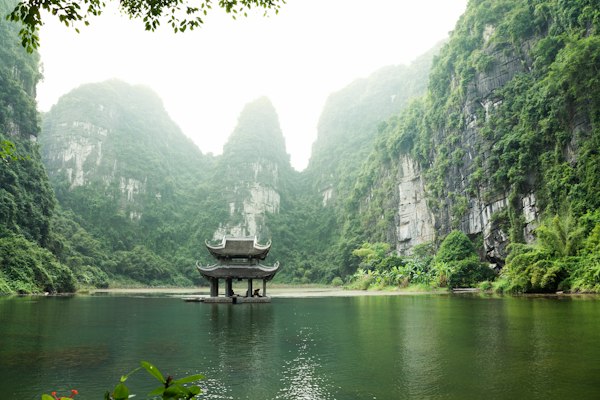
Three thousand limestone karsts rising from Ha Long Bay’s jade water. The Ancient Town of Hoi An at night, all silk lanterns and reflected light on the river. Pho served from a rolling cart on a Hanoi pavement at 6am. The Cu Chi tunnels that hid 16,000 people underground for a decade. This is a country that rewards you for showing up.
Vietnam (population 97 million — the 15th most populous country in the world — a narrow S-shaped nation stretching 1,650km from the Chinese border in the north to the Mekong Delta in the south, with a maximum east–west width of 600km that narrows to 50km at its waist near Dong Ha) is one of the most geographically, culturally, and culinarily diverse countries in Southeast Asia. The country’s shape — the result of a southward expansion from the original Red River Delta civilisation over two millennia, absorbing the Champa Kingdom of the centre and the Khmer-influenced Mekong Delta of the south — creates three distinct cultural and climatic zones that effectively function as three separate travel destinations: the north (Hanoi, Ha Long Bay, Sapa — four seasons, the mountains of the northwest, the limestone karsts of the northeast coast), the centre (Hue, Hoi An, Da Nang — the former imperial capital, the finest historic urban fabric in Vietnam, the Hai Van mountain pass that separates the two climate zones), and the south (Ho Chi Minh City — Saigon — the Mekong Delta — the warmer, wetter, more tropical character of the former southern republic).
The elements that make Vietnam unlike anywhere else in Southeast Asia are precise. Ha Long Bay (Vịnh Hạ Long — “Bay of the Descending Dragon” — UNESCO World Heritage 1994 — 1,553 km² of tidal sea bay containing 1,969 islands and islets of limestone karst, each an individual vertical column of rock rising from the water, the landscape used as the planet Pandora in James Cameron’s Avatar 2009 and as Kong’s island in Kong: Skull Island 2017 — both films shooting in Cat Ba Island and Halong Bay rather than studio sets). Hoi An Ancient Town (the 15th–19th century trading port on the Thu Bon River — UNESCO World Heritage 1999 — the most completely preserved example of a Southeast Asian trading town — its merchants’ houses, assembly halls, and Japanese Covered Bridge intact from the 17th century — the town’s lantern festival on the 14th night of each lunar month, when electric lights are turned off and the entire old town is lit by 300,000 coloured silk lanterns reflected in the river, is the single most beautiful recurring public spectacle in Vietnam). Vietnamese street food (consistently rated among the top five national food cultures in the world — the specific quality of Vietnamese street food being its non-negotiable freshness — the pho broth that has simmered for 12 hours, the bánh mì baguette still warm from the oven at 6am, the bún chả charcoal grill set up on the Hanoi pavement at 11am).
Vietnam’s north–south axis is the journey — each city and landscape a distinct chapter in a country that changes character every 300 kilometres.
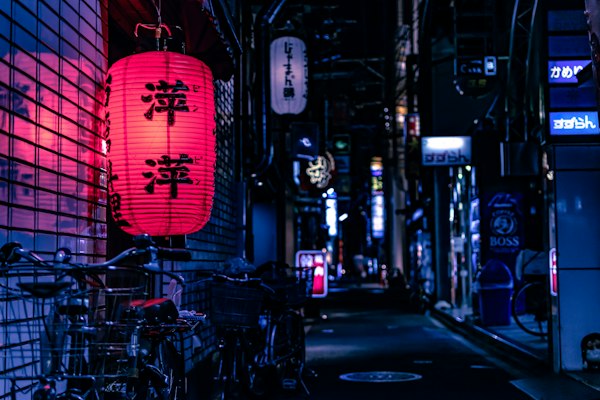
Hanoi (population 8 million — the Vietnamese capital, founded in 1010 CE as Thăng Long “Rising Dragon” by Emperor Lý Thái Tổ — one of the oldest continuously inhabited capital cities in Asia) is a city of lakes, tree-lined boulevards, and the 36-street Old Quarter (Phố cổ Hà Nội — the guild streets established from the 13th century, each street historically dedicated to a single trade — Hàng Đồng for brass, Hàng Bạc for silver, Hàng Mã for votive paper goods — still operating, though now selling everything — the most atmospheric urban neighbourhood in Northern Vietnam). The Hoan Kiem Lake (the Restored Sword Lake — the founding myth of Hanoi: Emperor Lê Lợi received a magical sword from the Golden Turtle God from the lake’s waters in 1418 to drive out the Ming Chinese, and returned it in 1428 — the Ngọc Sơn Temple on the lake’s island, connected by the red Huc Bridge, is the most photographed image of Hanoi). The Ho Chi Minh Mausoleum (the marble structure on Ba Dinh Square where Ho Chi Minh’s embalmed body lies in state — open Tuesday–Thursday and Saturday–Sunday mornings — the queue moves quickly; visitors must be modestly dressed and maintain complete silence — the experience is solemn, genuinely impressive in its controlled atmosphere, and a deeply informative encounter with the Vietnamese state’s treatment of its revolutionary history). The Old Quarter street food circuit (bun bo Nam Bo — the Hanoi beef noodle — at Hang Dieu Street; bun cha — the charcoal-grilled pork with cold noodles and herbs that Obama ate with Anthony Bourdain at Bun Cha Huong Lien in 2016 — 24 Le Van Huu, Hai Ba Trung district — still serving the same menu at VND 50,000 per person).
Ha Long Bay (Vịnh Hạ Long — 4 hours by road from Hanoi, 170km east — UNESCO World Heritage 1994, 2000) is the landscape that defines Vietnam in the international imagination: 1,969 islands and islets of karst limestone rising vertically from jade-green tidal water, each island a column of rock formed from sea-bed limestone uplifted and then sculpted by 500 million years of wave and rain erosion into the signature vertical-sided, rounded-top towers that no other geological process creates at this scale. The islands contain caves of extraordinary size (Thiên Cung Cave — “Heavenly Palace” — a cavern 130 metres wide and 80 metres high, its stalactites illuminated in programmatic coloured light which is tourist-kitschy but physically impressive; Đầu Gỗ Cave is the more naturally lit and less-visited alternative). The correct way to experience Ha Long Bay is by overnight cruise — the bay at dawn, before the day boats arrive, with mist in the karst valleys and kingfishers working the water surface, is fundamentally different from the midday scene that day-trippers encounter. Lan Ha Bay (the southern extension of Ha Long Bay, administered by Cat Ba Island rather than Quang Ninh province — less regulated, fewer boats, better kayaking access to the floating fishing villages and cave systems) is the more adventurous alternative that most Ha Long Bay operators now offer alongside the main bay.
Hoi An (Hội An — UNESCO World Heritage Ancient Town 1999 — population 120,000 — on the Thu Bon River 30km south of Da Nang) is the most completely preserved historic trading port in Southeast Asia: its merchants’ houses, assembly halls of the Chinese trading communities (the Phúc Kiến, Triều Châu, and Hải Nam assembly halls — each built by a different Fujian or Guangdong provincial merchant community in the 17th–18th centuries — the Phúc Kiến Hall’s courtyard garden is the most beautiful interior space in Hoi An), the Japanese Covered Bridge (Chùa Cầu — built in 1593 by the Japanese merchant community, the only remaining Japanese-built bridge in Vietnam — the symbol of Hoi An), and the French colonial architecture along Nguyen Thai Hoc Street are intact because Hoi An silted up in the 19th century and lost its commercial relevance before modern development arrived. The Full Moon Lantern Festival (the 14th night of each lunar month — the entire Old Town turns off electric lighting from 7pm, 300,000 silk lanterns are lit in the streets and on the river, lantern boats are floated from the riverside — the most photographically beautiful recurring event in Vietnam — the tourist density on this one evening is significant, but the spectacle justifies it — book accommodation months in advance if your travel dates align). Hoi An’s tailor culture (400+ tailors in the Old Town and immediate surrounds offering 48–72 hour garment production from client measurements — the quality varies enormously — the recommended approach is to bring a reference garment, visit Yaly Couture or Bebe Tailors, pay mid-range prices rather than the cheapest quote, and allow 2 fittings).
Hue (Huế — UNESCO World Heritage Complex 1993 — 100km north of Hoi An on the Perfume River — the imperial capital of the Nguyen Dynasty from 1802 to 1945, when Emperor Bảo Đại abdicated to Ho Chi Minh’s Viet Minh and the imperial era ended) is Vietnam’s most architecturally layered city: the Imperial Citadel (the outer Kinh Thành — a 10km-perimeter walled city modelled on Beijing’s Forbidden City — constructed 1804–1833 — the Ngo Mon Meridian Gate, the Thai Hoa Palace, the Forbidden Purple City whose inner palaces were largely destroyed by bombing in the 1968 Tet Offensive and are still being restored). The Nguyen Dynasty Royal Tombs (the seven emperors’ mortuary complexes scattered along the Perfume River south of the city — Tự Đức’s tomb (1864–1867 — the most romantically beautiful — a pine-forested landscape with a lake, pavilions, and a poem-covered stele that the emperor wrote himself lamenting his failure to produce an heir — he spent more time at his tomb complex during his lifetime than any of the emperors), Khải Định’s tomb (1920–1931 — the most architecturally extravagant — a Franco-Vietnamese synthesis that uses broken porcelain mosaic on every surface in the interior, the effect either garish or magnificent depending on your mood — it is definitely memorable)). Hue’s royal cuisine (Huế cuisine — the most refined and the spiciest in Vietnam — the result of the imperial chefs’ competition to produce visually elaborate dishes from small portions — bánh khoái (the Hue sizzling rice pancake), bún bò Huế (the spicy beef noodle soup that Hue residents consider superior to pho — they are correct)).
Sapa (Sa Pa — 1,600 metres above sea level in the Hoàng Liên Son mountain range on the Chinese border — 400km northwest of Hanoi, accessible by overnight train to Lao Cai (8 hours) then minibus (1 hour) or directly by the Sa Pa Express train) is Vietnam’s most celebrated trekking destination — but what makes Sapa remarkable is not primarily the trekking but the ethnic minority communities that have terraced the mountain slopes for centuries: the Black Hmong (Mông Đen — the largest minority group in the Sapa area, identifiable by their indigo-dyed hand-woven clothing — the women’s skirts dyed in natural indigo baths that turn the skin blue — the Saturday market at Bac Ha, 60km from Sapa, is the most authentic and least touristic ethnic minority market in Northern Vietnam), the Red Dao (Dao Đỏ — named for the red tasselled headdresses — their traditional medicinal herb knowledge the most extensive of any Sapa ethnic group — the herbal bath experience at a Red Dao homestay — a large wooden tub of boiled forest herbs — is the most body-temperature-altering thing available to a visitor in the Sapa highlands). The rice terraces (the Muong Hoa Valley terraces — carved into the mountain slopes at 1,000–1,600 metres over centuries by Hmong and Dao communities using hand tools, the terraces flooded and transplanted with rice May–June, green and photogenic July–September, golden for harvest September–October — the golden harvest window is the most sought-after photography season in Vietnam). Fansipan (3,143 metres — the “Roof of Indochina” — the highest peak in Vietnam, accessible by gondola from Sapa town in 20 minutes for VND 750,000 or by a 2–3 day guided trek for the committed).
Ho Chi Minh City (Thành phố Hồ Chí Minh — still called Saigon by virtually all Vietnamese people regardless of political generation — population 9 million in the city proper, the most economically dynamic city in Vietnam and the one most rapidly evolving) is the entry point for most Australian visitors to Vietnam and the city that rewards the traveller who digs below the surface: the Ben Thanh Market (the 1914 French colonial market building at the intersection of Le Loi and Ham Nghi — the tourist market by day, but the surrounding street food vendors and the night market that surrounds the building from 6–11pm are genuinely local). The War Remnants Museum (Bảo tàng Chứng tích Chiến tranh — the most unflinching war museum in Southeast Asia: the photographic documentation of the Vietnam War’s civilian impact — the Pulitzer Prize-winning photographs of Nick Ut (Napalm Girl, 1972), Eddie Adams (Saigon Execution, 1968), and AP photographers — the museum’s treatment of the war from the Vietnamese civilian perspective is essential context for understanding the country). The Cu Chi Tunnels (the 250km network of underground tunnels 75km northwest of HCMC used by the Viet Cong during the American War — the tunnels were home to 16,000 people for up to a decade — cooking fires vented through dispersed chimneys to prevent smoke columns being visible from US aircraft — the Ben Dinh section now has a reconstructed 100m tunnel section that tourists can crawl through — widened to twice the original Vietnamese-body-width to accommodate Western visitors). The Reunification Palace (the former South Vietnamese presidential palace whose gates were breached by North Vietnamese tanks on 30 April 1975 — the War’s end — preserved entirely as it appeared on that day, its 1960s modernist interiors, basement war rooms, and rooftop helicopter pad intact).
The Mekong Delta (Đồng bằng sông Cửu Long — the “Nine Dragon River Plain” — the 40,000 km² river delta formed by the Mekong River’s nine distributaries as it approaches the South China Sea, 100km southwest of Ho Chi Minh City) is the most aquatic landscape in Vietnam: a flat, densely canalled river plain at essentially sea level, its communities living on the water as much as beside it, its agriculture producing 50% of Vietnam’s rice and 60% of its exported fruit from a landscape where the distinction between land and water is seasonal rather than permanent. The Cái Bè floating market (the largest floating market in the Mekong Delta — operating from 5–9am when the wholesale trade between river boats is most active — vendors identify their produce by hanging a sample from a tall pole above the boat — the market is less photographically spectacular than the floating markets of Thailand’s Damnoen Saduak but more genuinely commercial and less staged for tourists). The Mekong homestay circuit (staying overnight in a Delta family’s river home — the boat canal access, the evening cooking on the family’s outdoor kitchen, the sound landscape of water birds and frog song at night — the homestay operators at Cồn Thới Sơn island near My Tho are the most consistently recommended in the Delta). The Vinh Long rice village walk (the raised river-bank path through active orchards, rice paddies, and river-side workshops producing coconut candy — the coconut candy factories of the Ben Tre province are the most fragrant and most photogenic cottage industry stop on the Delta circuit).
The Hai Van Pass (Đèo Hải Vân — “Ocean Cloud Pass” — 21km of mountain road on the spine of the Trường Sơn Range between Da Nang and Hue, at 496 metres above the South China Sea — featured in the Vietnam episode of Top Gear (2008) as the greatest driving road in the world) is the most cinematically beautiful road journey between two Vietnamese cities. The pass is now bypassed by a tunnel for heavy vehicles, making the mountain road itself quiet and freely driveable by motorbike or car. Depart Da Nang at 5:30am to be on the pass at sunrise: the clouds below the summit, the South China Sea turning silver in the morning light to the east, and the Lang Co lagoon visible to the north beyond the pass. The French-built summit fort (still standing, with anti-aircraft gun emplacements and the remains of a 1970s bunker) provides the viewing platform. A hired motorbike from Da Nang costs VND 150,000 per day. The return via the same road in the opposite direction presents an entirely different view.
Vietnamese cuisine is defined by freshness, balance, and the principle that every dish requires a reason. Eight dishes to know before you arrive.
The rice noodle soup with beef broth that has simmered for 12–24 hours with star anise, cinnamon, ginger, and charred onion. The northern Hanoi version (phở bắc) is served with fewer garnishes than the southern HCMC version — no bean sprouts, no basil, just spring onion and fresh chilli. The correct time to eat phở is 6am at a plastic-stool pavement vendor. Phở Gia Truyền at 49 Bát Đàn Street, Hanoi — the most celebrated phở restaurant in Vietnam, open 6am–10am, sells out daily, no menu other than phở bò (beef).
The Vietnamese baguette sandwich — the most direct edible legacy of French colonialism, the baguette adapted to Vietnamese taste with pâté, chả lụa (pork roll), pickled daikon and carrot, coriander, fresh chilli, and Maggi sauce. The Bánh Mì 25 at 25 Hàng Cá Street, Hanoi, and Madam Khánh in Hoi An (“The Bánh Mì Queen”) are the two most internationally cited. The correct price at a street stall is VND 20,000–35,000 (AUD$1.50–2.50). Paying more is a tourist markup; the sandwich is equally good at all price points.
Grilled pork patties and sliced belly pork over a charcoal grill, served with cold vermicelli noodles, fresh herbs, and a dipping broth of fish sauce, vinegar, sugar, garlic, and chilli. The charcoal smoke is part of the dish — bún chả served without a visible charcoal grill nearby is not the correct version. Obama ate bún chả with Anthony Bourdain at Bún Chả Hương Liên in 2016; the meal (VND 85,000 — then approximately AUD$5) made international news. The restaurant now charges slightly more and has framed the original table and chairs. The bún chả is unchanged.
Broken rice (cơm tấm — the cracked rice grains that were historically the food of the poor, now the definitive Saigon breakfast dish) served with grilled pork chop (sườn nướng), shredded pork skin (bì), steamed egg meatloaf (chả trứng hấp), and a fried egg, with fish sauce dipping broth. The broken rice’s texture — softer and stickier than whole rice grain — absorbs the grilled pork’s juices more effectively than regular rice. The best cơm tấm in HCMC is at street stalls near Ben Thanh Market from 6–10am.
The noodle dish that exists only in Hoi An — the thick chewy noodles (made with water from a specific ancient Cham well in Hoi An, which cannot be replicated elsewhere because the mineral composition of the water is unique) topped with sliced char siu pork, pork crackling, greens, and bean sprouts. The dish is eaten dry — no broth — with a small amount of rich pork broth poured over the top at the table. Cao lầu sold outside Hoi An is an approximation. The original well is at Bá Lễ, 35 Phan Châu Trinh Street; the most celebrated cao lầu restaurant is at 22 Nguyễn Huệ Street.
The spicy beef noodle soup of Hue — the dish that Hue residents consider the apex of Vietnamese noodle soup culture, superior to phở in complexity and depth. The broth is made with lemongrass, shrimp paste (mắm ruốc — the most pungent ingredient in Vietnamese cuisine, giving the broth an umami depth that phở’s star anise-driven broth cannot match), and dried chilli. The noodles are round and thicker than phở’s flat rice noodles. The garnish includes sliced beef shank, pig’s trotter, and cubes of congealed pork blood (tiết canh) — the last of which is optional but recommended for context.
Fresh (not fried) rice paper rolls filled with cooked prawns, pork, rice vermicelli, mint, and lettuce, served with a peanut hoisin dipping sauce or a fish sauce dipping broth. The rice paper (bánh tráng) is softened in warm water seconds before rolling — the result has a 10-minute window of optimal texture before it dries and hardens. The Vietnamese eat gỏi cuốn as a light lunch or a summer evening dish; it is the clearest expression of Vietnamese cuisine’s fundamental preference for freshness, herbs, and texture contrast over heat and richness.
Egg coffee (cà phê trứng) — Hanoi’s most distinctive beverage: egg yolk whipped with sweetened condensed milk until it forms a thick, pale meringue foam, poured over strong Vietnamese robusta espresso and served in a small cup. The result tastes like a warm tiramisu-flavoured drink — simultaneously coffee, dessert, and breakfast. Invented by Nguyễn Văn Giảng at the Sofitel Metropole in 1946 when fresh milk was rationed. His son now operates Giang Café at 39 Nguyễn Hữu Huân Street, Hanoi — still the most celebrated version, served in a bowl of hot water to keep the temperature.
Vietnam was, within living memory, the site of one of the most destructive wars of the 20th century. Between 1964 and 1975, the country absorbed more aerial bomb tonnage than the entire Second World War combined. Between 2 and 3.5 million Vietnamese civilians died. The country’s landscape was altered by Agent Orange defoliant across 4.5 million acres of forest. By 1975, Vietnam was one of the most bombed, most devastated, and most isolated nations on Earth.
By 2026, Vietnam has the second-fastest-growing economy in Southeast Asia. It is the world’s second-largest exporter of coffee. Its cuisine is taught in cooking schools on six continents. Ha Long Bay is on 60 million bucket lists. Hoi An’s tailors have dressed fashion week models in Paris. The country did this in 50 years. The War Remnants Museum in Ho Chi Minh City does not pretend this trajectory erases the history it documents. The Vietnamese capacity to hold both facts simultaneously — the gravity of what happened and the energy of what is being built — is the most remarkable thing about this country as a travel destination. The hospitality is not performed. It is a cultural position.
From a Ha Long Bay overnight cruise to the Cu Chi tunnel crawl — all tours bookable through Cooee Tours.
The Ha Long Bay overnight cruise is the correct Ha Long Bay experience — the difference between sleeping on the bay and taking a day cruise is the difference between experiencing Ha Long Bay and driving past it. The departure from Tuan Chau Harbour (30km west of Ha Long City) at 11:30am positions the cruise boat among the karst islands for the afternoon: kayaking into cave lagoons accessible only at low tide (the collapsed cave systems that leave a karst-walled lagoon entirely enclosed, accessible through a low arch at water level by kayak — the inside of the lagoon invisible from the surrounding water), visiting Vung Vieng floating fishing village (one of the four remaining inhabited floating villages on the bay, where families live on pontoon houses that rise and fall with the tide, growing oysters in the water beneath the house floors), and the sundeck cocktail hour as the light turns golden on the karst surfaces at 5pm (the specific golden hour light on Ha Long Bay’s limestone — the rock face is grey-blue in flat light and turns deep amber in the low-angle sun — is the most photographically rewarding 90 minutes in northern Vietnam). The dawn (5:30–6:30am — mist in the karst valleys, kingfishers working the water, the sunrise catching the highest karst towers before the light reaches the bay surface) is the payoff for the overnight stay. The cruise includes all meals, a cooking demonstration, and a squid fishing session after dinner.
The Hoi An full-day tour — timed where possible to coincide with the 14th night of each lunar month when the Full Moon Lantern Festival transforms the Ancient Town into the most photographically beautiful evening scene in Vietnam. The day begins at the Hoi An market (6:30am — the fresh produce market that operates before the tourist zone wakes — the Vietnamese cooking class operators buy their morning ingredients here — the guide explains what each vendor sells and its role in the local cuisine). The Ancient Town circuit (Phúc Kiến Assembly Hall — the 17th-century Fujian merchant community’s ceremonial compound, its courtyard garden the most beautiful interior space in Hoi An — the Japanese Covered Bridge — built 1593, visited by every person who comes to Hoi An, still worth the queue — the Tan Ky merchant house — a private family home open for viewing that has traded on the same site since 1741 — the Cao Lầu noodle lunch at 22 Nguyễn Huệ). The afternoon tailoring visit (the guide takes the group to Yaly Couture — the most consistent quality-to-price ratio in Hoi An — measurements taken for 48-hour production). Evening: the Full Moon Festival (electric lights off from 7pm — the silk lanterns lit — floating lanterns launched from the riverside — the guide positions the group at the Thu Bon River bank for the 7:30pm lantern launch reflection — the most beautiful single scene in Vietnam). Timed for full moon dates; the tour runs on all dates with the Ancient Town evening circuit as the alternative on non-festival evenings.
The Hue imperial day — the most architecturally layered single day available to a visitor in Vietnam. The Imperial Citadel (the 10km-perimeter walled Kinh Thành — the Ngo Mon Meridian Gate where the last emperor Bảo Đại read his abdication proclamation on 25 August 1945, handing the imperial seal to the Viet Minh representatives — the Thai Hoa Palace for royal audience — the Forbidden Purple City (Tử Cấm Thành) whose inner palaces were 80% destroyed in the 1968 Tet Offensive fighting — the ongoing restoration is described in detail by the guide, who explains which structures are original and which are being reconstructed from historical records). Two Royal Tombs by boat on the Perfume River (the dragon boat from the Tòa Khâm landing at the citadel carries visitors south to Tự Đức’s tomb — the pine forest, the stele poem, the emperor’s own sarcophagus location which he changed three times to confuse grave robbers, the actual burial site remaining unknown — and Khải Định’s tomb, the most visually overwhelming interior in Vietnam — every surface of every room covered in broken porcelain and glass mosaic assembled by 30 artisans over 11 years). Bún bò Huế lunch at a riverside restaurant the guide selects (the spicy lemongrass-shrimp paste beef broth — the most important single bowl of food available in Hue — VND 40,000). Thiên Mụ Pagoda (the seven-storey octagonal pagoda on the Perfume River bank — the oldest in Hue, 1601 — the blue Austin motorcar in the courtyard that carried monk Thích Quảng Đức to his self-immolation in Saigon in 1963).
Hanoi rewards walking in a way that no Vietnamese city except Hoi An matches — and the Old Quarter’s 36 guild streets, the Hoan Kiem Lake circuit, the Dong Xuan Market, and the street food sequence from phở at dawn to egg coffee at mid-morning to bún chả at lunch represent one of the finest single-day urban food and culture circuits in Southeast Asia. The tour departs at 6:30am for the Old Quarter at its most alive: the phở vendors at Phở Gia Truyền (49 Bát Đàn — the most celebrated phở restaurant in Vietnam, open 6–10am, the queue forming before the door opens, the broth made from 5kg of bones per pot, the bowls pre-portioned and distributed at the door) as the first meal. The Old Quarter walk through the guild streets (Hàng Bạc, Hàng Đồng, Hàng Mã — the paper votive goods street where the afterlife’s material requirements are anticipated: paper iPhones, paper Louis Vuitton handbags, paper Rolls-Royces to be burned at funerals so the deceased has them in the spirit world — the most anthropologically fascinating street in Hanoi). Temple of Literature (Văn Miếu — Vietnam’s first university, founded 1070, the stone stelae listing the names and villages of 1,307 doctoral graduates from 1484–1780 — the Vietnamese reverence for academic achievement encoded in granite). Ho Chi Minh Mausoleum (if open — Tue–Thu, Sat–Sun mornings). Egg coffee at Giang Café (39 Nguyễn Hữu Huân — the original). Bún chả lunch at Bún Chả Hương Liên (24 Le Van Huu — Obama’s table).
The Sapa 2-day trek with Hmong guide and overnight homestay is the most culturally immersive experience available to a visitor in northern Vietnam — and the one that requires the most correct approach to book. The guide for the Sapa rice terrace trek should be a Black Hmong woman from the village where the homestay is located — not a Vietnamese lowlander guide from Sapa town — because the Hmong guides provide language access, cultural context, and community hospitality that a Vietnamese guide cannot. The trek (12–18km depending on route, Grade 3, through the Muong Hoa Valley terraces — the most spectacular and most accessible of the Sapa terrace systems — passing through the villages of Lao Chai and Ta Van where Black Hmong families farm the same terrace fields their grandparents carved from the mountain) visits working rice farmers, the village school (the children’s English — learned from tourists over two decades — is often better than the teachers’), and the market where the Hmong women sell hand-embroidered goods. The overnight homestay (a traditional Hmong timber house on stilts — the family’s pigs and chickens visible through the floor slats — dinner of rice, stir-fried morning glory, poached chicken from the yard, and rice wine — the sound of the valley in the dark — the mist at dawn before the sun reaches the valley floor) is the correct reason for the overnight commitment. The Bac Ha Saturday market is included as a 2-hour stop on the return to Lao Cai if the timing allows.
The Cu Chi and War Remnants Museum day is the most historically significant day available to a visitor in southern Vietnam — and the one that Australian visitors most frequently report changing their understanding of the country they are in. The War Remnants Museum (Bảo tàng Chứng tích Chiến tranh — the former “Exhibition House for US and Puppet Crimes” — 28 Vo Van Tan Street, District 3 — the most unflinching war museum in Southeast Asia: the Pulitzer Prize-winning photographs of Nick Ut, Eddie Adams, and Larry Burrows — the Tiger Cage replicas — the defoliant chemicals room — allow 2 hours and bring full emotional bandwidth — the guide’s framing is historically accurate and contextually fair; the museum does not pretend the North Vietnamese government made no errors, but it documents the civilian impact of US military operations without restraint). The Cu Chi Tunnels (the Ben Dinh section — 75km northwest of HCMC — the reconstructed 100-metre tunnel section that visitors crawl through, widened from the original 50×80cm Vietnamese-body-sized original to approximately 70×90cm for Western visitors — the 10-minute crawl is claustrophobic and informative — the guide explains the tunnel system’s ventilation (cooking fires vented through dispersed chimneys mapped from aerial photographs to avoid smoke columns), its trap systems, and the daily life of the 16,000 people who lived underground during the American air campaigns).
The Mekong Delta day tour (or overnight) provides the essential counterpoint to Ho Chi Minh City’s urban energy: a landscape of flat water, dense orchards, and communities whose relationship with the river makes the city feel very far away. The departure from HCMC at 7:30am (2 hours by road to My Tho — the Delta’s northern gateway) transitions to a flat-bottom boat for the canal circuit: the Cồn Phụng (Phoenix Island) monastery, the coconut candy factory at Ben Tre (the most tactile cottage industry stop on the Delta — the fresh coconut juice boiled in iron pots, the palm sugar added, the resulting caramel pulled on wooden hooks into strands and cut into individually wrapped pieces — the entire production visible in a 10-minute factory walk that costs VND 20,000 to enter), the river rice noodle lunch at a floating restaurant above the Thu Bon tributary. The afternoon at the Vinh Long orchards (the tropical fruit tasting circuit — fresh rambutans, mangosteens, and the Mekong dragon fruit — the Delta’s pink-skinned Hylocereus undatus with white interior is the commercial variety; the red-interior H. costaricensis from Long An province is sweeter and harder to find outside the Delta). The overnight option (Cồn Thới Sơn island homestay — the river-sound night, the morning boat circuit before the day tourists arrive) is the most rewarding version of the experience.
The Hoi An cooking class is Vietnam’s most celebrated culinary experience — the combination of the Ancient Town market, the boat across the Thu Bon River to the organic herb and vegetable garden, and the riverside cooking school makes Hoi An’s cooking class circuit the finest in Southeast Asia for sequential coherence (market → garden → kitchen → table in 4 hours). The class begins at the Hoi An market (6:30am — the cook selects the day’s ingredients with the students, explaining provenance: the Tra Que village morning glory, the Sa Huynh salt, the Thu Bon River prawn catch — the guide navigates the market and translates the vendor interactions). The boat crossing to Tra Que vegetable village (the organic herb garden 3km north of Hoi An that supplies Hoi An’s restaurants with morning glory, rice paddy herb, perilla, Vietnamese balm, and the nine herbs that accompany virtually every Vietnamese table dish — the boat ride is 20 minutes and provides the finest river view of Hoi An’s surrounding agricultural landscape). At the cooking school, the students prepare: a Vietnamese fresh spring roll (gỏi cuốn), the Hoi An white rose dumpling (Bánh bao vac — a shrimp-filled rice flour dumpling unique to Hoi An, produced by a single family that supplies all Hoi An restaurants, the recipe kept within the family — the class makes an approximation), cao lầu, and a bánh xèo (the sizzling rice flour pancake). Eat the results at the riverside table.
The Essential Vietnam 12-Day package from Cooee Tours — designed for Australian travellers making their first Vietnam visit who want to experience all three cultural zones (north, centre, south) with the logistical complexity managed by specialists who understand that a missed domestic flight in Da Nang at 7am has consequences that cascade through 5 subsequent bookings. The package runs south to north (HCMC entry — Hanoi exit — the correct direction for acclimatisation and transport logic): 2 nights HCMC (War Remnants Museum, Cu Chi Tunnels, Reunification Palace, Ben Thanh market evening), 2 nights Hoi An (Ancient Town, lantern evening if lunar dates align, cooking class, Hai Van Pass day drive), 2 nights Hue (Imperial Citadel, royal tombs, bún bò Huế breakfast, Thiên Mụ Pagoda), 2 nights Ha Long Bay cruise (overnight on the bay — 2 days), 2 nights Hanoi (Old Quarter, Temple of Literature, Ho Chi Minh Mausoleum, egg coffee, bún chả). Internal domestic flights (HCMC–Da Nang, Hue–Hanoi), all ground transfers, guides in each city, and the Ha Long Bay cruise are included. Hotels are mid-range boutique (4-star equivalent) in each location. A 3-hour pre-departure Vietnam briefing covers traffic crossing, tipping norms, bargaining protocols, food safety, and the specific cultural context for each city.
Vietnam’s three climate zones mean there is always a perfect part of Vietnam to visit — but the north, centre, and south have different optimal windows. Plan your route around the weather.
The north has four seasons. October–November is the best window: cool (20–28°C), clear skies, and the rice harvest golden on the Sapa terraces. December–February is cooler (10–18°C in Hanoi, near-freezing in Sapa — bring a warm layer; the Hmong wear their full traditional clothing and the mist sits in the valleys for days). March–April is ideal: the spring warmth returns, the rice transplanting begins in Sapa (the flooded terraces mirror the sky), and the Ha Long Bay visibility is clear. May–September: hot (30–38°C), humid, and typhoon season affects the coastal regions. Ha Long Bay cruises sometimes cancel in bad weather July–September. The Sapa golden rice harvest (September–October) is the most photographically sought-after window in northern Vietnam: book accommodation 3–4 months ahead.
The centre’s climate is the opposite of the north and south: its wet season runs September–January (the Hai Van Pass brings the northeast monsoon’s heaviest rainfall to the coast — Hoi An floods in October–November with some frequency — the Ancient Town is partially inundated when the Thu Bon River rises, which is beautiful for photography and inconvenient for non-waterproof footwear). The dry season (February–August) provides Hue and Hoi An’s finest weather: warm (25–33°C), low rainfall, and the consistent sunshine that the lantern festival photographs require. Da Nang’s beach season (June–August) is the most crowded and most expensive window. The Tet lunar new year (late January or February) sees Hoi An at its most decorated — but also at its most expensive and most booked.
The south has two seasons with little ambiguity. The dry season (November–April) is consistently excellent: HCMC temperatures 28–35°C, low humidity, and the Mekong Delta’s water levels receding to reveal the rice fields for the second planting. The wet season (May–October): HCMC receives daily afternoon downpours (typically 2–4 hours of intense rain from 3–7pm) that flood the city’s low-lying streets before draining within 30 minutes. The Mekong Delta floods significantly in August–October (the flood season is ecologically essential for the Delta’s soil fertility but renders some canal routes inaccessible). The south’s wet season is manageable with an umbrella — the difference in experience is less dramatic than the north’s season change. December–March is the optimal HCMC window: the northeast monsoon has passed, the air is clear, and the cơm tấm vendors are setting up their charcoal grills by 5:30am.
Three circuits — from a 7-day south-to-centre focus to a 14-day full country circuit that covers every major region.