🇩🇪 Europe · Country Guide

Fairytale Castles,
Cold War History &
Bavarian Forests

A country that built Neuschwanstein above alpine lakes and the Berlin Wall through the heart of a capital; that distilled civilisation into concert halls and then documented its darkest chapter with unflinching honesty. Germany is Europe's most complex and perhaps most rewarding country for travellers who want to understand a place, not merely admire it.

52
UNESCO World Heritage Sites
~22hrs
Brisbane to Frankfurt
Visa Free
90 Days (Schengen)
300km/h
ICE High-Speed Rail
16
Federal States (Länder)
About Germany

A Country Built, Destroyed,
and Rebuilt with Extraordinary Honesty

Germany is unlike any other European destination in one specific way: it is a country that has spent 75 years confronting what it did in the 20th century with a seriousness and transparency found nowhere else in the world. The Holocaust Memorial in the heart of Berlin, the preserved concentration camps open as memorials to their victims, the DDR Museum documenting the surveillance state of East Germany — Germany does not look away from its history, and that honesty gives travel here a depth and moral seriousness that is genuinely moving.

But Germany is also, alongside all of this, a country of extraordinary beauty. Bavaria's alpine foothills — dotted with onion-domed churches, clear mountain lakes, and the fairy-tale turrets of Neuschwanstein above the treeline — are among Europe's most beautiful landscapes. The Romantic Road connects 29 medieval towns between Würzburg's baroque bishop's palace and the Bavarian Alps, passing through Rothenburg ob der Tauber, the most perfectly preserved medieval walled town in Europe. The Rhine Valley's castle-crowned gorge is UNESCO-listed. The Black Forest is genuinely black with ancient fir trees above cuckoo-clock villages. Germany's Christmas markets — Nuremberg's, Cologne's, Dresden's — are the originals against which every other Christmas market in the world is measured.

Germany also invented the modern city-break — Berlin is one of Europe's great cultural capitals, with a museum island that rivals the world's finest, a nightlife that is the continent's most celebrated, and a physical and psychological landscape shaped so visibly by the Cold War that the city functions as a living lesson in 20th-century European history. Hamburg's harbour, Munich's English Garden, Heidelberg's ruined castle above the Neckar — Germany rewards the curious traveller at every turn.

🏛️ Germany's UNESCO World Heritage Sites (Selected)
  • Cologne Cathedral — Gothic masterpiece, 632 years in construction (1248–1880)
  • Palaces and Parks of Potsdam and Berlin (Sanssouci)
  • Speyer, Worms and Mainz — the SchUM sites of medieval Jewish culture
  • Rhine Gorge — 65km of castle-crowned river scenery
  • Maulbronn Monastery — best-preserved medieval monastery north of the Alps
  • Bamberg's historic town centre — intact medieval layout
  • Wartburg Castle — where Luther translated the New Testament
  • Regensburg's historic old town — 2,000 years of unbroken settlement
Where to Go

Germany's Essential Destinations

From a reunified capital still defined by its division to a fairy-tale castle above Bavarian lakes — the places that have defined Germany's image in the world and the ones that reveal it most honestly.

Berlin Brandenburg Gate Germany capital city evening blue hour
🏆 Europe's Capital of History

Berlin

No city in the world carries its recent history so visibly — the remnants of the Wall, the Holocaust Memorial, the Reichstag's glass dome open to the public above the parliament, Checkpoint Charlie, and a Museum Island of five world-class institutions on a single river island. Berlin is also Europe's most creative and culturally alive city: its galleries, music venues, and restaurants set the tone for a continent.

Brandenburg · Direct flights from Singapore, Dubai, London
★ 5.0
Neuschwanstein Castle Bavaria Germany Bavarian Alps fairytale
Fairytale Bavaria

Neuschwanstein & Bavaria

Southern Bavaria · Near Füssen & the Alps
★ 4.9
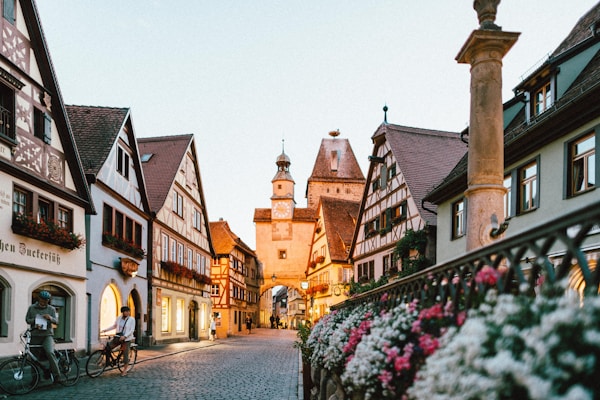
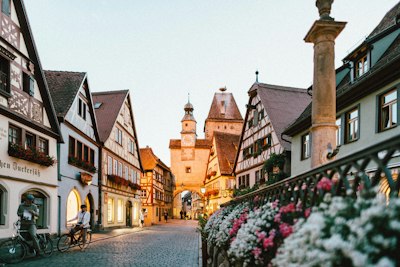
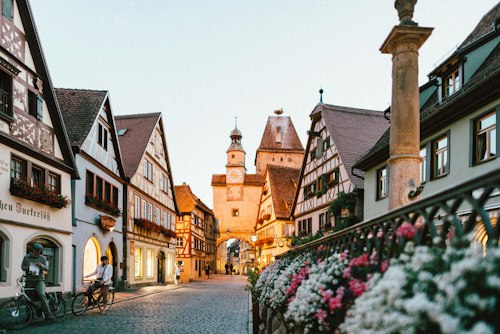
Rothenburg ob der Tauber medieval walled town Germany Romantic Road
Medieval Walled Town

Rothenburg ob der Tauber

Romantic Road · Franconia · Bavaria
★ 4.9
Munich Marienplatz city hall Bavaria Germany Oktoberfest
Beer & Culture

Munich

Bavaria · 3hrs from Frankfurt by ICE
★ 4.8
Rhine Valley Germany castle gorge river cruise Loreley
UNESCO Gorge

Rhine Valley

Rhineland-Palatinate · River cruise country
★ 4.8
Cologne Cathedral Germany Christmas market Rhine river
Gothic Cathedral

Cologne

North Rhine-Westphalia · Rhine river
★ 4.8
The Full Picture

Germany Region by Region

Germany's 16 federal states (Länder) each have a distinct identity — Bavaria's baroque catholicism is as different from Prussian Berlin as Tuscany is from Scotland. Here's your orientation guide.

Berlin Brandenburg Gate Germany capital history culture
History · Art · Nightlife
Berlin & Brandenburg

The capital — Cold War memorials, five world-class museums, the Reichstag, Charlottenburg Palace, and Europe's most vibrant cultural scene.

Berlin WallMuseum IslandPotsdam
Bavaria Neuschwanstein Alps Munich Oktoberfest Germany
Castles · Alps · Beer
Bavaria (Bayern)

Germany's most visited state — Neuschwanstein, the Bavarian Alps, Zugspitze, Munich's Oktoberfest, Regensburg, and Würzburg's baroque residenz.

MunichNeuschwansteinAlps
Rhine Valley Rhineland Germany castle gorge vineyard
Castles · Wine · Rivers
Rhineland & Rhine Valley

The Rhine Gorge UNESCO stretch, Cologne Cathedral, Düsseldorf's art museums, Heidelberg Castle above the Neckar, and the Moselle wine valley.

CologneHeidelbergMoselle
Black Forest Germany fir trees village Triberg cuckoo clock
Forest · Spas · Cake
Baden-Württemberg

The Black Forest (Schwarzwald), the spa town of Baden-Baden, Stuttgart and Porsche/Mercedes museums, Lake Constance, and Freiburg's Gothic cathedral.

Black ForestBaden-BadenStuttgart
Hamburg harbour Speicherstadt warehouse Germany port
Port · Music · Maritime
Hamburg & the North

Hamburg's red-brick Speicherstadt, the Reeperbahn, the Elbphilharmonie concert hall (one of Europe's finest buildings), and the North Sea coast and islands.

HamburgElbphilharmonieLübeck
Saxony Dresden Frauenkirche Germany baroque art
Baroque · Porcelain · Art
Saxony & the East

Dresden's rebuilt Frauenkirche, the Saxon Switzerland sandstone landscape, Leipzig (Bach's city), the porcelain city of Meissen, and the Elbe wine region.

DresdenLeipzigMeissen
Harz Mountains Germany Quedlinburg half-timbered town
Mountains · Half-Timber · Luther
Saxony-Anhalt & Harz

The Harz Mountains, Quedlinburg's UNESCO half-timbered medieval town, Wittenberg (where Luther nailed his 95 Theses), and Dessau's Bauhaus campus.

QuedlinburgWittenbergBauhaus
Frankfurt Germany skyline Römerberg old town banking
Gateway · Museums · Wine
Hesse & Frankfurt

Frankfurt — Germany's main flight hub, the Römerberg medieval square, 13 museums along the Museumsufer, and the Riesling vineyards of the Rhine-Hesse.

FrankfurtRieslingMarburg
What to Do

Germany's Unmissable Experiences

Germany's experiences are rarely simple pleasures — they tend to be complicated, layered, and more interesting than you expected. That is the country's defining quality, and its greatest gift to travellers.

Berlin Museum Island Pergamon altar Germany world heritage
Museum Island, Berlin

Five world-class museums on a single island in the Spree — the Pergamon Altar (complete Greek temple transported from Turkey, 2nd century BC), the Egyptian Nefertiti bust in the Neues Museum, the Ishtar Gate from Babylon in the Pergamon, the Alte Nationalgalerie's Romantic paintings, and the Bode Museum's Byzantine art. Buy the day pass (€22) and plan a full day. The Pergamon is under reconstruction until 2027 — confirm which sections are open before visiting.

Year-round · Book online
Neuschwanstein Castle Bavaria mountain lake Germany autumn
Neuschwanstein Castle

The world's most photographed castle — built by the eccentric Bavarian King Ludwig II from 1869 as a private retreat and never finished, it inspired Walt Disney's Sleeping Beauty castle and has no equal for the combination of alpine landscape and architectural fantasy. The interior tour (30min, €15) is guided and reveals the remarkable Wagnerian murals Ludwig had painted throughout. The Marienbrücke footbridge above the castle gives the photograph. Arrive at opening (8am) or book the first ticket slot online.

Year-round · Pre-book essential
Rothenburg ob der Tauber Christmas market medieval walls Germany
Rothenburg's Medieval Walls

Walk the complete circuit of Rothenburg ob der Tauber's medieval town walls — 3.5km, almost entirely roofed, with timber-framed views over the old town's stepped gables and the wooded Tauber valley below. The town was so perfectly preserved because American General John "Iron Mike" O'Daniel spared it from artillery bombardment in April 1945 after the mayor personally surrendered the town to save it. The result is the most intact walled medieval town in Germany and one of the most extraordinary in Europe.

Year-round · Christmas most magical
Oktoberfest Munich beer tent Bavaria lederhosen Germany
Oktoberfest, Munich

The world's largest festival — held on the Theresienwiese in Munich for 16–18 days from late September, attracting 6 million visitors annually from 160+ nations. The large beer tents (each holding 6,000–8,000 people) are run by Munich's six traditional breweries; entry is free but tents fill completely by 11am on weekends. The festival is simultaneously a massive global event and, in its traditional tents like the Augustinerkeller and Hackerzelt, a genuinely local Bavarian celebration of extraordinary atmosphere.

Late Sep – Early Oct · Book accommodation 12+ months ahead
Rhine River cruise castle gorge Germany Loreley rock wine village
Rhine Gorge River Cruise

The 65km stretch of the Rhine between Rüdesheim and Koblenz is UNESCO-listed as the Middle Rhine Valley — a dramatic gorge flanked by 40 castles and ruined towers, terraced Riesling vineyards on improbably steep slopes, and medieval wine villages at the water's edge. The K-D Line cruise from Rüdesheim to Koblenz (4hrs one-way, ~€20) is the classic experience; the ICE train runs parallel so you can cruise one direction and train back. The Lorelei rock at St. Goarshausen is the gorge's most photographed point.

Mar – Oct · Best Jun–Sep
Dresden Frauenkirche Saxony Germany baroque rebuilt reunification
Dresden & the Frauenkirche

Dresden's Frauenkirche — the magnificent baroque domed church that collapsed in the Allied firebombing of February 1945 and was left as a ruin memorial throughout the Cold War — was rebuilt stone by stone after reunification and reconsecrated in 2005. The result is extraordinary: 45% of the original stones, blackened by the 1945 fire, were incorporated into the new structure, marking history visibly in the walls. Dresden's Zwinger palace complex, the Old Masters gallery (Raphael's Sistine Madonna is here), and the Semper Opera are among Germany's finest baroque monuments.

Year-round · Dec Christmas market exceptional
Black Forest Germany Triberg waterfalls hiking cuckoo clock Baden
The Black Forest

The Schwarzwald — a 200km north-to-south range of ancient fir-covered hills in Baden-Württemberg — gave the world cuckoo clocks, Black Forest gateau (Schwarzwälder Kirschtorte, made with Kirschwasser cherry schnapps), and one of Germany's finest long-distance hiking routes (the Westweg, 285km from Pforzheim to Basel). The spa town of Baden-Baden at the forest's northern edge has been Europe's most fashionable spa resort since Roman legions built the first baths here in the 1st century AD. The Triberg waterfalls are Germany's highest accessible falls.

Year-round · Spring & Summer best
Zugspitze Germany highest mountain Garmisch-Partenkirchen alpine Bavaria
Zugspitze — Germany's Highest Peak

Germany's highest mountain at 2,962 metres sits above Garmisch-Partenkirchen in the Bavarian Alps, one hour south of Munich by train. The Zugspitzbahn cog railway and cable car system ascends to the summit plateau, where on clear days the panorama extends across 400 alpine peaks into Austria, Switzerland, and Italy. The Zugspitze is accessible year-round — in winter as a ski area (Europe's highest and most reliably snowy), in summer for alpine walking. The peak platform's café sells beer at altitude with a view that justifies every euro.

Year-round · Winter skiing, summer hiking
Germany's Most Scenic Drive

The Romantic Road — Complete Guide

The Romantische Straße connects 29 towns across 460km from Würzburg's baroque bishop's palace in the north to the Bavarian Alps in the south. It is Europe's oldest and most celebrated scenic driving route — established in 1950 and unchanged in character since the Middle Ages.

Romantic Road — Key Facts
📍 Start: Würzburg (Franconia) → End: Füssen (Bavaria), 460km
🚗 Driving time: 6–8hrs non-stop; plan 3–5 days to do it properly with stops
🚌 Europabus: Seasonal coach service (May–October) Würzburg ↔ Füssen; 11hrs each way
🏨 Best bases: Rothenburg ob der Tauber (overnight essential), Dinkelsbühl, Augsburg
📅 Best season: April–October; Christmas markets Dec; snow can close passes Jan–Feb
🏁 Combine with: Neuschwanstein (30min from Füssen), Austrian Tyrol, or Bavarian Lakes
Würzburg
🏛️ Franconia · Northern Start · UNESCO Residenz

The Würzburg Residenz — a baroque episcopal palace completed in 1744 and housing the world's largest ceiling fresco (Tiepolo, 677 m²) — is among the most spectacular baroque interiors in Europe and the northern anchor of the Romantic Road. Würzburg itself is a university city rebuilt after being 90% destroyed in a 17-minute RAF bombing raid in March 1945; its reconstruction was remarkably faithful. The Marienberg Fortress above the Main River and the wine-growing hillsides on both banks make for an excellent first day.

UNESCO ResidenzTiepolo FrescoFranconian Wine
Book Würzburg Residenz for the earliest morning tour — the State Rooms are best with low-angle morning light through the original 18th-century windows.
Rothenburg ob der Tauber
🏰 Franconia · The Romantic Road's Centrepiece · Medieval Walls

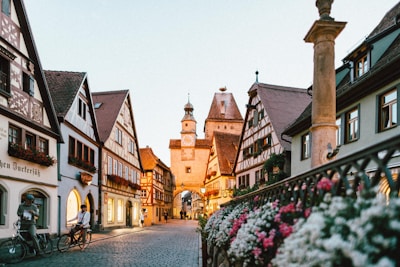
The most perfectly preserved medieval walled town in the German-speaking world — and the Romantic Road's undisputed highlight. The complete circuit of roofed medieval walls, the timber-framed Marktplatz with its Ratstrinkstube clock, the Käthe Wohlfahrt Christmas shop (open year-round, the world's largest permanent Christmas decoration store), and the Night Watchman Tour (English, 8pm nightly, €9, one of Germany's best guided experiences) combine to make Rothenburg genuinely extraordinary at any time of year. An overnight stay — when the day-trippers have departed and the town's streets are quiet under the medieval lantern light — is essential to understand its character.

Medieval WallsNight Watchman TourChristmas Year-Round
The Night Watchman Tour (Hans Georg Baumgartner, the original and still the best) departs from the Marktplatz at 8pm nightly from April to December. Arrive 10 minutes early and stand close — the commentary is extraordinary.
Dinkelsbühl
🎪 Franconia · Quieter Rothenburg · Intact Medieval Town

Dinkelsbühl lacks Rothenburg's fame and therefore its crowds — a slightly smaller, slightly less dramatic but equally intact medieval walled town where the streets at midday in summer are still walkable. The Church of St. George (15th-century Gothic, with a slender spire visible above the town walls) is considered Franconia's most beautiful Gothic hall church. The town is famous for the Kinderzeche festival (third week of July), recreating the legend of its children persuading the Swedish army to spare the town during the Thirty Years War in 1632.

Quiet AlternativeSt George's ChurchKinderzeche July
Augsburg
🏛️ Swabia · Renaissance City · Fugger Banking Dynasty

Augsburg is one of Germany's oldest cities (founded by the Romans in 15 BC as Augusta Vindelicum) and one of its richest in Renaissance heritage — the banking Fugger family, who financed Holy Roman Emperors, built the Fuggerei here in 1516: the world's oldest social housing complex, still inhabited and charging the original rent of one Rhenish gulden per year (approximately €0.88). Augsburg's Town Hall (1624) has one of the finest Renaissance interiors in Germany. As the largest city on the Romantic Road, it works well as a practical base for exploring in both directions.

Fuggerei Housing 1516Renaissance Town HallPractical Base
Stay in the Fuggerei for a genuinely unusual accommodation experience — a small number of rooms are available to non-resident visitors for overnight stays at the original rate equivalent.
Füssen & Neuschwanstein
🏰 Bavaria · Southern End · Fairytale Finale

The Romantic Road ends at Füssen — a small market town at the foot of the Bavarian Alps, 2km from the Austrian border — whose primary significance is as the gateway to the twin castles of Neuschwanstein and Hohenschwangau. Neuschwanstein (King Ludwig II's unfinished Wagnerian fantasy, 1869–86) is the most photographed building in Germany and arguably in all of Europe; Hohenschwangau (the yellow castle below it, where Ludwig grew up and was shown the Lohengrin murals that inspired his life's obsession) is equally interesting and significantly less crowded. The Bavarian Alps beyond Füssen — Zugspitze, the Allgäu Alps, Oberstdorf — make Füssen a natural gateway for further alpine exploration.

NeuschwansteinHohenschwangauAlpine Gateway
Book Neuschwanstein tickets online at least 2–3 weeks ahead in summer (all time slots sell out). The first morning slot (8am) gives the best light on the Marienbrücke bridge for photographs and the quietest castle interior.
December in Germany

Germany's Christmas Markets Guide

Germany invented the Christmas market — the first recorded Weihnachtsmarkt was in Dresden in 1434 — and the originals remain the finest in the world. Here are the five markets that set the global standard.

Nuremberg Christkindlesmarkt Christmas market Germany Bavaria
🥇 World's Most Famous
Nuremberg Christkindlesmarkt
Late November – December 24 · Hauptmarkt

The most famous Christmas market in the world — held on Nuremberg's Hauptmarkt since 1628 and opened each year by a local girl elected as the Christkind (Christ Child) who delivers a prologue from the church gallery above the market. The 180 stalls sell only handmade goods conforming to strict quality standards: Nuremberg Lebkuchen (spiced gingerbread, protected designation since 1927), Zwetschgenmännle (prune people), glass ornaments, and the famous Bratwurst served in pairs in a bread roll.

  • Lebkuchen (gingerbread) protected designation of origin
  • Bratwurst — Nuremberg style, 3 in a roll, mustard only
  • Christkind opening ceremony — last Friday before Advent
  • Children's railway around the market square
Arrive on a weekday — weekend afternoons are impossibly crowded. The market is magical in the early morning (from 10am when stalls open) before the main crowd arrives at lunch.
Cologne Cathedral Christmas market Germany Rhine winter
🏰 Most Spectacular Setting
Cologne Cathedral Christmas Market
Late November – December 23 · Roncalliplatz

Set directly at the foot of Cologne's Gothic Cathedral — whose twin spires rise 157 metres above the market stalls — the Weihnachtsmarkt am Dom is one of the most visually spectacular of all Germany's markets. The cathedral is floodlit after dark; the market stalls selling glass ornaments, mulled wine (Glühwein), and Cologne's own Reibekuchen (potato pancakes with apple sauce) are reflected in the Rhine just below. Cologne actually has seven different Christmas markets spread across the city; the harbour and old town markets are less crowded alternatives.

  • Cathedral backdrop — the world's finest Christmas market setting
  • Reibekuchen potato pancakes — Cologne's Christmas speciality
  • Cologne's signature Glühwein served in a collectible mug
  • 7 markets across the city — harbour market least crowded
Visit the Cathedral market after dark (from 6pm) when the Gothic spires are fully floodlit — the combination of medieval architecture and Christmas lights is extraordinary. Queue times for Glühwein are shortest at the smaller market stalls on the periphery.
Munich Christmas market Marienplatz Rathaus Bavaria Germany
🍺 Most Festive Atmosphere
Munich Christkindlmarkt
Late November – December 24 · Marienplatz

Munich's central Christmas market — set on the Marienplatz with the neo-Gothic New Town Hall as backdrop — is the largest in Bavaria and the market with the most festive atmosphere, reflecting Munich's identity as Germany's capital of gemütlichkeit (cosiness and conviviality). The Kripperlmarkt (crib figurine market) on the nearby Rindermarkt is among Germany's oldest crib markets. Munich's other Christmas markets — Schwabing's bohemian market and the medieval market at Wittelsbacherplatz (staff in period costume, no electricity) — are excellent alternatives to the main market's crowds.

  • Marienplatz backdrop — Munich's finest square at its festive best
  • Kripperlmarkt — traditional crib figurines and nativity scenes
  • Medieval Market at Wittelsbacherplatz — no electricity, period costume
  • Combine with Residenz palace and Hofbräuhaus
Visit Munich's Christmas market on a weekday evening (Tuesday–Thursday) for the best atmosphere-to-crowd ratio. The Glühwein deposit system means you collect a collectible mug from every market you visit — a fine and essentially free souvenir.
Dresden Striezelmarkt Christmas market Germany Saxony oldest
🏆 World's Oldest Market (1434)
Dresden Striezelmarkt
Late November – December 24

The world's oldest Christmas market on record — the Striezelmarkt has been held in Dresden since 1434, 60 years before Columbus reached the Americas. The market's centrepiece is the world's largest Advent calendar and the Christmas pyramid (Weihnachtspyramide) at 14 metres. Dresden's Christstollen (the traditional German Christmas fruit cake, baked since the 15th century in Dresden) is sold throughout; the annual Stollenfest in late November features a 4-tonne Stollen being ceremonially cut open. Combine with Dresden's extraordinary rebuilt Frauenkirche and the Old Masters gallery.

Rothenburg ob der Tauber Reiterlesmarkt Christmas market Germany medieval
🏰 Most Atmospheric
Rothenburg Reiterlesmarkt
Late November – December 23 · Marktplatz

The smallest of Germany's major Christmas markets is arguably its most atmospheric — held entirely within Rothenburg ob der Tauber's medieval walls, lit by lanterns and open fires rather than electricity, with the half-timbered Rathaus as backdrop. The market specialises in Schneeballen (snowball pastries) and handmade wooden ornaments. The combination of Rothenburg's perfectly preserved medieval town and a genuine Christmas market — without the scale of Nuremberg or Munich — makes this the choice for travellers who want the atmosphere above the spectacle. Stay overnight on a weekday to have the illuminated town walls to yourself after the market closes.

Berlin's Essential History

The Cold War & Modern History Circuit

Berlin is the 20th century's most significant city — every major event of European history from 1933 to 1989 left a physical mark on its streets. This circuit covers the sites that make Berlin's historical reckoning uniquely honest.

Berlin Wall East Side Gallery murals Germany Cold War
🧱 Cold War · 1961–1989
The Berlin Wall — East Side Gallery & Remnants
Friedrichshain · Mühlenstraße · 1.3km outdoor gallery

The 1.3km East Side Gallery — the longest remaining stretch of the Berlin Wall, painted by 118 artists from 21 countries in 1990 — is simultaneously one of the world's largest outdoor art galleries and the most powerful monument to the Wall's fall. The famous Trabant breakthrough painting (Dmitri Vrubel's "My God, Help Me to Survive This Deadly Love") is here. Walk the full gallery, then continue to the Topography of Terror (free, on the former SS headquarters site), Checkpoint Charlie (now a tourist site — the original checkpoint booth is at the Allied Museum in Dahlem), and the Documentation Centre at Bernauer Strasse, where the Wall divided a residential street and photographs of the desperate first escapes are displayed at street level.

The Bernauer Strasse Documentation Centre (free, excellent) has the most powerful and human account of what the Wall meant to the people who lived along it. Prioritise this over the more tourist-visited Checkpoint Charlie.
Holocaust Memorial Berlin Germany Stumbling Stones Stolpersteine
🕯️ Holocaust Memorials
Memorial to the Murdered Jews of Europe
Mitte · Cora-Berliner-Straße · Adjacent to Brandenburg Gate

Peter Eisenman's field of 2,711 concrete stelae of varying heights — occupying 19,000 m² in the heart of Berlin's government quarter, one block from the Brandenburg Gate — is one of the most architecturally and emotionally powerful memorial sites in the world. The underground information centre beneath the field provides the historical record; the field itself is experienced physically, as the stelae close around you and the city disappears. Entry is free. Nearby: the Stolpersteine (Stumbling Stones) — 100,000+ brass plaques embedded in Berlin's pavements outside the last homes of Holocaust victims, each inscribed with a name and date. A project by artist Gunter Demnig still ongoing across all of Germany.

Visit the underground information centre before walking the memorial field — the individual histories documented in the centre transform the abstract experience of the stone field into something deeply personal.
Sachsenhausen concentration camp memorial Germany Oranienburg Berlin
⚑ Nazi Germany · 1936–1945
Sachsenhausen Memorial & Museum
Oranienburg · 35km north of Berlin · S1 + regional train

Sachsenhausen concentration camp — established 1936 as a "model camp" for the SS system and used as a training ground for concentration camp commandants — held 200,000 prisoners over its operation and saw approximately 30,000 deaths on site. The memorial museum (free, open daily except Monday) is among the most comprehensive in Germany, with the original camp layout preserved including the cell building where political prisoners were held in isolation. The site was subsequently used as a Soviet NKVD "special camp" until 1950, in which a further 12,000 died — a history also documented and commemorated. Allow 3–4 hours minimum.

Join the free English-language guided tour (daily 11am, meeting point at the main gate) — the guided experience provides context that independent exploration cannot replicate, particularly for the less visually obvious aspects of the camp's function.
Reichstag glass dome Berlin Germany Norman Foster parliament
🏛️ Democracy & Reunification
Reichstag Glass Dome & German Parliament
Tiergarten · Platz der Republik · Free admission

Norman Foster's glass dome above the restored Reichstag — built after the building's gutting by fire in 1933 and destruction in 1945, opened in 1999 as the reunified Germany's parliament — is one of the world's greatest acts of architectural reclamation. The dome (free, pre-registration at bundestag.de required) allows visitors to look directly down into the debating chamber below while walking a spiral ramp to the top: democracy made physically transparent. The building's exterior still bears the graffiti carved by Soviet soldiers in May 1945 — preserved under plexiglass as a decision made by the Bundestag not to erase them. The rooftop view over the Tiergarten and the Brandenburg Gate is Berlin's finest free panorama.

Register for the Reichstag dome at bundestag.de at least 2–3 days in advance (free, takes 2 minutes). Sunset slots (book for 1–2 hours before sunset for your travel date) give the best combination of golden light on the city and the dome's internal mirrors catching the last light.
When to Travel

Germany Through the Seasons

Germany is a four-season destination with pronounced seasonal character — each month offering a genuinely different experience of the same country.

🌸
Spring — Blossom & Beer Gardens
April – June

Germany in spring is one of Europe's most beautiful travel experiences — the Rhine valley covered in cherry and apple blossom in April, Munich's beer gardens opening in May (Munich custom holds that if the temperature reaches 12°C, the beer gardens open — regardless of sun or cloud), and the Romantic Road's medieval towns in their best light before the summer crowds arrive. The Bavarian Alps are accessible for hiking from June as snow clears. Easter markets in Bavaria and Saxony are among Germany's most charming and least-known events.

☀️
Summer — Festivals & Outdoors
July – August

German summer is warm, festival-filled, and the best time for the Romantic Road (peak bloom in gardens, all attractions open, long days), the Bavarian Alps and Zugspitze, Rhine cruises, and Berlin's outdoor culture. July–August is peak tourist season — Neuschwanstein requires pre-booking weeks ahead, and Rothenburg's streets fill with tour groups. The Rhine Gorge is at its most beautiful with the vineyards in full leaf. Richard Wagner's Bayreuth Festival (July–August) is Germany's most prestigious music event; tickets are allocated by lottery with a waiting list of 8–10 years, though last-minute tickets occasionally become available.

🍂
Autumn — Oktoberfest & Wine Harvest
September – October

Arguably Germany's finest travel season — Oktoberfest runs late September into early October in Munich, the Rhine wine harvest (Weinlese) brings the Rheingau and Moselle villages to life in October, and the Bavarian and Black Forest landscapes turn in extraordinary autumn colour from mid-October. Neuschwanstein in October mist and autumn forest is one of Germany's most photographed views. Berlin's festival season (art fairs, music festivals, theatre season openings) peaks in September. Accommodation is hard to find and expensive in Munich during Oktoberfest; book 12+ months ahead for that specific period.

🎄
Winter — Christmas Markets
November – December

Germany in December is arguably the world's finest winter travel destination — the Christmas markets (Nuremberg from late November, Cologne, Munich, Dresden, Rothenburg) are the originals and the world's best, the medieval towns covered in Advent lights are at their most atmospheric, and the Bavarian and Black Forest ski resorts open from late November. January and February are cold and quiet — excellent for museum-focused city trips to Berlin and for Bavarian spa villages. The period between Christmas and New Year is one of Germany's finest travel windows: markets still running, crowds thinned, hotels frequently offering best-of-year rates.

Expert Tips for Germany

From our team who have travelled Germany across every region and season — the things that make a genuinely great German trip.

01
Pre-book Neuschwanstein — Every Time

Neuschwanstein Castle receives 1.4 million visitors per year on a site that can only be toured in guided groups of 70. In summer (June–August), all timed-entry tickets for a given day sell out online at least two weeks in advance, frequently three to four. The only way to guarantee entry is to book at tickets.hohenschwangau.de when the booking window opens (available 113 days in advance). Walk-up tickets at the valley ticket office occasionally remain for the day's very last tour (late afternoon) but this cannot be relied upon. Arriving without a pre-booked ticket in peak season and finding the castle fully sold out for the day is one of Germany's most common travel disappointments.

02
The Deutschlandticket — Use It

The Deutschlandticket (€49/month, introduced 2023) gives unlimited travel on all regional trains, S-Bahns, U-Bahns, trams, and buses across all of Germany — an extraordinary value for any traveller spending more than 3–4 days in the country. It does not cover ICE high-speed trains or IC/EC intercity services, but for regional exploration — the Rhine Gorge trains, Bavarian local services, Berlin's entire public transport network, and the Black Forest railway — it is exceptional value. Purchase through DB Navigator app or at any DB ticket machine; a subscription can be started and cancelled within the same calendar month.

03
Visit the Memorials. All of Them.

Germany's Holocaust and Cold War memorials are not an optional addition to a German itinerary — they are, for many travellers, its most important component. The Memorial to the Murdered Jews of Europe, the Sachsenhausen and Dachau concentration camp memorials, the Topography of Terror, the Stasi Museum in Berlin, the DDR Museum — all are free or very low cost, all are extraordinarily well-curated, and all change the way you understand the Germany you are standing in. Germany's commitment to documenting and memorialising its worst chapters is, paradoxically, one of the most impressive things about it as a contemporary society.

04
Drink the Local Beer. Locally.

Germany has approximately 1,500 breweries — more than any other country — and each region has its own tradition: Bavarian Helles (pale lager) and Weissbier, Cologne's Kölsch (served in tall 200ml glasses by the Köbes, who brings another automatically until you place your beer mat on top), Düsseldorf's Altbier (dark, copper ale), Berlin's Berliner Weisse (sour wheat beer served with raspberry or woodruff syrup), Franconian unfiltered Kellerbier, and Bamberg's smoked Rauchbier (beech wood-smoked malt: extraordinary and unlike anything else on earth). Ordering the local style, in the local context — a Kölsch in a Cologne Braustube, a Weissbier in a Munich beer garden — is one of Germany's most specific and reliable pleasures.

Before You Go

Visas, Flights & Practicalities

Germany is a Schengen member — Australians can visit visa-free for up to 90 days. Frankfurt Airport (FRA) is Europe's third busiest hub and the natural entry point for most Australian routings to Germany and central Europe.

Permit / Entry TypeStatusDurationKey Notes for Australians
Schengen Tourist Entry 🇩🇪 ✓ Visa Free Up to 90 days in any 180-day period No pre-application required. The 90-day Schengen allowance is shared across all 27 member states — days in Austria, Switzerland (non-EU but Schengen), France, or other Schengen countries before arriving in Germany count toward the total. Germany is naturally positioned as the central hub of a multi-country European trip. A valid Australian passport is all that is required at the border.
Germany + Austria + Switzerland Circuit ✓ Visa Free 90 days total across Schengen states Germany combines naturally with Austria (Munich to Vienna is 4hrs by ICE; Salzburg is 1.5hrs from Munich — a natural day trip), Switzerland (Basel is 3hrs from Frankfurt; Zurich 4hrs), and the Czech Republic (Prague is 4.5hrs from Munich; Dresden to Prague is 2.5hrs). Switzerland and Austria are Schengen but not EU; the Czech Republic is Schengen. Days in all of these count against your 90-day total. Plan accordingly if combining multiple European countries on a long trip.
ETIAS (from 2025–26) Check Before Travel Multiple trips / 3 years The EU's Electronic Travel Information and Authorisation System applies to all Schengen arrivals from visa-exempt countries including Australia. Expected cost: ~€7, application online, response within minutes for the vast majority of applicants. The ETIAS rollout has been delayed several times; verify the current launch status at travel.europa.eu before departure. It is not the same as a visa — it is a pre-travel registration equivalent to Australia's own ETA for foreign visitors.
Working Holiday Visa Apply in Advance 12 months Australia and Germany have a bilateral Working Holiday arrangement for citizens aged 18–30. Apply through the German Embassy in Canberra. Limited quota annually — apply as early as possible after the new quota opens (typically 1 January). Germany is a popular working holiday destination particularly in hospitality, tourism, and the ski industry. The visa allows up to 3 months with any single employer; language skills are not required but basic German significantly improves employment prospects and daily life quality.
✈️
Flights from Australia
  • Brisbane to Frankfurt (FRA): No direct service. The most common routings are via Singapore with Singapore Airlines (~21–22hrs total, connecting Lufthansa or partner airline to FRA), via Dubai with Emirates (direct Frankfurt service, ~22–24hrs total), or via Doha with Qatar Airways (~21–23hrs). Lufthansa also flies Frankfurt from Singapore and connects extensively. FRA is Europe's third busiest airport and one of its best-connected hubs.
  • Sydney to Frankfurt: Singapore Airlines via Singapore to Frankfurt is consistently strong in Business Class. Emirates via Dubai, Lufthansa via Singapore or Bangkok (code-sharing with partner airlines from Australia), and Qatar via Doha all serve Frankfurt from Sydney with competitive fares. Singapore Airlines's Frankfurt service offers direct connection without terminal changes.
  • Consider flying into Munich (MUC): If your itinerary is Bavaria-focused (Neuschwanstein, Romantic Road, Alps), Munich Airport is significantly more convenient than Frankfurt. Munich is served from Singapore, Dubai, and Doha with one-stop routings; the city centre is 40 minutes from the airport by S-Bahn (€13.40). Munich to Füssen (Neuschwanstein) is a 2hr direct train.
  • Frankfurt as a hub: Frankfurt's airport has a long-stay car hire at Terminal 1; an ICE train station in the airport basement connects directly to central Frankfurt (11 min) and the national rail network — Munich 3hrs, Berlin 4hrs, Cologne 1hr. Flying into Frankfurt and immediately boarding a train is one of Europe's most efficient arrival experiences. No transfer bus, no city airport shuttle — just the train, under the terminal.
  • Best booking window: 4–6 months for July–August peak; 8–10 weeks for spring and autumn at significantly lower fares. For the Christmas market season (late November–December), book accommodation before flights — popular Christmas market cities (Nuremberg, Cologne, Munich, Rothenburg) fill all hotels by September for December.
💰
Budget & Money Guide
  • Germany vs Western Europe: Germany is generally 15–25% less expensive than comparable destinations in France and the UK. Restaurant prices are particularly competitive — a mid-range Gasthaus (traditional German pub-restaurant) main course with a local beer typically costs €14–22; the equivalent in a London or Paris brasserie runs 40–60% more at current exchange rates.
  • Budget travel (€70–100/day, ~$120–170 AUD): Hostel or budget hotel, self-catering breakfasts (German bakeries open from 6am; a roll with cheese and coffee costs €3–5), lunch at a Metzgerei (butcher's shop with takeaway hot food, Germany's finest fast food tradition — Nuremberg Bratwurst, Munich Leberkäse), regional beer at a Wirtschaft, public transport with the Deutschlandticket (€49/month).
  • Mid-range (€130–200/day, ~$220–340 AUD): Three-star hotels or family-run Gasthäuser with breakfast included, mid-range restaurant dinners (€25–45 per person with wine), ICE train travel (book ahead for best fares), castle and museum admissions (most major attractions €10–18).
  • Premium (€280–450+/day, ~$475–765+ AUD): Schlosshotels (historic castle hotels, Germany has 50+), fine dining in Berlin and Munich, private Romantic Road car tours with a guide, and Oktoberfest reserved tent seating (pre-booked through official tents for large groups, typically requiring minimum food and drink orders of €50–80 per person).
  • Tipping in Germany: Round up to the nearest round number or add 5–10% at restaurants — tell the server the total amount you wish to pay when they bring the bill (e.g., "machen Sie 30 bitte" for a €27.40 bill). Tipping is not as culturally embedded as in Australia or the US; a tip is appreciated but never expected. Taxi drivers: round up. Housekeeping: €1–2 per night left on the pillow.
  • Free museums: Unlike France and the UK, most German national museums charge admission (€8–18). However, many civic and state museums offer free admission on the first Sunday of the month. Berlin's major museums have an €18 museum island day pass covering all five institutions. The Holocaust Memorial underground centre, the Topography of Terror, and the East Side Gallery are all free.
🚅
Getting Around Germany
  • Deutsche Bahn ICE Network: Germany's InterCity Express (ICE) trains travel at up to 300km/h between all major cities — Frankfurt to Munich 3hrs, Frankfurt to Berlin 4hrs, Hamburg to Berlin 1hr 45min, Cologne to Munich 4.5hrs. Book at bahn.de or DB Navigator app. Advance booking (Sparpreis fares, 3 months ahead) can reduce a €120 walk-up fare to €17.90. The full-price Flexpreis ticket is refundable and changeable — worth paying for if plans are uncertain.
  • Deutschlandticket (€49/month): Unlimited travel on all regional trains, S-Bahns, U-Bahns, trams, and buses in Germany. Does NOT cover ICE/IC/EC trains. Excellent value for: exploring Berlin's public transport comprehensively, the Rhine Gorge regional trains (Koblenz–Rüdesheim), Bavarian regional services (Munich to Füssen/Neuschwanstein), and the Black Forest Railway. Buy through the DB Navigator app; can be started mid-month.
  • Car hire for the Romantic Road: Essential for the full Romantic Road experience — the route passes through 29 towns, most of which have no direct train service. International licence accepted (IDP recommended but not legally required). The Autobahn has no general speed limit — some sections have recommended limits of 130km/h, others are genuinely unrestricted. Motorway (Autobahn) toll: none for passenger cars. Urban parking: pay and display at Parkscheinautomaten; underground carparks in town centres typically €1.50–3/hour.
  • Frankfurt Airport ICE connection: The DB long-distance train station in Frankfurt Airport Terminal 1 basement connects directly to central Frankfurt (11 min), Cologne (1hr), Munich (3hrs), Berlin (4hrs). Arriving at Frankfurt and boarding an ICE to another German city without leaving the airport complex is one of European travel's great efficiencies. Look for signs to "Fernbahnhof" within the terminal.
  • Munich to Neuschwanstein: Direct train Munich HBF → Füssen (2hrs, €25.80 or Deutschlandticket-covered if using regional trains). A free shuttle bus runs from Füssen train station to the Hohenschwangau valley. Taxis (€10) and the horse-drawn carriage (€8 up, €4 down) are additional options to reach the castle from the valley. Total journey Munich to castle interior: allow 3–3.5 hours including queues and the 30-minute guided tour.

Auf nach Deutschland?

Our Germany specialists have personal knowledge of every section of the Romantic Road, every major Berlin memorial, and a personal favourite Christmas market in each of the five cities. We handle the Neuschwanstein pre-bookings, the Night Watchman Tour timing, the ICE rail passes, and the Oktoberfest tent reservations that are impossible to secure independently. We build Germany itineraries that go beyond the postcards.

Start Planning My Germany Trip Call 0409 661 342

Trusted by 50,000+ Australian travellers · ATAS Accredited · 35+ Years

Explore More

Related European Travel Guides