Both ancient. Both extraordinary. Both World Heritage listed. But one is steaming tropical jungle where cassowaries stalk the undergrowth — and the other is cool Gondwanan mountain forest where glow worms light the dark. Which one belongs in your trip?
Visitors to Queensland often ask: should I visit the Daintree or Springbrook? The answer depends entirely on where you're staying, how much time you have, and what kind of rainforest experience you're after. They are both remarkable — but they are not interchangeable. One is steaming tropical jungle where crocodiles patrol the rivers, cassowaries stalk the undergrowth, and the vegetation is so dense it blocks the sky. The other is cool, misty Gondwanan mountain forest where Antarctic beech trees predate the dinosaurs and glow worms illuminate cave ceilings at night.
| 🌴 Daintree | 🌿 Springbrook | |
|---|---|---|
| Location | Tropical far north QLD — 2 hrs north of Cairns | Gold Coast hinterland — 1 hr from Surfers Paradise |
| Climate | Tropical: hot, humid, distinct monsoonal wet season | Subtropical / cool: misty, mild and comfortable year-round |
| Age | ~180 million years — oldest tropical rainforest on earth | Gondwanan remnant — species 100+ million years old |
| World Heritage | Wet Tropics of Queensland WHA | Gondwana Rainforests of Australia WHA |
| Nearest city | Cairns (2 hrs) · Port Douglas (1 hr) | Gold Coast (1 hr) · Brisbane (1.5 hrs) |
| Signature wildlife | Cassowary · crocodile · tree kangaroo · Boyd's forest dragon | Glow worms · pademelons · Albert's lyrebird · Antarctic beech |
| Best trails | Dubuji boardwalk, Marjorie Creek, Mount Sorrow (hard) | Purling Brook Falls, Natural Bridge, Warrie Circuit |
| Best season | May–October (dry season) | Year-round; best March–August |
| Key experience | Rainforest meets the reef at Cape Tribulation | Glow worm cave at Natural Bridge (night) |
| Vibe | Wild, remote, primeval, hot and dense | Cool, intimate, ancient, misty and quiet |
The Daintree is the oldest continuously surviving tropical rainforest on earth — estimated at 180 million years. It covers 1,200 square kilometres of dense tropical jungle from the Daintree River north to Cooktown, and it holds the unique distinction of being the only place on earth where two World Heritage areas meet: the rainforest runs directly to the coast of the Great Barrier Reef at Cape Tribulation.
Walking in the Daintree is a full sensory experience unlike any other. The canopy is thick and multi-layered — fern palm, fan palm, strangler fig, and hundreds of other species layered one above another until the sky almost disappears. The air is warm, heavy with moisture, and smells distinctively green. The sound is constant — birds, insects, water, rustling. Everything is enormous: the buttress roots spreading three metres from the trunks, the fan palms wider than most rooms, the fungi that glow phosphorescent at night.
This is also active saltwater crocodile country. Estuarine crocodiles inhabit the Daintree River and surrounding waterways — you won't encounter them on the walking trails, but their presence is felt and real. It adds a layer of genuine wildness that no other Australian rainforest offers.
Springbrook sits on a plateau 900 metres above the Gold Coast — a remnant of the ancient Tweed Shield Volcano that erupted 23 million years ago. It's part of the Gondwana Rainforests of Australia World Heritage Area — fragments of the forests that covered the supercontinent Gondwana before it broke apart over 80 million years ago.
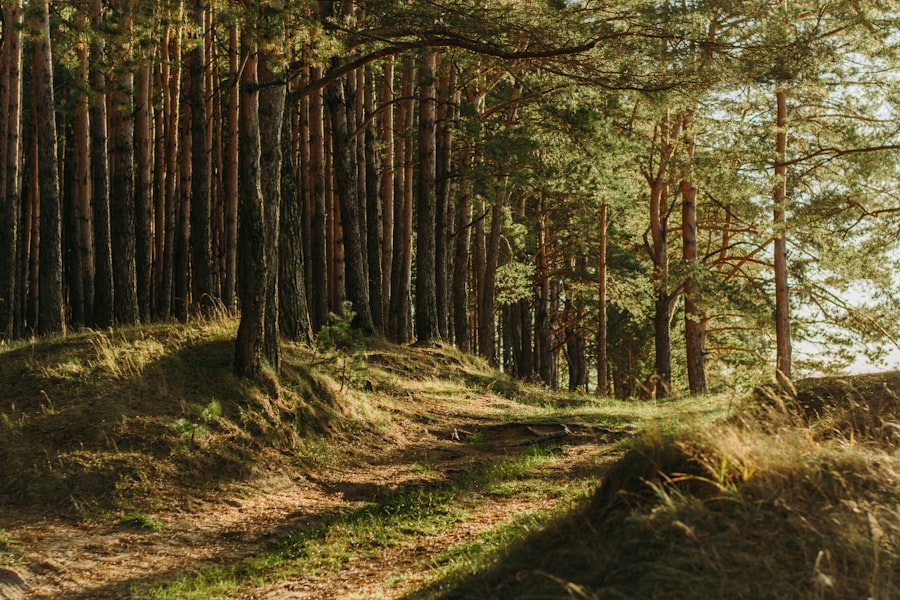
Where the Daintree is hot and dense, Springbrook is cool, quiet, and intimate. Its signature species are Antarctic beech trees — Gondwanan relics that have survived essentially unchanged for over 100 million years. Walking through the beech forest at Best of All Lookout is a profoundly unusual experience: the moss-covered trunks, the mist filtering through a closed canopy, the silence broken only by whipbirds, create something almost meditative.
Springbrook's other signature experience is entirely unique: the Natural Bridge glow worm cave, where a basalt rock arch over a waterfall hosts thousands of bioluminescent glow worm larvae (Arachnocampa flava) whose blue-green light illuminates the cave ceiling at night. No crocodiles, no cassowaries — but a quieter, different, older kind of wonder.
Both rainforests are rich in wildlife — but the species are as different as the forests themselves. Here's a side-by-side breakdown of what you're most likely to encounter in each.
Both parks have excellent marked walking trails accessible to visitors without specialist gear. The character of the trails reflects the character of the forest: Daintree trails focus on boardwalks through dense jungle and coastal access; Springbrook trails feature waterfalls, ridgeline lookouts, and varied difficulty levels.
A classic Daintree boardwalk through lowland rainforest. Short, flat, and excellent for first-time visitors — the elevated walkway keeps you safely above the forest floor and at eye level with the lower canopy. Giant fan palms, strangler figs, and exceptional birdlife. One of the best introductions to what tropical rainforest actually looks like from the inside.
The iconic Daintree experience: this boardwalk starts in dense rainforest and ends on the Cape Tribulation beach where the jungle comes down to the coral sea. Cassowaries are occasionally spotted early morning along this trail. Do both the forest walk and the beach access — standing at the point where World Heritage rainforest meets the Great Barrier Reef is genuinely remarkable. Allow 45 minutes including the beach.
Short, accessible, and particularly good for the variety of tree species and buttress root formations on display. Well-suited for guided interpretation sessions — the number of different fern species alone is extraordinary. Better for photography than Marjorie Creek due to more open canopy sections.
For experienced, fit walkers only — 600 m vertical gain over 3.5 km, loose shale in sections, and significant exposure at the ridge. The reward is a panorama from rainforest to reef visible simultaneously: one of the most dramatic views in Australia. 4–5 hours return. Take plenty of water, start before 8 AM, and do not attempt in wet season.
The signature Springbrook walk — a circuit that takes you through sub-tropical rainforest, past the 109-metre Purling Brook Falls (one of Queensland's tallest), and returns via a different ridge path with views over the Numinbah Valley. Sections of excellent Antarctic beech forest. A few steep pinches but nothing requiring special fitness. Allow 2–2.5 hours. The view of the falls from the base lookout is the standout moment.
The unmissable Springbrook experience — and it only works at night. A short 1 km loop descends to a basalt arch formed by a waterfall cutting through the rock over millennia. The cave ceiling hosts thousands of Arachnocampa flava glow worm larvae whose bioluminescent silk threads create a blue-green star field in the dark. Join an organised night tour rather than going alone — guides know where to stand, how to allow your eyes to adjust, and the natural history that makes the experience meaningful rather than just a brief wonder.
The walk to Best of All Lookout passes through the most accessible section of Antarctic beech forest in the park. These are the Gondwanan trees — their trunks draped in moss, their canopy so old the concept of age breaks down. On clear mornings the lookout reveals a view extending from the hinterland ranges to the Gold Coast towers and Pacific Ocean beyond. Worth combining with Purling Brook Falls for a half-day in the park.
The full-day Springbrook experience — 17 km through the main section of the park visiting all major waterfalls (Goomoolahra, Tallanbana, Canyon Lookout, Twin Falls), ancient beech forest, and multiple ridge viewpoints. Allow 7–8 hours. Requires a good fitness level and solid footwear. One of the best single-day walking experiences available anywhere in South East Queensland for the range of environments encountered.
Fly to Cairns. Drive north along the Captain Cook Highway (one of Australia's most scenic coastal roads) past Port Douglas (1 hour from Cairns) to the Daintree River crossing. The river is crossed by cable ferry — cost is approximately $35 per vehicle return, cash or card. There is no bridge.
North of the river, the road is sealed but narrow and winding. Fuel up before the river crossing — there is limited fuel availability north of the Daintree (Wujal Wujal community) and prices reflect remoteness. Mobile coverage is patchy to non-existent beyond Cape Tribulation.
Some minor roads and creek crossings become impassable in heavy wet season rain. If visiting June–October, conditions are reliable. November–April, check conditions before heading north of the river.
Drive from the Gold Coast or Brisbane. The main Springbrook road climbs from Mudgeeraba (Gold Coast) on fully sealed switchback mountain road — winding but not difficult. No ferry, no river crossing, no fuel complications. Full mobile coverage throughout most of the park.
Multiple entry points serve different sections: Springbrook Road for the main falls and lookouts; Natural Bridge Road for the glow worm cave. Both are clearly signposted. Parking at the main areas is free but can fill on busy weekends — arrive by 9 AM or after 2 PM on weekends.
Springbrook is accessible year-round without any seasonal complications. The mountain road can be temporarily closed in extreme weather but this is rare and brief. The park is a genuinely easy day trip without planning complexity.
Both rainforests are perfectly achievable on a guided day tour and frankly easier that way — particularly the Daintree, where the distances between sites and the logistics of the ferry crossing reward having someone else handle the driving. Cooee Tours operates from both cities. The natural history interpretation provided by a good guide also transforms what you see: a boardwalk walk alone and a boardwalk walk with someone identifying species in real time are genuinely different experiences.
The recommended visiting window. Clear skies, reduced humidity, minimal mosquitoes, and reliable road access throughout the park. Temperatures are warm (25–30°C) but not oppressive. Trails are firm. Wildlife sightings can actually be better in dry season as animals come to water sources. Book tours ahead — this is peak visitor season.
Dramatic, lush, and very wet. The forest is at its most vividly green. Rainfall can be intense — Cairns averages 2,100 mm annually, most falling November–April. Some minor roads and creek crossings may flood. Mosquitoes are more numerous and persistent. The heat and humidity are significant. Still a valid time to visit with appropriate preparation — but not ideal as a first visit.
Best for comfortable walking — temperatures are cool and pleasant (12–20°C on the plateau), misty mornings, and the beech forest is particularly atmospheric in cool winter light. The glow worm cave operates year-round and the contrast between cold air outside and the cave interior is most pronounced in winter. Waterfalls run strongly after the summer rain.
Unlike the Daintree, Springbrook has no genuinely difficult season. Summer (December–February) brings warmer temperatures (25–30°C at the base, 18–22°C on the plateau), some afternoon storms, and the waterfall flows at maximum volume after heavy rain. Spring (September–November) brings wildflowers in surrounding areas. Any month is a valid choice for Springbrook.
The honest answer is simple: visit whichever rainforest is near where you're already staying. They are 1,800 kilometres apart. You can't casually add both to an itinerary centred on one city. If your trip covers both regions — Cairns/Port Douglas and the Gold Coast, connected by a 2.5-hour flight — then visit both, because they are genuinely different experiences and together they tell a remarkable story about the age and diversity of Australia's ecological heritage.
Both forests represent different chapters of Australia's ecological story — tropical biodiversity at maximum intensity (Daintree) and ancient Gondwanan survival across geological time (Springbrook). If your itinerary allows, the combination is extraordinary. If it doesn't, make the choice based on geography and trust that whichever you visit will be unlike anywhere else you've been. Neither will disappoint.
The Daintree is the oldest continuously surviving tropical rainforest on earth — estimated at around 180 million years. Springbrook's Antarctic beech forest contains Gondwanan plant species dating back over 100 million years. Both predate the Amazon rainforest by tens of millions of years. Both are part of separate UNESCO World Heritage Areas: the Wet Tropics of Queensland (Daintree) and the Gondwana Rainforests of Australia (Springbrook).
Only if your itinerary includes both Cairns and the Gold Coast — the forests are 1,800 km apart and not remotely accessible as a combined day trip from one city. If you're flying into Cairns and out of Brisbane (or vice versa), visiting both is absolutely feasible. Combined, they represent one of the most complete introductions to Australia's ancient ecological heritage available anywhere.
Both have good self-guided trails but a guided tour adds substantial value — particularly for wildlife identification (you will walk straight past dozens of species a guide would stop and explain), ecological interpretation, and in the Daintree's case, handling the logistics of the ferry crossing and inter-site travel. The Natural Bridge glow worm experience at Springbrook is significantly better on a guided night tour than a self-guided visit. Cooee Tours operates from both the Gold Coast and Cairns.
The Daintree edges Springbrook for overall biodiversity — it has more globally iconic species (cassowary, crocodile, Boyd's forest dragon, tree kangaroo), higher species endemism, and the additional marine life accessible at Cape Tribulation. However, Springbrook's glow worm experience at Natural Bridge is unique — Arachnocampa flava doesn't occur in the Daintree — and Albert's lyrebird is one of the most extraordinary birds in Australia. Both are exceptional for birdlife.
Springbrook is accessible and enjoyable year-round — best March–August for comfortable walking temperatures. The Daintree's ideal window is May–October (dry season) when conditions are reliable, access roads are firm, humidity is manageable, and mosquitoes are reduced. The Daintree in wet season (November–April) is vivid and dramatic but roads can flood, mosquitoes are persistent, and the heat and humidity are intense.
Both have excellent easy trails suitable for families with children. The Daintree's short boardwalk trails (Marjorie Creek, Dubuji, Jindalba) are flat, safe, and genuinely exciting for children — the scale of the vegetation and the possibility of cassowary sightings makes it compelling. Springbrook's Natural Bridge trail (1 km, flat) and Best of All Lookout (600 m) are both excellent for children. The glow worm experience is particularly memorable for kids. Keep children close to adults on all trails — this is live wildlife habitat.
In the Daintree, do not swim in any river, creek, estuary, or beach unless at a specifically designated and monitored swimming area. Saltwater crocodiles are present throughout the river system and coastal waterways — this is not a theoretical risk. At Cape Tribulation beach, the area is monitored but swimming near river mouths is prohibited. In Springbrook, the creek below Natural Bridge is cool and clear but swimming is not recommended as the rock surfaces are slippery and water levels fluctuate. Check with park rangers for current swimming conditions.
An honest guide to the reef — conditions now, responsible visiting, and choosing a good operator.
Where to find Australia's unique fauna — cassowaries, crocodiles, koalas, and more.
10 easy Queensland trails perfect for first-time bushwalkers — rainforest included.
From Brisbane to Cairns — plan the iconic Australian east coast journey that covers both rainforests.
Cooee Tours runs guided day trips to both rainforests. Springbrook from the Gold Coast. Daintree from Cairns. Small groups, expert local guides, all logistics included — no car hire, no navigation, no guesswork. Just ancient forest and someone who can tell you what you're actually looking at.
ATAS Accredited · 50,000+ Guests · ★★★★★ 4.8/5 · Small Groups Only · Australian Owned Since 1963