


🌏 Why Sustainable Travel Matters — The 2026 Picture
Tourism represents approximately 8% of global carbon emissions. As international travel rebounds to and beyond pre-pandemic levels, the industry faces genuine pressure to reduce its environmental footprint while remaining economically viable for the communities it supports. The good news for travellers: the tools to make better choices are more accessible than ever.
Sustainable travel doesn't mean compromising the experience — it means making informed choices about which operators to support, how to get between destinations, and how to engage with natural environments. At its best, it produces richer experiences: Indigenous cultural tours, wildlife encounters led by conservation-funded guides, and farm-to-table food that's genuinely local.
Australia's extraordinary biodiversity — 80% of wildlife found nowhere else on Earth, the world's largest coral reef system, the oldest tropical rainforest — makes responsible tourism especially urgent here. The Great Barrier Reef Foundation, Leave No Trace Australia, and Ecotourism Australia all provide frameworks for visiting these ecosystems without damaging them. Choosing certified operators directly funds the conservation work that keeps these places accessible.
🤖 How AI Transforms Eco-Friendly Travel — Real Tools for 2026
AI and technology genuinely help eco-conscious travellers make better decisions — when used purposefully. Here are the tools that are actually useful for sustainable travel in Australia, with an honest assessment of what each does.
Skyscanner — Greener Choice Filter
Skyscanner's flight search now includes a "Greener Choice" label on lower-emission flight options. When you must fly, this helps identify routes and airlines with better fuel efficiency. Not perfect — but a genuine and accessible starting point.
Rome2rio — Multi-Modal Route Planning
Rome2rio compares train, bus, ferry, and car options alongside flights — making it the best tool for finding lower-carbon ways to travel between Australian cities. Sydney to Melbourne by overnight train? Brisbane to Cairns by rail? Rome2rio shows the options side-by-side.
Ecotourism Australia Green Travel Guide
The definitive resource for finding ECO Certified operators and accommodation across Australia. Powered by Ecotourism Australia, this is the only guide that verifies claims rather than taking operators at their word. Essential for booking tours in sensitive ecosystems.
TripAdvisor GreenLeaders
TripAdvisor's GreenLeaders program flags accommodation and experiences in Australian cities that meet verified environmental criteria — renewable energy use, waste reduction, water conservation, and local sourcing. Useful for filtering eco-friendly hotels in major cities.
Google Travel — Carbon Emissions Estimates
Google Flights now shows carbon emissions estimates for flights in search results, making it easy to compare the environmental cost of different routes and airlines when planning Australian travel. Simple and integrated into the search most people already use.
PlugShare / NRMA EV Map — EV Charging
For road trips in an electric or hybrid vehicle, PlugShare and the NRMA EV Charging map show Australia's 10,000+ charging stations along your route. Australia's nationwide EV network reached full integration in 2026 — EV road trips from Brisbane to Cairns or Melbourne to Adelaide are now genuinely practical.
By 2026, generative AI tools can craft personalised eco-itineraries that consider a traveller's preferences alongside local environmental data — avoiding overcrowded sites, suggesting certified eco-lodging, and combining transport modes to reduce emissions. Research indicates AI-driven route planning can reduce a typical trip's carbon footprint by approximately 15% compared to traditional planning. The most practical version: use AI assistants to find train alternatives to flights, identify ECO Certified operators, and plan routes that sequence destinations efficiently to minimise backtracking.
🌱 Ecotourism Australia Certification — The Verification That Matters
Australia has one of the world's most rigorous ecotourism certification systems — run by Ecotourism Australia, a non-profit established in 1991. When a tour operator or accommodation displays the ECO Certified logo, it means their environmental and cultural practices have been independently verified against global best practice standards — not just self-reported.
Nature Tourism Certification
For businesses that operate in natural areas with low environmental impact. Baseline verification of sustainability practices, waste management, and wildlife interaction standards.
Ecotourism Certification
For businesses with a genuine focus on education, conservation, and Indigenous cultural respect. Active contribution to conservation and community programs is verified.
Advanced Ecotourism Certification
The highest standard — reserved for operators who are sector leaders in environmental management, cultural respect, economic contribution, and visitor education. Often described as "a badge of honour" by certified Australian businesses.
Not all operators claiming to be "eco-friendly" or "sustainable" are certified. Verify claims at greentravelguide.org or ecotourism.org.au before booking. Look for the green ECO Certified logo on operators' websites and booking pages. For reef experiences, the Great Barrier Reef Foundation maintains a list of High Standard Tourism Operators at the reef.
🌊 Sustainable Adventure Destinations in Australia
Australia's natural environments are extraordinary — and many of the best ways to experience them are also the most sustainable. These destinations represent the strongest combination of natural wonder and responsible tourism infrastructure.
Great Barrier Reef, QLD
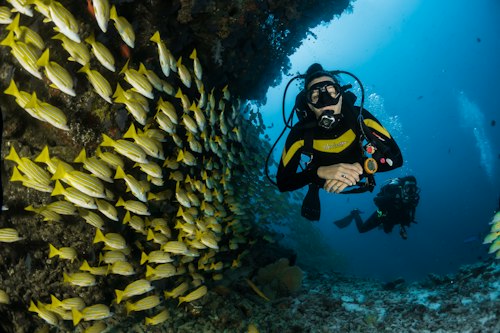
Snorkel or dive with High Standard Tourism Operators certified by the Great Barrier Reef Marine Park Authority. Use reef-safe sunscreen (avoid oxybenzone and octinoxate — both documented to damage coral). Choose outer reef tours that provide genuine conservation education, not just snorkel access.

Tasmania
Eco-lodges, bushwalking in World Heritage wilderness, and wildlife tours with some of Australia's most rigorous environmental operators. The Bay of Fires, Cradle Mountain, and Freycinet Peninsula offer world-class experiences through genuinely low-impact operators — many ECO Certified.

Daintree Rainforest, QLD
World's oldest tropical rainforest, managed with Kuku Yalanji Indigenous cultural protocols. Eco-tours here combine ancient rainforest science with 50,000 years of land management knowledge. Choose operators that work in partnership with Traditional Owners — the Daintree Ecolodge's spa treatments were developed with Elder approval.

Uluru & the Red Centre, NT
The free Mala Walk with Anangu rangers (2km, 90 min) is the most sustainable Uluru experience available — zero cost, zero environmental impact, and the deepest cultural learning. The new 2026 Uluru-Kata Tjuta Signature Walk (5-day guided experience) operates under Anangu protocol with minimal footprint overnight camps.

Victoria's Yarra Valley
Organic wineries, farm-to-table restaurants, and guided nature walks. The Yarra Valley's regenerative agriculture scene is growing — several cellar doors now use AI monitoring for water use and soil health. Biodynamic vineyards are increasingly the standard for conscious wine tourism in the region.

Queensland Hinterland
Lamington National Park, Mt Tamborine's forest walks, and Springbrook National Park offer accessible rainforest and nature experiences near Brisbane. The new Dreaming Trails Tour (Sunshine Coast, 2026) led by First Nations knowledge-holders includes bush tucker walks with Aunty Dale — an excellent example of community-based sustainable tourism.
⚖️ The Honest Trade-Off: AI's Own Environmental Footprint
A genuinely useful guide to AI and sustainable travel has to include this: AI itself has a significant and growing energy footprint. Data centres running AI consumed approximately 460 TWh in 2022 — equivalent to the entire electricity consumption of Germany. The International Energy Agency projects this will double to 1,000 TWh by 2026.
This doesn't mean AI tools aren't useful for sustainable travel — they genuinely are. AI-optimised routing can reduce trip emissions by ~15%. Eco-certification finders save hours of manual research and prevent booking greenwashing operators. Carbon tracking creates accountability. These are real benefits.
The most sustainable approach: use AI tools selectively and purposefully — for planning and decision-support — rather than generating unnecessary AI content or running energy-intensive generative tasks out of curiosity. A well-targeted AI search that finds a certified eco-operator you would have missed independently has a clear net benefit. An AI that generates 10 variations of a travel caption does not. Use the tools; use them with intention.
✅ Your Sustainable Travel Checklist for Australia
Before You Book
- Verify tour operators at greentravelguide.org or ecotourism.org.au for ECO Certification
- Use Rome2rio to identify train or bus alternatives to internal flights
- Use Skyscanner's "Greener Choice" filter when flights are unavoidable
- Check that reef experiences follow Great Barrier Reef High Standard Tourism Operator guidelines
- Choose accommodation with TripAdvisor GreenLeaders certification or ECO Certified lodges
- Research carbon offsetting options through Climate Active or Gold Standard certified programs
While You're There
- Use reef-safe sunscreen (no oxybenzone or octinoxate) near marine environments
- Follow Leave No Trace principles on all bushwalks and nature activities
- Book Aboriginal and Torres Strait Islander experiences with operators working under community permission and cultural protocols
- Choose locally owned restaurants, markets, and cafés over chains
- Carry a reusable water bottle — tap water is safe to drink everywhere in Australia
- Respect all signage at natural sites — particularly sacred site restrictions and wildlife distance guidelines
- Never take rocks, shells, or natural material from protected areas (including Uluru — see our Responsible Travel guide)
Technology Habits
- Download offline maps before losing cell coverage in national parks (Gaia GPS, AllTrails)
- Use Ecotourism Australia's Green Travel Guide app to find certified experiences in each region
- Track your trip emissions using Google Travel or Skyscanner's carbon estimates
- If hiring a car, select hybrid or electric — EV charging networks now cover all major Australian tourist routes
- Use AI for planning decisions, not entertainment — keep the energy footprint of your planning proportionate
Travel Sustainably with Cooee Tours
Eco-conscious day tours, wildlife experiences, and guided nature immersion from Brisbane and the Gold Coast. We support local guides, follow responsible wildlife interaction protocols, and work toward Ecotourism Australia certification alignment.
Explore Our Tours →