🌎 Kenya · Tanzania · Uganda · Rwanda · Zanzibar

The Greatest
Wildlife Show
on Earth.

1.5 million wildebeest crossing the Mara River in July. A mountain gorilla sitting three metres from your face in a Rwandan rainforest. The sun rising over the Ngorongoro Crater as a cheetah begins its morning hunt. East Africa delivers wildlife encounters that no amount of reading or watching prepares you for.

1.5M
Wildebeest in the Great Migration
1,063
Mountain Gorillas Left on Earth
5,895m
Mount Kilimanjaro — Africa’s Summit
600km²
Ngorongoro Crater — Wildlife Eden
12 hrs
Brisbane to Nairobi via Dubai
🌎 East Africa
Five Countries · One Continent’s Finest

East Africa — Where Evolution
Still Runs at Full Speed

East Africa (Kenya, Tanzania, Uganda, Rwanda, and the island territories of Zanzibar and Pemba — collectively constituting the most biodiverse and most intact large mammal ecosystem remaining on Earth) is the destination where the evolutionary drama that produced all terrestrial life is still visible, daily and in real time. The Serengeti–Masai Mara ecosystem (the 25,000 km² continuous grassland spanning the Kenya–Tanzania border — the largest terrestrial animal biomass of any ecosystem on Earth outside the polar oceans) supports 1.5 million wildebeest (Connochaetes taurinus), 400,000 zebra, 200,000 Thomson’s gazelle, and the predator community that follows them: approximately 3,000 lion, 1,000 cheetah, 400 wild dog (Lycaon pictus — among the most endangered carnivores in Africa), and 9,000 spotted hyena. The Great Migration — the annual circular movement of the wildebeest and zebra herd following the rains clockwise around the Serengeti-Mara system — is the largest terrestrial animal migration on Earth and the event that structures the East African safari calendar.

Beyond the migration: Rwanda’s Volcanoes National Park (the Virunga volcanic massif shared between Rwanda, Uganda, and the DRC — home to approximately 60% of the world’s remaining mountain gorillas (Gorilla beringei beringei) — total world population 1,063 as of the 2018 census, increasing from a low of 250 in the 1980s due to conservation intervention — the gorilla tracking permit (USD$1,500 per person per hour-long visit in Rwanda — the most expensive wildlife permit in the world and the most justifiable) funds the park ranger network that has made the recovery possible). Mount Kilimanjaro (5,895m — the highest freestanding mountain in the world — the summit accessible to non-technical climbers via the Marangu, Machame, Lemosho, or Rongai routes — the summit success rate of approximately 65% on the standard 6-day Machame route, improving to 85%+ on the 8-day Lemosho route with better acclimatisation). Zanzibar (the spice island in the Indian Ocean — the Stone Town UNESCO World Heritage Site — the dhow harbour, the clove and nutmeg plantations — and the coral reef diving that ranks among the finest in the Indian Ocean).

✅ East Africa Practical Essentials
  • Visa: Kenya (eTA — USD$30, apply at etakenya.go.ke — available to Australians — processes within 48–72 hours — required before arrival). Tanzania (e-Visa — USD$50, apply at immigration.go.tz). Uganda (USD$50, apply at visas.immigration.go.ug). Rwanda (e-Visa USD$50, apply at irembo.gov.rw). Zanzibar uses the Tanzania visa.
  • Currency: Kenya — KES (~130 = AUD$1). Tanzania — TZS (~2,300 = AUD$1). USD is the effective safari currency — most lodges, permits, and tour operators quote and accept USD. Carry USD$100 notes in good condition (pre-2006 notes often refused). ATMs in Nairobi and Dar es Salaam — limited in parks and national reserves.
  • Health: Yellow fever vaccination certificate required for entry from countries with endemic yellow fever (including some African transit countries — confirm with DFAT and your GP). Malaria prophylaxis is strongly recommended for all East African travel — consult your GP at least 4 weeks before departure. Pack DEET-based repellent (50%+ concentration). Travel insurance with medical evacuation coverage is essential — confirm it covers safari activities and high-altitude trekking if climbing Kilimanjaro.
  • Safari rules: Never exit the safari vehicle in an unfenced wildlife area unless instructed by your guide. The animals are wild and unhabituated to pedestrians — a vehicle is a neutral olfactory object that does not register as a predator threat; a standing human is not. In the Masai Mara, the ground rules are enforced by the guide — follow them without question. In Rwanda gorilla trekking, maintain a minimum 7-metre distance from gorillas (the animals frequently approach more closely — this is their choice, not yours).
  • Best booking lead time: 12–18 months ahead for peak migration season (July–October). Gorilla permits sell out 6–12 months ahead for peak dates. Kilimanjaro in January and February (the best summit weather) is booked out by serious climbers 6 months ahead. The off-peak (November — June in the Masai Mara) provides 30–40% lower costs and significantly fewer vehicles at sightings.
Seven Key Destinations

East Africa from the Plains to the Peak

From the Serengeti’s infinite horizon to Rwanda’s volcanic gorilla forest — each destination rewards a different expectation.
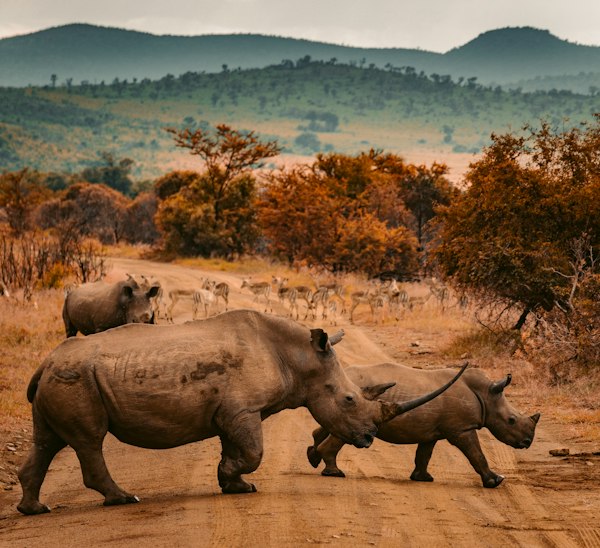
Masai Mara Kenya safari savanna big five wildebeest
Masai Mara, Kenya
🐄 Big Cats · Migration Crossings · Jul–Oct

The Masai Mara National Reserve (1,510 km² — the Kenyan portion of the Serengeti–Mara ecosystem — administered by the Narok County Council and the Mara Conservancies surrounding the reserve’s borders) is the world’s most celebrated wildlife destination for three specific reasons: the highest density of lion per area of any African ecosystem, the highest density of leopard sightings (the Mara’s relatively open acacia woodland makes leopard visible that would be entirely hidden in denser bush), and the Great Migration crossings at the Mara River — the defining wildlife spectacle of the safari calendar. The wildebeest herd arrives in the Masai Mara from the Serengeti from July, and the Mara River crossings (the wildebeest swimming the crocodile-dense river in their hundreds of thousands — the crocodiles (Crocodylus niloticus — the largest in Africa, some exceeding 5 metres and 700kg — resident in the Mara River year-round, the migration crossings representing 6–8 weeks of concentrated feeding that sustains the crocodile population for the rest of the year) occur unpredictably from July through October — a specific crossing point on a specific day cannot be guaranteed. The Masai Mara Conservancies (the privately managed areas surrounding the national reserve — Olare Motorogi, Naboisho, Ol Kinyei, and others — lower vehicle density, night game drives permitted (not allowed in the national reserve), and walking safaris — the best big cat sightings in the Mara system are typically in the conservancies, not the reserve).

  • Mara River crossings — Jul–Oct · unpredictable but certain within the window
  • Stay in a Conservancy, not the Reserve — night drives + walking safaris
  • Lion density — highest of any ecosystem · multiple prides per km²
  • Balloon safari at dawn — the Mara from 300m · champagne breakfast
  • Maasai village visit — context for the landscape’s human history
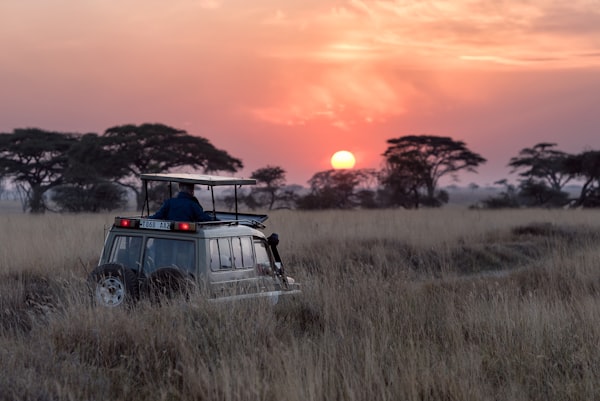
Serengeti Tanzania safari plains migration wildebeest acacia
Serengeti, Tanzania
🐄 Year-Round Game · UNESCO · 25,000 km²

The Serengeti National Park (14,763 km² — UNESCO World Heritage Site — the Tanzanian portion of the ecosystem, three times the size of the Masai Mara — containing the Seronera Valley in the centre (the “Big Cat Capital” — the most productive predator sighting area in the park, year-round), the Western Corridor (where the Grumeti River crossings occur in June–July — the Grumeti River crocodiles are larger and less well-known than the Mara River’s), and the Northern Serengeti (bordering the Masai Mara — the Mara River crossings viewed from the Tanzanian side — fewer vehicles, equal spectacle)) provides the most complete year-round wildlife experience in East Africa because the migration never leaves it entirely. The wildebeest calving season (January–March in the Ndutu area of the southern Serengeti — 400,000–500,000 calves born in a 3-week window — the highest predator activity of the year — cheetah hunting newborn calves within hours of birth — the single most intense wildlife experience on the Serengeti calendar). The Ngorongoro Crater (20km wide, 600m deep, 600 km² of enclosed ecosystem — technically administered by the NCA (Ngorongoro Conservation Area) rather than Serengeti NP — contains the highest density of wildlife per square kilometre of any area in Africa — approximately 30,000 large mammals permanently resident — the only ecosystem in Africa where lion, elephant, buffalo, hippo, zebra, wildebeest, black rhino, flamingo, hyena, and cheetah all coexist in a single drivable day — the black rhino (Diceros bicornis — population approximately 26 animals — among the best-protected black rhino populations in Africa due to the crater’s natural enclosure)).

  • Ngorongoro Crater — 30,000 animals · 26 black rhino · one full day minimum
  • Calving season (Jan–Mar) — highest predator activity · cheetah hunting newborns
  • Western Corridor (Jun–Jul) — Grumeti crossings · larger crocodiles than Mara
  • Northern Serengeti (Jul–Oct) — Mara crossings Tanzanian side · fewer vehicles
  • Seronera Valley — year-round big cat concentration · resident leopard families
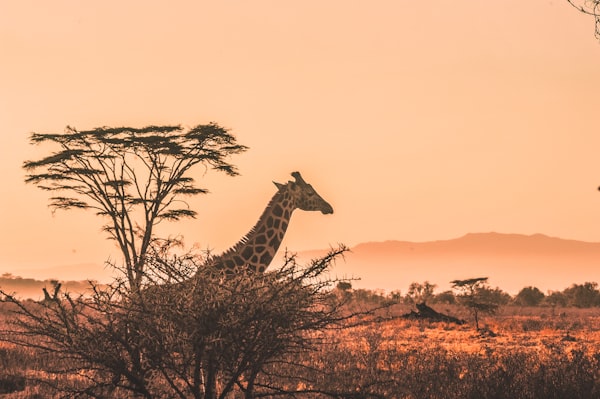
Mountain gorilla Rwanda Uganda Virunga Bwindi tracking
Gorilla Tracking — Rwanda & Uganda
🦍 Mountain Gorillas · 1,063 Left · Year-Round

Mountain gorilla tracking (Gorilla beringei beringei — the largest living primate, adult males (silverbacks) reaching 200kg and 1.8m standing height — the world population of 1,063 individuals distributed across the Virunga Volcanoes (Rwanda, Uganda, DRC) and the Bwindi Impenetrable Forest (Uganda)) is the most profoundly affecting wildlife encounter available to Australian travellers anywhere on Earth — a near-universal assessment from those who have done it, regardless of prior expectations. The animals sit, forage, play, and move through the forest at their own pace, at their own distance from the visitor group — the silverback typically visible within 5–15 metres — the group’s interactions, social structure (the gorilla family group (the silverback, 5–10 females and their offspring — the blackbacks (sub-adult males) at the periphery — the social dynamics observable in a single 1-hour session)) legible without prior knowledge because they are so clearly expressed in the animals’ behaviour. Rwanda (Volcanoes National Park): the permit costs USD$1,500 per person (2024 rate — the most expensive wildlife permit in Africa — the revenue funds the park’s anti-poaching infrastructure, ranger salaries, and community benefit programs surrounding the park — the conservation model that reversed the gorilla’s population trajectory). The tracking starts from one of the park’s six trailheads — depending on the assigned gorilla family, the hike ranges from 20 minutes to 4–5 hours through steep volcanic terrain. Uganda (Bwindi Impenetrable Forest NP): the permit costs USD$700 (50–60% cheaper than Rwanda — Bwindi is less developed tourism infrastructure, more challenging terrain, and in some sections more authentic forest experience — the two countries offer genuinely different versions of the gorilla experience).

  • Rwanda permit — USD$1,500 · book 6–12 months ahead via rdb.rw
  • Uganda permit — USD$700 · Bwindi Impenetrable Forest · harder terrain
  • 1-hour guaranteed with the gorilla family once found
  • Tracking time — 20 min to 4+ hours depending on family location
  • Combine Rwanda gorillas + Akagera NP for a Big Five safari without Kenya
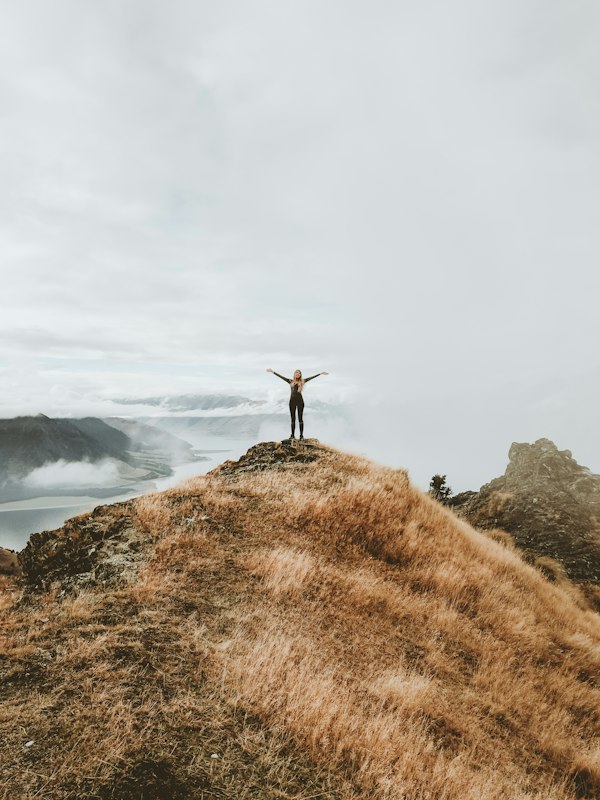
Mount Kilimanjaro Tanzania summit climb Uhuru Peak Africa
Mount Kilimanjaro, Tanzania
⛰ 5,895m · Africa’s Highest · Non-Technical

Mount Kilimanjaro (Uhuru Peak — 5,895m — the highest point in Africa and the highest freestanding mountain in the world — a dormant stratovolcano in the Kilimanjaro National Park in northern Tanzania — visible from the Amboseli National Park in Kenya on clear days as an ice-capped peak rising from the surrounding plains — the most photographed juxtaposition in East Africa: the snow-capped summit of a near-equatorial mountain above the African savanna) is the world’s most accessible major summit — it requires no technical climbing skills, only sufficient fitness for sustained high-altitude walking and the patience to acclimatise properly. The Machame Route (“The Whiskey Route” — 7 days / 6 nights — the most scenic and most popular route, ascending through rainforest, heath, moorland, alpine desert, and the arctic summit zone — the Shira Plateau, the Barranco Wall (a near-vertical 300m scramble — the most physically demanding single section of any Kilimanjaro route — non-technical but requiring confident use of hands and feet), the Karanga Valley acclimatisation camp — the 7-day route provides better acclimatisation than the cheaper 6-day version with a statistically significant improvement in summit success rate). The Lemosho Route (8 days / 7 nights — the longest, least crowded, and highest-success route — summit success rate approximately 85–90% on the 8-day version vs 65% on the 6-day Machame — the additional acclimatisation days at the Shira Plateau make the physiological difference). All routes require a licensed Kilimanjaro guide and porter team — Tanzanian law mandates this, and the porter welfare standards enforced by the Kilimanjaro Porters Assistance Project should be verified with any operator before booking.

  • Machame Route (7 days) — most scenic · 65–75% summit success
  • Lemosho Route (8 days) — least crowded · 85–90% summit success
  • Best months — Jan–Feb and Jun–Oct · avoid March–May (long rains)
  • Altitude sickness — the primary risk · Diamox (acetazolamide) commonly used
  • Verify porter welfare with operator (KPAP accreditation)
Zanzibar Tanzania spice island Indian Ocean beach coral reef
Zanzibar, Tanzania
🌊 Spice Island · UNESCO Stone Town · Indian Ocean

Zanzibar (officially Zanzibar Island — Unguja — 1,666 km² — in the Indian Ocean 35km from the Tanzanian coast — accessible by a 25-minute flight from Dar es Salaam or a 2-hour high-speed ferry from the Dar es Salaam port) is the spice island — historically the world’s largest producer of cloves (Syzygium aromaticum — the clove plantations established by the Omani Sultanate in the early 19th century — the Stone Town still perfumed by the clove and nutmeg drying on the streets between October and December). The Stone Town (Mji Mkongwe) (UNESCO World Heritage Site — the 19th-century Swahili and Omani Arab trading town — the labyrinthine alleys (no motor vehicles in the old town), the carved wooden doors (traditionally demonstrating wealth by the elaborateness of the carving — Omani doors have a central floral motif and brass studs, Indian doors have chains of brass flowers), the House of Wonders (Beit el-Ajaib — the first building in East Africa with an electric lift — built 1883 for Sultan Barghash), the Old Fort (the 17th-century Portuguese-then-Omani fortification now housing an evening dhow culture music festival). The north coast beaches (Nungwi and Kendwa — the finest white sand beaches in Tanzania, the Indian Ocean turquoise at low tide — the dhow sunset trips from Nungwi — the Mnemba Atoll snorkel/dive site 3km offshore (the most pristine coral reef in Zanzibar — whale shark season September–March — manta rays year-round — the Nemo fish (Amphiprion ocellaris) in the anemone beds are the correct Zanzibar underwater cliché)). The spice tour (the plantation walk — the guide presents the spice plants and their products — vanilla, cinnamon, cardamom, lemongrass, ylang-ylang, and fresh coconut — 3 hours — the most fragrant 3 hours available anywhere in East Africa).

  • Stone Town — UNESCO 2000 · the carved door taxonomy · no cars in old town
  • Nungwi beach — the Indian Ocean at low tide · dhow sunset
  • Mnemba Atoll — whale sharks Sep–Mar · manta rays year-round
  • Spice tour — clove, vanilla, cardamom · the most fragrant 3 hours in Africa
  • Combine with Serengeti/Mara safari as the final “beach recovery”
Amboseli Kenya Kilimanjaro elephant herd savanna lake
Amboseli, Kenya
🐘 Elephant Herds · Kilimanjaro View · Year-Round

Amboseli National Park (392 km² — at the foot of Mount Kilimanjaro in southern Kenya — the park that provides the most photographically iconic combination available in East Africa: elephant herds in the foreground, Kilimanjaro’s snow-capped summit in the background — the single photograph that defines East Africa’s visual identity in international consciousness) is most famous for the size and accessibility of its elephant herds (approximately 1,600 individual elephants (Loxodonta africana) in the Amboseli ecosystem — the most studied elephant population in the world, documented by the Amboseli Elephant Research Project running continuously since 1972 under Cynthia Moss — the longest continuous study of any wild mammal population — the family groups named (the AA family, the BA family, etc.) and individually known from the database of ear-tear patterns accumulated over 50 years). The Amboseli elephants are particularly large-tusked (the families that have avoided poaching retain the genetic predisposition to large ivory — the Amboseli males can carry tusks of 50–60kg each, among the longest remaining in Kenya). The Observation Hill (the volcanic rise at the park’s centre — the only place in Amboseli where visitors are permitted to leave their vehicle — the 360-degree view of the park: the swampland and Lake Amboseli below, the elephant herds moving to water, and (on clear mornings, typically 6–10am before the afternoon cloud builds) the Kilimanjaro summit visible as a white tooth above the treeline 40km north).

  • Elephant herds + Kilimanjaro — clearest view 6–10am before afternoon cloud
  • Amboseli Elephant Research Project — since 1972 · named family groups
  • Observation Hill — only place to leave vehicle · 360° park panorama
  • Year-round destination — elephants present regardless of season
  • Combine with Masai Mara (5–6hr drive north) for a 10-day Kenya circuit
💡 INSIDER TIP — The Private Conservancy Advantage

The Masai Mara National Reserve receives up to 200 vehicles at a major predator sighting during peak season. The Masai Mara Conservancies (Olare Motorogi, Naboisho, Ol Kinyei, Mara North, Lemek — privately managed land surrounding the national reserve, operated under agreements with Maasai communities who receive a per-acre conservation fee) typically see a maximum of 3–6 vehicles at any sighting. The conservancy camps are also permitted to offer night game drives (revealing the nocturnal predator behaviour invisible in daylight — the spotted hyena’s communication, the leopard’s hunting technique, the serval’s leaping catches) and walking safaris with an armed Maasai guide (the most physically and intellectually intimate wildlife experience in East Africa). The conservancy daily rate is 15–30% more expensive than a national reserve camp — the experience is categorically different. Always specify a conservancy camp when booking a Masai Mara safari, regardless of the cost difference.

The World’s Greatest Wildlife Event

The Great Migration — Month by Month

1.5 million wildebeest, 400,000 zebra, and 200,000 gazelle moving clockwise through the Serengeti–Mara ecosystem in a continuous loop. There is no bad time to see it — but there is a best time for each experience.

January – March
Southern Serengeti — Ndutu
🐈 Calving Season

400,000–500,000 wildebeest calves born in 3–4 weeks in the short-grass plains of Ndutu and the Ngorongoro Conservation Area. The highest predator activity of the year. Cheetah, lion, and hyena hunt within metres of vehicles. The calves can walk within minutes of birth — they must. A cheetah takes a newborn wildebeest calf within 10 minutes if the mother cannot keep pace. The most visceral predator-prey encounter on the migration calendar. Newborn calves with still-wet coats are visible for approximately 2–3 weeks into the season.

April – May
Central Serengeti — Seronera
🌧 Long Rains · Shoulder Season

The long rains (the masika — April–May) transform the Serengeti from golden to the deep green of the short-grass plains in flush. The herd is moving north toward the Western Corridor. Fewer tourists, 30–40% lower accommodation rates, and the landscape at its most photogenically green. The predators remain active. The Seronera Valley’s resident leopard and lion are visible year-round. Not recommended for first-time visitors who specifically want the migration action, but excellent for value-conscious travellers who want quality game viewing without the peak-season prices.

June – July
Western Serengeti — Grumeti
🐖 Grumeti River Crossings

The herd reaches the Western Corridor in June and begins crossing the Grumeti River — the less-famous but arguably more dramatic of the two migration river crossings. The Grumeti’s resident Nile crocodiles (Crocodylus niloticus) are notably larger than the Mara River’s population — some individuals recorded at 5.5–6m. The Grumeti crossings are less predictable than the Mara crossings (the Grumeti is narrower and more easily forded) but when they occur, the crocodile ambush activity at a narrowing is among the most concentrated predator-prey interactions on the migration route. Fewer visitor vehicles than the Mara.

July – October
Masai Mara, Kenya
🌊 Mara River Crossings

The wildebeest enter the Masai Mara from the Serengeti’s Northern Extension from July. The Mara River crossings (the 300–500-metre wide river — 3,000–5,000 animals crossing at a time in the largest single crossings — the crocodiles ambushing from the riverbank — the lion prides waiting on the far bank) are the defining images of the Great Migration and the reason most visitors plan the Masai Mara trip for this window. The crossings occur at 7–12 known crossing points along the river — Lookout Hill and the Fig Tree Crossing are the most reliable. Peak season July–August — most expensive, most crowded. September–October: still excellent crossings, fewer vehicles.

What the Safari Does to You

The surprising thing about sitting three metres from a mountain gorilla in the Virunga forest is not the physical proximity. It is that the animal is clearly aware of you, clearly assessing you, and clearly unimpressed by your assessment of it. The silverback’s gaze is not hostile, not frightened, not curious. It is appraising. You are being evaluated by an intelligence that shares 98.3% of your DNA, has been living in this forest for longer than your species has been literate, and has the social complexity to maintain family bonds across decades.

“The Great Migration crossing is not a wildlife documentary. It is a sound — the thunder of hooves on the riverbank, the water churning white, the crocodiles moving — and then a smell. No camera setting prepares you for the smell of 4,000 wildebeest crossing a river.”

East Africa delivers wildlife encounters that consistently confound the expectations of visitors who have spent 30 years watching wildlife documentaries. The scale is different. The sound is different. The smell is different. The fact that the lion eating the wildebeest calf 40 metres from your vehicle is doing so without any awareness that you exist — that you are genuinely irrelevant to the actual life of the ecosystem — is the most recalibrating experience in travel. East Africa does not perform for visitors. The visitors are permitted to observe. That is the correct relationship, and it is what makes the safari transformative rather than merely spectacular.

9 Curated Experiences

East Africa Safaris from Brisbane

From a 3-night Masai Mara conservancy stay to the full 14-day Grand Circuit — all bookable through Cooee Tours’ Africa specialists.

🐄 Migration · Jul–Oct
Masai Mara Great Migration Safari
⏱ 5 nights★ 5.0(1,240 reviews)

The Masai Mara Great Migration safari — designed around the July–October window when the wildebeest herd is present in the Mara and the Mara River crossings are occurring. Based in a private conservancy camp (Olare Motorogi, Naboisho, or Mara North — the specific camp allocated at booking based on availability and current predator activity reports) rather than the national reserve: the conservancy means a maximum of 3–6 vehicles at any sighting, night game drives, and walking safaris with a Maasai guide. The 5-night programme: two full day game drives in the conservancy (the conservancy’s resident big cat families — the lion prides, the cheetah coalitions, the leopard that the camp manager has named), two half-days at the Mara River crossing points (Lookout Hill and Fig Tree — the guide positions the vehicle at the river bank by 6am and waits — a crossing may take 2 hours to initiate once the herd builds at the bank), the dawn hot-air balloon flight (the Mara from 300m — the herd visible as a moving mass from altitude — champagne breakfast in the bush on landing), and one walking safari with an armed Maasai guide (the bush at walking pace — the insects, the dung analysis, the track identification — the ecology that the vehicle never slows down enough to reveal). Return Nairobi by charter flight on Day 5 (30 minutes vs the 6-hour road).

Includes
Nairobi return charter flight5 nights conservancy campAll meals & game drivesDawn balloon flightWalking safari with Maasai guide
🐄 Serengeti · Year-Round
Serengeti & Ngorongoro Crater Safari
⏱ 7 nights from Kilimanjaro★ 5.0(980 reviews)

The Tanzania circuit — the definitive Tanzania safari combining the Serengeti (3 nights in the central Seronera Valley for year-round big cat concentration, or the calving Ndutu camps January–March, or the northern Serengeti July–October for Mara crossings from the Tanzanian side) and the Ngorongoro Crater (2 nights at the crater rim lodge — the descent into the crater floor at dawn (the gate opens at 6am — the first vehicles in the crater have it largely to themselves for 90 minutes) — the crater floor game drive covers the Lerai Forest (elephant and baboon), the hippo pool (the largest hippo concentration in Tanzania outside the Selous), the flamingo lake (Lake Magadi — the alkalinity supporting the algal bloom that attracts the lesser flamingo (Phoeniconaias minor) — the lake’s surface pink at distance), and the open grassland (the black rhino’s territory — the guide carries a Ngorongoro Crater Black Rhino monitoring map updated weekly by the Ngorongoro Conservation Area Authority — the 26 individual animals identified by horn and ear notch patterns)). Tarangire National Park add-on (the baobab tree savanna south of Lake Manyara — the largest elephant concentration in northern Tanzania — the tree-climbing lion that uses the baobab’s broad flat branches as resting platforms) is the correct extension for families with children or first-time visitors who want more variety before the Serengeti.

Includes
Kilimanjaro / Arusha arrivalTarangire & Manyara (optional)3 nights Serengeti2 nights Ngorongoro rimFull-day crater floor descent
🦍 Gorillas · Rwanda
Rwanda Mountain Gorilla Trek
⏱ 4 nights from Kigali★ 5.0(870 reviews)

The Rwanda mountain gorilla trek — 4 nights, 2 gorilla tracking days — designed around the fact that one hour with a mountain gorilla family is insufficient for most visitors to fully absorb what they are seeing, and that the second tracking day (a different assigned family) typically produces a fundamentally different experience from the first. The permit (USD$1,500 per person per tracking day — purchased through the Rwanda Development Board at rdb.rw — the guide confirms availability and secures the permits as part of the tour package) covers exactly 1 hour in the presence of the gorilla family once found. The hike to find the family (conducted with a lead ranger who has radio contact with the tracking team that locates the gorilla group each morning) takes between 20 minutes and 4+ hours depending on how far the family has moved overnight. Kigali (2 nights — the Kigali Genocide Memorial (the Gisozi memorial site commemorating the 1994 genocide — 250,000 victims are buried in the memorial’s gardens — the most important historical site in Rwanda and the most emotionally demanding — allow 2–3 hours in full awareness of what the experience requires — this is not optional context; it is central to understanding contemporary Rwanda), the Kimironko market, the Iminzi y’Amashyo art galleries). Volcanoes National Park (2 nights — 2 tracking days). Akagera National Park add-on (the savanna and wetland park in eastern Rwanda — lion reintroduced 2015, black rhino reintroduced 2017 — the only park in Rwanda where a Big Five encounter is possible).

Includes
Kigali hotel 2 nightsVolcanoes NP lodge 2 nights2 gorilla tracking permits (USD$3,000)Kigali Genocide MemorialRanger-led tracking
⛰ Kilimanjaro · Machame
Mount Kilimanjaro — Machame Route (7 Days)
⏱ 7 days / 6 nights★ 4.9(680 reviews)

The Machame Route (“The Whiskey Route” — the 7-day, 6-night circuit ascending via the Shira Plateau and the Southern Circuit traversal, with the summit night push from Barafu Camp (4,673m) to Uhuru Peak (5,895m)) is the most commonly attempted and most scenically varied route on Kilimanjaro. The route passes through 5 distinct ecological zones: the lower rainforest (the montane forest below 2,800m — black and white colobus monkeys, giant groundsels, the tree heather tunnel above 3,000m), the heath and moorland (2,800–4,000m — the giant groundsel (Dendrosenecio kilimanjari) — the 5-metre cabbage-on-a-stick plant endemic to Kilimanjaro that grows at 1cm per year and is therefore 500 years old — the mountain’s most distinctive plant), the alpine desert (4,000–5,000m — the Shira Plateau view — the volcanic crater rim and the icefield beyond), and the arctic summit zone (5,000–5,895m — the summit push begins at midnight from Barafu — −15 to −25°C — the guide sets the pace at “pole pole” (slowly slowly) — the summit at sunrise: the Rebmann Glacier, the ash pit of Uhuru Peak, and the East African plains 5,895m below). The guide team: 1 lead guide, 2 assistant guides, 1 cook, 1 waiter, and porters (the porter-to-climber ratio is approximately 3:1 — the porters carry the camping equipment, food, and supplemental oxygen — KPAP accreditation verification is handled by Cooee Tours before any operator is recommended).

Includes
Full guide and porter teamAll park fees and campingAll meals on mountainKPAP-accredited operatorKilimanjaro NP summit certificate
🌊 Zanzibar · Beach & Reef
Zanzibar Spice Island & Reef Diving
⏱ 7 nights★ 4.9(1,560 reviews)

The Zanzibar island stay — the beach extension that most East Africa safari visitors add to the end of their Serengeti or Mara circuit (the combination is the standard East Africa itinerary: 5–10 days safari, 3–7 days Zanzibar). 2 nights in Stone Town (the UNESCO Old Town walking tour — the carved door taxonomy, the House of Wonders, the Old Fort, the Forodhani seafood night market — the stalls of octopus, lobster, sugarcane juice, and Zanzibar pizza (the thin crepe-style street food that has nothing in common with Italian pizza beyond the name — filled with egg, vegetables, and cheese, folded and fried) — the most atmospheric open-air food market in East Africa at nightfall). Spice tour (3 hours, morning — the plantation walk through cinnamon, cloves, vanilla, lemongrass, and ylang-ylang — the guide cuts the bark, the root, the leaf, and the pod from each plant and passes them for smell and taste — the fresh vanilla pod’s scent is entirely different from the extract). 5 nights north coast (Nungwi or Kendwa — the white sand, the dhow sunset, the Mnemba Atoll dive/snorkel — whale shark season September–March — the Scuba Zanzibar or One Ocean dive centre for the certified diver’s Mnemba circuit: the Napoleon wrasse at 20m, the hawksbill turtle at 12m, the bumphead parrotfish at dawn)). The Stonetown to Nungwi coastal road (2 hours — the spice farms visible from the road, the dhows under construction in the boatyard at Mkokotoni, the Portuguese Chapel ruins at Ras Nungwi).

Includes
Stone Town hotel 2 nightsStone Town guided walkSpice tourNorth coast resort 5 nights2 x Mnemba Atoll snorkel/dive
🦍 Uganda · Primates
Uganda Gorillas & Chimpanzee Tracking
⏱ 7 nights from Entebbe★ 5.0(560 reviews)

The Uganda primate circuit — combining mountain gorilla tracking in Bwindi Impenetrable Forest with chimpanzee habituation in Kibale Forest — the most complete primate encounter available anywhere in Africa. Kibale Forest National Park (the chimpanzee tracking — the Kibale population of approximately 1,500 chimpanzees (Pan troglodytes schweinfurthii) is the most studied in Uganda — the habituation programme allows visitors to spend up to 4 hours (vs the standard 1-hour gorilla visit) with a semi-habituated chimpanzee community — the chimpanzee’s vocal communication (the pant-hoot call, the drum buttressing, the alarm call — each with a specific function and a specific response from other group members) is the most complex animal communication observable by a non-researcher in East Africa — the guide interprets the calls as they occur). Bwindi Impenetrable Forest (the gorilla tracking — USD$700 permit — 4 habituated gorilla families in the Buhoma sector, each accessed from a different trailhead — the forest is genuinely impenetrable in the sections the gorillas prefer — the guides use machetes to create access through the undergrowth — the gorilla encounter in this context (enclosed forest rather than Rwanda’s more open bamboo habitat) is more intimate and more physically challenging). Murchison Falls (the Victoria Nile at the point where it is forced through a 7-metre gap in the rock — the world’s most powerful waterfall — the boat cruise from Paraa to the falls base — the elephant and hippo concentrations on the Nile banks).

Includes
Entebbe hotel 1 nightKibale chimp habituation (4hrs)Bwindi gorilla trek (permit USD$700)Murchison Falls Nile boatAll lodging en route
🐘 Kenya · Amboseli + Mara
Kenya Classic Safari — Amboseli & Masai Mara
⏱ 8 nights from Nairobi★ 4.9(1,120 reviews)

The Kenya classic circuit — Amboseli and Masai Mara — the two parks that together deliver Kenya’s defining wildlife experiences: the Kilimanjaro elephant herds (Amboseli) and the big cat concentration with migration river crossings in season (Masai Mara). Nairobi (1 night — the Giraffe Centre (the Rothschild giraffe (Giraffa camelopardalis rothschildi) breeding programme — one of the most endangered giraffe subspecies — the feeding platform puts the visitor at giraffe head height — the long purple-black 45cm tongue — the morning routine that the giraffes have conducted with increasing competence since 1983), the Sheldrick Wildlife Trust orphan elephant nursery (public visit daily 11am–12pm — the rescued elephant calves (some hours old when found, too young to have been named by their rescuers yet — the keeper who sleeps beside each calf for the first 3 years of its life)). Amboseli (2 nights — the Observation Hill at dawn for the Kilimanjaro clarity window (6–10am), the swamp elephant feeding, the bull elephant big-tusk sightings). Drive or fly to Masai Mara (5 nights — conservancy camp, night drives, walking safaris, river crossing positioning July–October). Charter flight return to Nairobi on Day 8. Direct flight to Zanzibar (optional extension — 3 nights) or Nairobi–Brisbane connection.

Includes
Nairobi hotel 1 nightGiraffe Centre & Sheldrick nurseryAmboseli lodge 2 nightsMasai Mara conservancy 5 nightsCharter flight Mara–Nairobi
⛰ Kilimanjaro · + Safari
Kilimanjaro Lemosho & Serengeti Safari
⏱ 15 days total★ 5.0(420 reviews)

The summit-and-safari combination — climbing Kilimanjaro first (8-day Lemosho route — the acclimatisation advantage of the Lemosho approach means a post-climb body is more physiologically depleted but summit success rates are the highest of any route at 85–90%) then transitioning immediately to the Serengeti for 7 nights of game viewing (the legs recovering on the game drive while the eyes do the work). The logical sequence is critical: climb first, safari second — the post-altitude body is physically tired but mentally activated by the summit experience, and the game vehicle requires no physical exertion. The Lemosho route (8 days / 7 nights — the Lemosho Glades entrance in the west — the least-used entry gate, providing 2 days of relatively private wilderness approach before joining the Southern Circuit above the Shira Plateau — the acclimatisation profile is the gentlest of any Kilimanjaro route, with the highest-altitude camping on Day 5 at Laava Tower (4,630m) followed by a descent to Barranco Camp (3,960m) for the night — the “climb high, sleep low” principle maximising red blood cell production). Post-summit recovery in Moshi (1 night — the YMCA or Kilimanjaro Crane Hotel — the long shower, the first beer at sea level since Day 1, the certificate framing). Fly Kilimanjaro Airport to Serengeti (charter via Arusha — 1.5 hours) — 7 nights Serengeti itinerary with timing selected for maximum wildlife interest.

Includes
Lemosho 8-day guided climbKPAP-accredited operatorMoshi recovery nightCharter KIA–Serengeti7 nights Serengeti + Ngorongoro
🌎 Grand Circuit · 16 Days
Grand East Africa — Safari, Gorillas & Zanzibar
⏱ 16 days / 15 nights★ 5.0(380 reviews)

The Grand East Africa circuit — 16 days covering Rwanda (gorillas), Kenya (Masai Mara), Tanzania (Serengeti, Ngorongoro), and Zanzibar — the most complete single East Africa trip available in a fortnight-plus. This is the trip that delivers the full range of East Africa’s defining experiences: the gorilla encounter in Rwanda (2 days — 2 tracking permits), the Masai Mara big cat plains and (July–October) migration crossings (4 nights conservancy), the Serengeti’s year-round game (3 nights), the Ngorongoro Crater descent (1 full day), and Zanzibar’s beach recovery (4 nights). The routing: Fly Brisbane–Nairobi–Kigali. Rwanda (3 nights — Kigali Genocide Memorial Day 1, gorilla tracking Days 2–3). Fly Kigali–Nairobi (Kenya Airways, 1.5hrs). Masai Mara conservancy (4 nights — charter flight from Nairobi Wilson Airport — 45 minutes). Fly Mara–Kilimanjaro. Tarangire (1 night — the elephant and baobab) — Serengeti (3 nights) — Ngorongoro (1 night). Fly Kilimanjaro–Zanzibar (Precision Air, 1.5hrs). Zanzibar (4 nights — Stone Town day, spice tour, north coast beach and Mnemba Atoll). Fly Zanzibar–Nairobi–Brisbane. All permits, internal flights, accommodation, game drives, and meals (on safari) included.

Includes
2 Rwanda gorilla permitsAll internal flightsMasai Mara conservancy 4 nightsSerengeti + NgorongoroZanzibar 4 nights
When to Go

East Africa’s Two Seasons

East Africa’s wildlife calendar is determined by two annual rainfall cycles — and the Great Migration’s position within the ecosystem at any given time.

Dry Season — Peak Safari
June – October · January – February

The long dry season (June–October) is peak safari season: the vegetation is low, the animals concentrate around permanent water sources (making them more predictable and more visible), and the migration is in the Masai Mara with Mara River crossings occurring July–October. January–February is a second dry window: the short rains have ended, the Serengeti’s southern plains are green from the rains (the wildebeest calving in the Ndutu area — the most dramatic predator activity of the year), and Kilimanjaro’s summit has its clearest weather conditions. Peak season means peak prices (20–40% premium over shoulder) and the most vehicles at major sightings. Book 12–18 months ahead for July–August Masai Mara conservancy camps — the best properties sell out completely at these prices.

🌧
Wet (Green) Season — Value Window
March – May · November

The long rains (masika — March–May) and the short rains (vuli — November) provide the off-peak window: 30–40% lower accommodation rates, significantly fewer vehicles at sightings, and the landscape at its most lush and most photogenically green. Wildlife viewing is not inferior in the wet season — the animals are present, the predators are active — but the vegetation is taller, making the finding of animals slightly more challenging in dense bush. The short rains (November) are the best value month in the Masai Mara: the migration has returned to the Serengeti but the resident lion prides, leopards, and cheetah remain, the conservancies are nearly empty of visitors, and the accommodations offer their lowest annual rates. Gorilla tracking in Rwanda operates year-round regardless of season — the forest is always wet and the gorillas are always present.

Before You Go

Planning Your East Africa Trip

Getting to East Africa
Brisbane to Nairobi: approximately 18 hours via Dubai (Emirates — the most recommended routing for Brisbane departure — daily service, strong East Africa connections onward to Kilimanjaro, Zanzibar, and Kigali). Singapore Airlines via Singapore and Addis Ababa (Ethiopian Airlines) are the main alternatives. Nairobi (Jomo Kenyatta International Airport — NBO) is the primary East Africa hub with onward connections to Kilimanjaro (JRO), Dar es Salaam (DAR), Zanzibar (ZNZ), Kigali (KGL), and Entebbe (EBB). Internal charter flights (the correct approach between national parks — the 45-minute charter from Nairobi Wilson Airport to the Masai Mara airstrips vs the 6-hour road) are organised by the tour operator as part of the safari package.
📔
Visas & Documentation
Kenya: eTA required before arrival (etakenya.go.ke — USD$30 — 48–72hr processing). Tanzania: e-Visa (immigration.go.tz — USD$50). Uganda: e-Visa (visas.immigration.go.ug — USD$50). Rwanda: e-Visa (irembo.gov.rw — USD$50). Yellow fever vaccination certificate required if arriving from a country with endemic yellow fever risk — check with DFAT and your GP. All passport pages must be valid for at least 6 months beyond the intended departure date. Keep all visa approvals and vaccination certificates accessible in hard copy — border officials in East Africa may request paper documentation.
🥌
Safari Packing
Neutral colours (khaki, olive, tan, grey) are standard for safari — bright colours are not prohibited but are contrary to convention and can startle wildlife at close range. Avoid blue (which attracts tsetse flies). Layers are essential: dawn game drives in the Mara can be 8–12°C, midday 30–35°C. A fleece or light down jacket for the morning drive is necessary year-round. Binoculars (8×42 or 10×42) are the most important safari equipment after the camera. Bring more than you think you need in DEET repellent. A headlamp for the tent at night. All Kilimanjaro-specific gear (crampons, ice axe, down jacket rated to −25°C) can be rented in Moshi.
🐈
Safari Etiquette
Never exit the vehicle in open wildlife areas unless instructed by a qualified guide. The animals are entirely wild — a vehicle registers as a neutral object; a standing human does not. Keep noise to a minimum at game sightings — whisper, do not slam doors. Do not pressure guides to drive off-road or push vehicles closer — responsible guides maintain the distance the animals’ behaviour indicates is appropriate. Do not feed any wildlife. In Rwanda, maintain the 7-metre rule with gorillas even if they approach closer (they will — do not move away suddenly, lower your gaze to avoid direct eye contact, and let the silverback’s presence dictate the group’s movement). Tipping: USD$10–20 per day per driver-guide; USD$5–10 per day per camp staff.
Day by Day

East Africa Itineraries

Three circuits — from a 7-day Tanzania introduction to the 16-day Grand East Africa circuit.

⌛ 7 Days · Tanzania Introduction
Serengeti & Ngorongoro First Safari
Big Cats · Crater · Black Rhino · Year-Round
Day 1
Arrive Kilimanjaro. Transfer to Arusha. Debrief dinner — the guide covers safety protocols, the Big Five identification, and the Ngorongoro rhino briefing. Overnight Arusha.
Day 2
Tarangire National Park. Drive from Arusha (2hrs). Tarangire — the baobab savanna, the elephant concentration (the largest in northern Tanzania — 3,000 animals in the park during the dry season), the tree-climbing lion on the ancient figs. Overnight Tarangire tented camp.
Days 3–5
Serengeti (3 nights). Drive or fly to Seronera. Three full days in the central Serengeti — the guide works from current sighting reports for the resident cheetah, lion, leopard, and wild dog activity. Sunset drives. Night sounds: the hyena’s whooping, the lion’s territorial roar audible from 8km.
Day 6
Ngorongoro Crater. Drive to the crater rim. Overnight crater rim lodge (the view at sunset — the crater below in shadow while the rim catches the last light). Early dinner and early sleep — the crater gate opens 6am.
Day 7
Crater descent at dawn. In the gate at 6am. The first 90 minutes in the crater with minimal other vehicles — the black rhino at the forest edge, the hippo pool, the flamingo lake, the lion pride on a kill. Exit crater by 1pm (gate closes to new entries at 12pm). Drive Arusha or fly Kilimanjaro. Depart.
Book This Itinerary →
⌛ 10 Days · Kenya + Tanzania
Masai Mara, Amboseli & Serengeti
Migration · Elephants · Big Cats · Crater
Days 1–2
Nairobi + Amboseli. Day 1: Giraffe Centre (morning), Sheldrick elephant nursery (11am visit). Drive Amboseli (4hrs). Overnight Amboseli tented camp. Day 2: Full Amboseli — Observation Hill at dawn for Kilimanjaro clarity (6–10am) — the elephant swamp feeding, the big-tusked bulls at Enkiama waterhole.
Days 3–6
Masai Mara conservancy (4 nights). Charter flight Amboseli–Mara (45min). Days 3–6: conservancy camp — dawn drives (predator activity peaks 5:30–8am), midday vehicle-based rest, afternoon drives. Walking safari with Maasai guide (Day 4). River crossing positioning (Days 5–6 — Jul–Oct). Balloon flight (Day 3 dawn — champagne breakfast in the bush at 8am).
Days 7–10
Tanzania: Serengeti + Ngorongoro. Charter Mara–Kilimanjaro. Drive Tarangire (1 night). Serengeti (2 nights). Ngorongoro crater descent (Day 10 dawn — the complete crater circuit — rhino, hippo, flamingo, lion). Drive or fly Kilimanjaro. Depart. Zanzibar extension: fly Kilimanjaro–Zanzibar (1.5hrs) and add 3–5 nights beach recovery.
Book This Itinerary →
⌛ 14 Days · Grand East Africa
Gorillas, Safari & Beach
Rwanda · Mara · Serengeti · Zanzibar
Days 1–3
Rwanda. Day 1: Fly Nairobi–Kigali. Kigali Genocide Memorial (afternoon — 3 hours — the most important context for Rwanda’s extraordinary conservation story that follows). Day 2: Gorilla tracking Day 1 (Volcanoes NP — the silverback family). Day 3: Gorilla tracking Day 2 (different family — typically a more intimate encounter as the novelty of the previous day’s emotion has subsided into attention). Overnight Volcanoes NP lodge.
Days 4–7
Masai Mara. Fly Kigali–Nairobi (Kenya Airways, 1.5hrs). Charter Nairobi Wilson Airport–Mara airstrip (45min). Days 4–7: conservancy camp (night drives, walking safari, dawn drives, balloon flight on Day 6).
Days 8–11
Tanzania. Charter Mara–Kilimanjaro. Drive to Serengeti (2 nights — calving in Ndutu Jan–Mar, Seronera big cats year-round, Northern Serengeti crossings Jul–Oct). Ngorongoro (1 night rim lodge, 1 full-day crater descent — the rhino, the hippo pool, the flamingo lake).
Days 12–14
Zanzibar. Fly Kilimanjaro–Zanzibar (Precision Air, 1.5hrs). Day 12: Stone Town walk, evening Forodhani seafood market. Day 13: Spice tour morning, north coast afternoon. Day 14: Mnemba Atoll snorkel or dive. Fly Zanzibar–Nairobi–Brisbane. The end of the greatest wildlife fortnight available to an Australian traveller.
Book This Itinerary →

A silverback gorilla, three
metres from your face,
appraising you calmly.

Our East Africa specialists have the Masai Mara conservancy camp secured at the correct crossing point for the July window before the best properties sell out — the Rwanda gorilla permits booked through the Rwanda Development Board 9 months ahead of your travel dates, the Kilimanjaro KPAP-accredited operator confirmed with the correct 8-day Lemosho route for your fitness level, and the Ngorongoro Crater gate entry timed for 6am when the first vehicles have it to themselves and the black rhino is still at the forest edge. They know which Amboseli waterhole the big-tusked bulls use in the afternoon, why the Serengeti calving season in February is the most concentrated predator experience on the continent, and that the Zanzibar whale sharks are at Mnemba Atoll between September and March. Eighteen hours from Brisbane. Let us take you into Africa properly.

Plan My Africa Safari → Call 0409 661 342

50,000+ Australian travellers · ATAS Accredited · 35+ Years